8 Proven Marketing Strategies That Attract Serious Buyers in Austin
Eight proven estate property marketing strategies tailored to Austin's luxury sellers, covering pre-market positioning in Westlake Hills and Barton Creek, architectural photography and dedicated property websites, private channel distribution to family offices and relocating executives, precision pricing and absorption analysis, narrative storytelling, buyer-profile staging, curated showings, and global reach with local Austin precision.

Austin's luxury market draws sophisticated buyers from coastal cities. The marketing of an estate property must match the caliber of the audience it intends to reach.
Selling a luxury property in Austin demands specialized estate property marketing strategies tailored to high-net-worth buyers who rely on private channels, trusted advisors, and curated information rather than traditional home search platforms. This guide outlines eight proven approaches that account for how sophisticated buyers, many relocating from coastal markets, discover, evaluate, and ultimately commit to Austin's most exclusive properties in Westlake Hills, Barton Creek, Tarrytown, Rollingwood, Pemberton Heights, Spanish Oaks, and along Lake Austin.
Selling a luxury property in Austin is not the same as selling a home. The buyers are different, the decision-making process is longer, and the margin for error is smaller. A mispriced listing, a poorly executed photo shoot, or a premature public launch can cost a seller weeks of momentum and negotiating leverage they may never recover.
Estate property marketing is its own discipline. It requires understanding how high-net-worth buyers discover properties, how they evaluate them before ever requesting a showing, and what signals of quality they look for before engaging seriously.
Austin's luxury market has matured considerably. Buyers relocating from California, New York, Chicago, Seattle, and South Florida arrive with sophisticated expectations shaped by years of coastal-market activity. They are not browsing Zillow hoping to stumble onto something in 78746 or 78703. They are working with advisors, monitoring private channels, and making decisions based on curated information about specific submarkets, school boundaries, and lifestyle corridors.
This guide covers eight strategies that reflect how serious estate property marketing actually works at the high end of the Austin market. Each one addresses a specific gap that generic real estate marketing leaves open.
1. Control the Narrative Before the Listing Goes Live
The Challenge It Solves
Most luxury listings launch cold. The property appears on the MLS with no prior context, no buyer anticipation, and no established sense of value. For estate-level properties in submarkets like Westlake Hills or Barton Creek, this is a significant problem. Sophisticated buyers and their advisors notice when a listing appears without any prior awareness, and that absence of anticipation can signal a lack of strategy.
The cold-launch problem is particularly damaging in Austin's upper tier, where properties priced above three million dollars already face a smaller pool of qualified buyers. In Eanes ISD alone, the number of buyers actively shopping above $5M at any given moment is small enough that an advisor can name most of them. You cannot afford to waste the critical first two weeks introducing the property to a market that should already know it exists.
The Strategy Explained
Pre-market positioning means building the story of the property before it is publicly available. This involves briefing the small group of agents who consistently represent qualified buyers in Westlake Hills, Rollingwood, Tarrytown, and Barton Creek, creating private marketing materials, and generating quiet interest before any public exposure occurs.
Think of it as a soft opening before the main event. By the time the listing goes live, there is already a group of interested parties who have been primed to act. The property enters the market with momentum rather than starting from zero.
In neighborhoods like Barton Creek, Westlake Hills, Tarrytown, and Rollingwood, where estate-quality inventory is genuinely thin and turnover is measured in single-digit transactions per year at the top end, this kind of pre-launch activity routinely surfaces buyers who have been waiting eighteen months or more for the right property to come available.
A Brief Example from the Austin Market
Consider a recent estate-quality property prepared for sale in Westlake Hills. Rather than launching immediately on the MLS, the listing team spent three weeks circulating a private brief to roughly two dozen Austin luxury advisors known to represent Eanes ISD buyers above $5M. A second tier of outreach went to relocation specialists working with technology executives moving to Austin from the Bay Area. By the time the property went live publicly, four qualified buyers had already toured privately, two had requested second showings, and a written offer was in hand within seventy-two hours of activation. The property closed at full ask, with no public price reduction and no extended days-on-market clock to negotiate against. The outcome was not the result of the launch itself. It was the result of three weeks of quiet positioning that turned the launch into a confirmation rather than an introduction.
This is the pattern that consistently produces strong outcomes at the estate level in Austin. The buyer pool is small enough to be reached individually, and the cost of doing so is far lower than the cost of a stalled launch.
Implementation Steps
- 01Identify the property's most compelling attributes and develop a clear positioning statement that frames its value before any public description is written. For a Tarrytown property, that statement might center on architectural lineage and walkability. For a Lake Austin waterfront estate, it centers on dock configuration, lot orientation, and constant-level water access.
- 01Brief a curated list of top-producing buyer's agents in the Austin luxury market at least two to three weeks before the planned launch date. The list should be narrow and specific, not a mass email. The advisors who actually move estate-level buyers in 78746, 78703, and along the lake are a finite group.
- 01Create a private teaser package, including select photography and key property details, to share through broker networks and private channels before the MLS listing is activated.
Pro Tips
Avoid over-sharing during the pre-market phase. The goal is to generate awareness and anticipation, not to conduct a full showing cycle before the property is properly positioned. Selective disclosure builds perceived scarcity. If too much information circulates too early, you lose the ability to control the story once the listing goes live.
2. Commission Photography and Video That Reflects the Property's True Character
The Challenge It Solves
Visual quality is the first filter a serious buyer applies. Before a showing is ever requested, buyers and their advisors have formed a strong impression based entirely on photography and video. Generic real estate photography, even technically competent work, rarely captures what makes an estate property distinctive.
For out-of-state buyers relocating from coastal markets, the visual presentation may be the only impression they have of a property before flying to Austin. A weak visual package can eliminate a Westlake Hills estate or a Lake Austin waterfront home from consideration before any human conversation takes place.
The Strategy Explained
Architectural-grade visual production treats a property the way a luxury brand treats its product. The goal is not simply to document the space but to communicate the experience of being in it. This means working with photographers who understand light, composition, and how to reveal a property's character rather than just its square footage.
Cinematic video adds a layer of storytelling that photography alone cannot provide. A well-produced property film can convey the rhythm of daily life in a home, the relationship between interior and exterior spaces, and the quality of craftsmanship in ways that still images cannot.
Drone footage is particularly relevant in Austin, where properties along Lake Austin, in the Barton Creek corridor, on elevated Westlake Hills lots, or within the Hill Country fringe of Spanish Oaks have site context that is inseparable from their value. A buyer evaluating a Hill Country estate cannot fully understand the property without seeing how it sits within the landscape.
Dedicated Property Websites for Estate-Level Listings
At the estate level, the MLS and standard portal templates are not sufficient to present a property properly. They constrain photo counts, truncate descriptions, and offer no real ability to tell a story. A dedicated property website addresses every one of those limitations and has become an expected piece of the marketing package for serious Austin estates.
A well-built property website should include long-form storytelling that explains the property's architectural lineage, history, and design intent. Full-screen photography that lets the buyer see detail and quality rather than thumbnails. Cinematic video integrated into the main narrative, not buried as a secondary asset. Detailed floor plans that allow a buyer to understand circulation and proportion before they tour. Neighborhood context that situates the property within the relevant submarket, whether that is the Eanes ISD boundary, the Lake Austin shoreline, or the gated streets of Barton Creek. School information where appropriate, particularly for properties in Eanes ISD, Austin ISD elementary boundaries like Casis, or Lake Travis ISD. And lifestyle presentation that communicates what daily life in this specific property and this specific community actually looks like.
For out-of-state buyers, a dedicated property website is often the first complete picture they receive of the property. It carries the entire pre-tour conversation and frequently determines whether a buyer commits to traveling to Austin to see it in person.
AI Search and Conversational Discovery
How luxury buyers find properties is changing. A growing share of high-net-worth buyers begin their search with AI-powered tools, conversational search platforms, and brokerage recommendation engines rather than traditional portal browsing. They ask questions in natural language about Eanes ISD homes with specific lot characteristics, about Lake Austin waterfront properties with particular dock configurations, or about Tarrytown homes with architectural pedigree.
These tools surface properties based on the quality and structure of the information available about them. High-resolution photography that is properly captioned, accurate and detailed property data, well-written narrative content, and clear neighborhood context all improve discoverability across both traditional search and AI-driven discovery systems. Properties with thin descriptions and generic photography are increasingly invisible in this environment, even when they appear in standard search results.
The practical implication for sellers is straightforward: the same investments that make a property compelling to a human buyer, strong photography, clear narrative, accurate specifications, and rich neighborhood context, also make it more discoverable in the search environments that high-net-worth buyers are increasingly using.
Implementation Steps
- 01Select a production team with a specific portfolio in architectural and luxury residential photography, not general real estate work. Ask to see prior work in the same submarket the property occupies.
- 01Schedule the shoot to align with optimal natural light conditions for the property's orientation, and allow sufficient time to capture both interior and exterior spaces without rushing. In Austin, this often means avoiding harsh midday summer light and prioritizing morning shots for east-facing properties or late afternoon for west-facing lake homes.
- 01Develop a shot list that prioritizes the property's most distinctive features, including architectural details, outdoor living areas, and any views or site characteristics that are central to the property's value.
Pro Tips
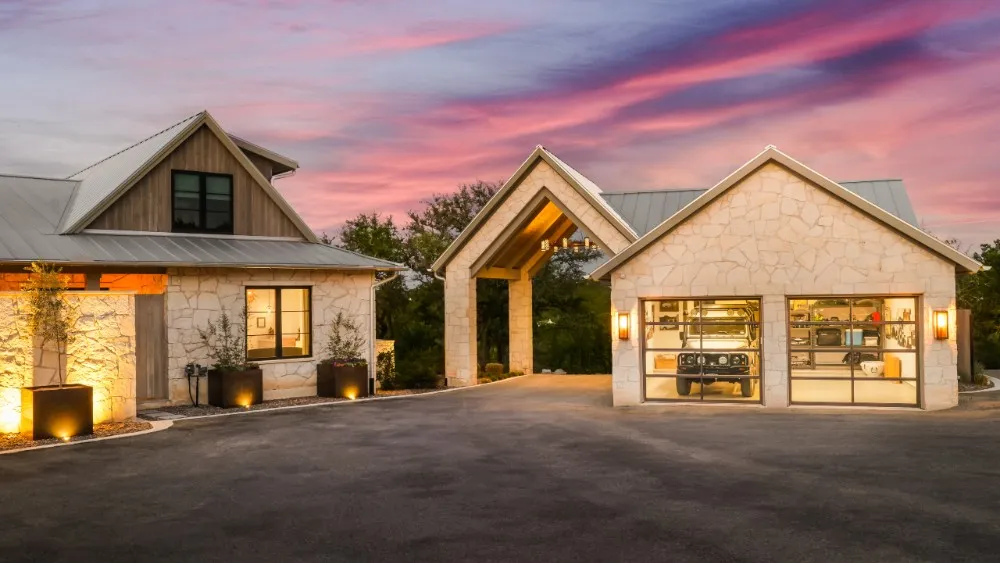
Invest in twilight photography for estate properties with significant exterior presence. The combination of interior warmth and fading natural light creates images that consistently perform well with high-net-worth buyers. Also consider whether virtual staging is appropriate for any spaces that are currently vacant, as unfurnished rooms can be difficult for buyers to evaluate without visual context.
3. Use Private Channels to Reach Buyers Who Never Search Publicly
The Challenge It Solves
A meaningful portion of high-net-worth buyers at the estate level do not search public portals. They rely on trusted advisors, broker relationships, and private networks to identify opportunities before they become widely available. If your marketing strategy begins and ends with the MLS and consumer-facing portals, you are invisible to a significant segment of the most qualified buyers in Austin's market.
This is especially true at the five-million-dollar-and-above price point, where off-market and private transactions in Austin have become a meaningful share of total activity. Buyers at this tier rarely see a property for the first time on Zillow. By the time it reaches Zillow, they have either already passed on it through private channels or it was never offered to them at all, which is information in itself.
Why High-End Buyers Often Learn About Properties Before They Go Public
Several overlapping dynamics explain why estate-level buyers consistently see opportunities earlier than the public:
Agent-to-agent relationships. The community of advisors who consistently transact above $5M in Austin is small enough that most of them know each other personally. When a property is being prepared for sale in Westlake Hills, Rollingwood, Tarrytown, or Barton Creek, the listing agent typically knows which two dozen advisors are most likely to have a qualified buyer for it. A single round of direct outreach to that group routinely surfaces interest before any public marketing begins.
Private buyer databases. Top luxury brokerages maintain internal databases of qualified buyers and their specific search criteria, including price band, neighborhood preference, school district requirement, and lot characteristics. When a property comes available that matches a registered buyer, that buyer is contacted before the listing reaches the MLS. These databases are not public, and access to them is one of the more meaningful advantages a seller gains by working with an experienced advisor.
Executive relocations. Austin continues to receive a steady inflow of senior executives relocating for technology and financial sector roles. These executives are often introduced to the market through corporate relocation channels and through the wealth advisors managing their compensation transitions. Many never engage with public portals at all during their initial search, relying instead on their relocation specialist and their newly assigned local advisor.
Technology founders moving to Austin. Founders and operators relocating from the Bay Area, Seattle, and New York continue to be active buyers in Austin's upper tier, particularly in Westlake Hills, Tarrytown, and along Lake Austin. Their entry into the market is frequently coordinated through introductions from venture capital relationships, mutual portfolio company contacts, or wealth managers who already work in Austin. These buyers prefer discretion and rely on trusted introductions rather than open search.
Wealth advisors and family office relationships. Family offices and the wealth advisors who serve high-net-worth clients are an underappreciated channel in Austin. They are often the first to learn that a client is preparing to acquire a property, and they often manage the introduction to local real estate counsel. Listings that are aware of and connected to this network see qualified buyer flow that does not exist for listings that depend solely on public exposure.
Corporate relocation specialists. Major employers expanding their Austin presence often retain relocation specialists to support senior hires. These specialists work with a small circle of local advisors and are a consistent source of qualified, time-sensitive buyers, particularly for primary residences in Eanes ISD and central neighborhoods with strong school options.
Off-market buyer matching. Experienced Austin luxury advisors actively match registered buyers to properties that are not yet listed. This is the core function of a serious off-market practice. When a seller engages an advisor with active relationships across this network, the property can be quietly previewed to specific buyers whose criteria match before any public marketing decision is made.
Broker-to-broker networking. Beyond local relationships, broker-to-broker referral networks reach into coastal feeder markets where many Austin buyers originate. A property in Westlake Hills can be quietly surfaced to a buyer's advisor in Los Angeles or New York through these networks, often before the buyer themselves has identified Austin as a specific target.
The cumulative effect of these channels is that, above roughly $5M in Austin, the buyer pool is not best reached through public marketing alone. It is reached through coordinated, relationship-driven outreach to the people and platforms that already know who is in the market and what they are looking for.
The Strategy Explained
Private channel marketing means actively distributing property information through networks that operate outside of public view. This includes broker-to-broker outreach, private listing networks, family office relationships, wealth advisor introductions, and direct communication with the agents who represent qualified high-net-worth buyers in Austin's specific submarkets.
It also means having real working relationships with relocation specialists and corporate advisors handling executives and founders moving to Austin from other markets. These professionals are often the first point of contact for buyers who have not yet engaged a local agent, and the listings that are visible to them have an access advantage that is difficult to replicate through any volume of digital advertising.
Implementation Steps
- 01Develop a targeted list of buyer's agents who have closed transactions in the relevant price range and neighborhood tier within the past twelve to eighteen months. For an Eanes ISD property above $5M, that list is usually fewer than thirty names. Reach all of them personally.
- 01Create a private property brief, more detailed than a standard listing sheet, that provides the kind of information a sophisticated buyer's advisor needs to evaluate fit for their client. Include floor plans, lot dimensions, view orientation, school boundary confirmation, and any history of recent improvements or renovations.
- 01Engage with private listing platforms and broker networks that operate at the luxury tier, including those with national and international reach for out-of-state buyer exposure. Pair that exposure with direct outreach to family offices, wealth advisors, and relocation specialists known to be active in Austin.
Pro Tips
Relationships matter more than reach in private channel marketing. A personal call or message to a well-connected buyer's agent will consistently outperform a mass email blast to a large list. Identify the ten to fifteen advisors most likely to have a qualified client for this specific property and communicate with them directly and personally. The same principle applies to wealth advisors and relocation specialists: a small number of strong relationships, maintained over time, produces more qualified buyer flow than a broad and shallow distribution list.
4. Price with Precision, Not Optimism
The Challenge It Solves
Overpricing is one of the most common and costly mistakes in luxury real estate. It feels like a conservative strategy because it preserves room to negotiate, but it has the opposite effect with sophisticated buyers. When an estate property in Westlake Hills, Tarrytown, or Barton Creek is priced above what the market supports, experienced advisors recognize it immediately and often advise their clients to wait.
Properties that sit accumulate stigma. Days on market is a visible data point that every buyer's agent monitors, and at the estate level, buyer psychology is unusually sensitive to it. Once a listing has been on the market for an extended period without activity, it becomes significantly harder to generate competitive interest, even after a price reduction. The first price cut signals weakness, the second signals desperation, and each one widens the gap between asking price and the offers buyers feel comfortable making.
Reading Absorption Rates and Inventory in Austin's Submarkets
Precision pricing in Austin requires looking past the headline median and into the absorption rate for the specific submarket and price band the property occupies. Absorption rate, the ratio of closed sales to active inventory over a defined period, is the most useful single indicator of how a property is likely to perform on launch.
In Austin's luxury submarkets, absorption can vary dramatically by neighborhood and price tier. The market for $3M to $5M homes in Tarrytown behaves differently than the $5M and above market in Barton Creek, which in turn behaves differently than Lake Austin waterfront above $7M. Inventory levels at each tier, combined with the rate at which qualified buyers are entering the market through the channels described above, define the realistic competitive landscape a new listing will face. A property launched into a tier with thin inventory and active buyer demand has very different pricing latitude than one launched into a tier where inventory has been building for months.
Strategic Pricing as Market Entry
Strategic pricing at the estate level is not about pricing low. It is about pricing accurately enough that serious buyers and their advisors view the property as fairly positioned, which opens the door to genuine competitive interest rather than skepticism. The first two weeks on market generate the strongest concentration of qualified attention. A property priced to invite that attention typically establishes its value range during that window. A property priced to leave aspirational room for negotiation typically spends those two weeks being passed over while the listing accumulates the days-on-market stigma that erodes future leverage.
A property in Rob Roy is not priced the same way as a comparable property in Rollingwood, even if the square footage and finishes are similar. Site, views, lot configuration, gated access, and proximity to specific amenities all factor into how the market will respond. The same is true comparing Pemberton Heights to Tarrytown, or Spanish Oaks to Barton Creek.
Implementation Steps
- 01Conduct a detailed comparable sales analysis focused specifically on the relevant submarket, not the broader Austin metro, using sales from the past twelve months where possible. For sparse submarkets like Lake Austin waterfront, extend the window and weight the most structurally similar properties most heavily.
- 01Adjust for the specific attributes that differentiate this property from recent comparables, including lot size, view corridors, renovation quality, dock configuration where relevant, and any features that are rare in the submarket.
- 01Evaluate current inventory in the same price tier to understand the competitive landscape the property will enter, calculate the absorption rate, and position the listing accordingly. If the same buyer is choosing between this property and three others, the launch price needs to reflect that reality.
Pro Tips
Have a direct conversation with your advisor about the difference between your aspirational price and the market-supported price. Understanding that gap before launch allows you to make an informed decision rather than discovering it through weeks of inactivity. Sophisticated sellers in Austin's upper tier consistently treat pricing as a strategic market-entry decision, not an emotional one, and they preserve negotiating leverage by entering the market accurately rather than discovering true value through public price reductions.
5. Craft Property Storytelling That Speaks to a Lifestyle, Not Just Square Footage
The Challenge It Solves
Standard listing descriptions catalog features. They tell buyers how many bedrooms, how many bathrooms, and how many square feet. For estate-level properties, this kind of description fails to communicate what actually motivates a purchase decision at this price point. High-net-worth buyers are not buying square footage. They are buying a way of living.
A property in the Barton Creek corridor is not just a house with a pool. It is a specific relationship with the Hill Country landscape, a particular quality of privacy, proximity to Barton Creek Country Club, and a connection to one of Austin's most established luxury communities. A Tarrytown home is not just an inside-the-loop address. It is morning walks to Casis Elementary, access to Lady Bird Lake, and the architectural character of one of central Austin's most enduring neighborhoods. That story is not told in a features list.
The Strategy Explained
Narrative marketing for estate properties means developing a clear articulation of what life looks and feels like in the home. This includes the physical experience of the property, the neighborhood context, the proximity to Austin's cultural and natural assets, and the specific qualities that make this property distinct from others in the same tier.
The narrative should be consistent across all marketing materials, from the private brief to the public listing description to the property website. Every touchpoint should reinforce the same story.
Austin's lifestyle assets are genuinely compelling to buyers from coastal markets. The combination of Hill Country landscape, a vibrant cultural and culinary scene, strong private school options, Eanes ISD's continued reputation, and no state income tax creates a specific value proposition that deserves to be articulated clearly in property marketing. The advisors who can speak to those assets with specificity, naming particular restaurants, schools, trails, and cultural institutions, consistently outperform those who default to generic Texas luxury messaging.
Implementation Steps
- 01Identify the two or three qualities that make this property genuinely distinctive, not just good, and build the narrative around those specific attributes. For a Pemberton Heights home, that may be the architectural pedigree and walkability. For a Lake Austin waterfront estate, it is the dock and water orientation. For a Spanish Oaks property, it is the gated privacy and Hill Country view.
- 01Write a property description that opens with experience rather than features, drawing the reader into the property before presenting specifications.
- 01Develop neighborhood context content that connects the property to the specific amenities, communities, and lifestyle elements most relevant to the target buyer profile.
Pro Tips
Avoid generic luxury language. Phrases that could describe any expensive property in any city add no value and can actually reduce credibility with discerning buyers. Specificity is what makes a narrative compelling. The more precisely you can describe what makes this property and this location distinctive, the more resonant the story becomes, and the more clearly it is differentiated from every other Austin listing competing for the same buyer's attention.
6. Stage and Present the Property for Its Ideal Buyer Profile
The Challenge It Solves
Generic luxury staging applies a universal aesthetic that is designed to appeal to no one in particular. It is safe, inoffensive, and forgettable. For estate properties, forgettable is a significant problem. Buyers at this level are making large, emotionally significant decisions, and a presentation that fails to connect with their specific sensibility can prevent them from seeing themselves in the home.
Staging decisions that work well for a young family relocating from San Francisco to Westlake Hills may not resonate with a semi-retired executive from New York looking for a primary residence on Lake Austin. The property is the same, but the presentation should shift to reflect who is most likely to buy it.
The Strategy Explained
Buyer-profile-driven staging begins with a clear analysis of who the most likely purchaser is for this specific property. Age range, lifestyle, family structure, and aesthetic preferences all inform how a property should be presented. A property in Pemberton Heights with strong architectural character and walkability to Central Austin will attract a different buyer than a gated estate in Spanish Oaks with a resort-style pool and multiple garage bays.
Once the target profile is defined, every staging decision, from furniture selection to art placement to the way outdoor spaces are configured, should be made in service of that buyer's vision of how they would live in the home.
Implementation Steps
- 01Define the primary buyer profile for the property based on price point, location, property type, and the specific lifestyle attributes it offers.
- 01Select a staging approach, whether occupied staging with the seller's existing furnishings, partial staging to fill gaps, or full vacant staging, based on what will most effectively serve that buyer profile.
- 01Pay particular attention to outdoor living spaces, which are often undersold in Austin properties despite being a primary driver of value for buyers coming from markets with less favorable climates. In Austin, the experience of a covered terrace, a pool, or a Hill Country view at dusk is often the moment a buyer commits emotionally to the home.
Pro Tips
For occupied properties, editing is often more important than adding. Sellers are frequently too close to their own possessions to see how they affect a buyer's ability to visualize the space. A professional staging consultation focused on what to remove and simplify can have a greater impact than bringing in additional furnishings.
7. Manage Showings as a Curated Experience, Not Open Access
The Challenge It Solves
Estate properties in Westlake Hills, Tarrytown, Rollingwood, and along Lake Austin are not appropriate for open-house traffic. Unqualified visitors walking through a significant property create security risks, disrupt the seller's household, and dilute the sense of exclusivity that is part of the property's value proposition. More importantly, they rarely produce offers.
Controlled access is not about being difficult. It is about ensuring that every showing is a genuine opportunity with a qualified buyer, and that the experience of seeing the property reflects its caliber.
The Strategy Explained
Curated showing management means verifying buyer qualification before any showing is scheduled, coordinating access in a way that respects the seller's privacy and security, and ensuring the property is presented at its best for every visit.
The showing itself should be treated as an experience, not a transaction. For buyers who have traveled from out of state or who are considering a significant investment, the quality of the showing experience directly influences their perception of the property and the team representing it.
Private showings with the listing agent present, rather than lockbox access, allow for real-time storytelling and the ability to address questions in a way that reinforces the property's value.
Implementation Steps
- 01Establish a clear qualification protocol before any showing is scheduled, including confirmation of financing capability or proof of funds appropriate to the price tier.
- 01Prepare the property consistently for each showing, including lighting, temperature, scent, and any seasonal outdoor elements that contribute to the experience.
- 01Brief the listing agent to be present at all showings with a clear narrative and the ability to answer detailed questions about the property, the neighborhood, the relevant school boundary, and the broader Austin market.
Pro Tips
Follow up after every showing with a personal communication, not an automated message. At the estate level, the relationship between advisors matters. A thoughtful follow-up from the listing agent to the buyer's representative reinforces professionalism and keeps the door open for continued dialogue, even if the initial showing does not produce an immediate offer.
8. Leverage Global Reach Without Losing Local Precision
The Challenge It Solves
Austin's luxury market draws a significant portion of its buyers from other markets. Executives relocating for technology and financial sector opportunities, founders selling companies, families leaving high-cost coastal cities, and retirees seeking a lower-tax environment are all active in Austin's upper tier. Reaching these buyers requires marketing that extends well beyond local channels.
The challenge is that broad national and international marketing often loses the specificity that makes Austin compelling. Generic Texas luxury messaging does not resonate with a buyer from Manhattan who wants to understand exactly what life in Westlake Hills, on Lake Austin, or in Spanish Oaks actually looks and feels like.
The Strategy Explained
Effective multi-market outreach combines the reach of a national or global platform with hyper-local content that demonstrates genuine knowledge of Austin's neighborhoods, communities, and lifestyle. Buyers relocating from other markets are not just evaluating a property. They are evaluating a city, and the advisor who can speak knowledgeably about Austin's school systems, commute patterns, cultural assets, and neighborhood distinctions will earn their trust faster than one who simply sends listings.
Echelon Property Group's affiliation with eXp Realty provides access to a global network of agents and referral relationships that can surface qualified buyers from out-of-state markets. Combined with targeted digital marketing to buyer profiles in specific feeder cities, this creates a reach that local-only marketing cannot replicate.
Implementation Steps
- 01Identify the two or three feeder markets most likely to produce a buyer for this specific property based on price point, property type, and lifestyle attributes, and develop marketing content tailored to those audiences.
- 01Leverage broker-to-broker referral networks in key markets, particularly in California, New York, Chicago, Seattle, and South Florida, where Austin relocation continues to be most active.
- 01Create digital content, including neighborhood guides, lifestyle context, and Austin market perspective, that helps out-of-state buyers understand the specific community the property is located in, not just the property itself.
Pro Tips
Out-of-state buyers often need more time and more information before they are ready to visit. Invest in the digital experience, including a dedicated property website, a well-produced video tour, and detailed neighborhood context, so that buyers can do meaningful research before committing to travel. The more informed they arrive, the more productive the showing will be.
Putting It All Together
Effective estate property marketing in Austin is not a single decision. It is a coordinated campaign in which positioning, storytelling, visual production, private network distribution, pricing strategy, buyer qualification, and local expertise reinforce one another from the first internal conversation through closing.
Positioning establishes how the property is understood before anyone sees it. Storytelling gives the property a distinct identity in a market where most luxury inventory blends together. Visual production builds credibility before a single conversation takes place. Private networks reach the buyers who are most likely to act and are often unreachable through any other channel. Pricing strategy determines whether the property enters the market with momentum or with resistance. Buyer qualification protects the seller's time, privacy, and negotiating position. Local expertise binds all of it together, because every one of these decisions is shaped by the specific dynamics of Westlake Hills, Tarrytown, Rollingwood, Pemberton Heights, Barton Creek, Spanish Oaks, and the Lake Austin shoreline.
No single strategy works in isolation. The sellers who achieve the strongest outcomes in Austin's luxury market are typically those who approach the process as a coordinated campaign rather than a simple listing exercise. They understand that the marketing of an estate property is a strategic discipline, not a checklist, and they engage advisors who treat it that way.
The properties that perform best in Austin's upper tier, whether in the Barton Creek corridor, along Lake Austin, on the elevated streets of Westlake Hills, or in the established central neighborhoods of Tarrytown and Pemberton Heights, share a common thread. They were marketed with intention, presented with precision, priced with discipline, and brought to market by advisors who understood the difference between activity and strategy.
Work With an Austin Estate Property Advisor
If you are preparing to sell an estate-level property in Barton Creek, Westlake Hills, Tarrytown, Rollingwood, or along Lake Austin, Echelon Property Group is available for a confidential advisory conversation. Each engagement begins with a private review of the property, the relevant submarket, and the buyer profile most likely to compete for it, followed by a customized marketing strategy built specifically for the property rather than adapted from a template.
We work with a limited number of clients at a time to ensure each estate receives the positioning, private network distribution, visual production, and pricing discipline it deserves. Conversations are confidential and carry no obligation. Learn more about our advisory approach or review the off-market opportunities we currently have access to.
Continue Exploring
Three places to go from here

ABOUT THE AUTHOR
Taylor Sherwood
Austin Real Estate Advisor · Echelon Property Group
Taylor Sherwood is a Certified Luxury Home Marketing Specialist (CLHMS) and top-performing Austin real estate advisor. He specializes in luxury residential properties, land development, commercial real estate, and investment property across Austin and the Texas Hill Country. With deep market expertise and a results-driven approach, Taylor helps buyers, sellers, and investors navigate Austin's most competitive real estate segments.
Related Reading

Selling a House During a Divorce in Texas: The 2026 Guide
Community property, owelty liens, the 95% LTV buyout, and the Section 121 tax clock. A data-driven 2026 guide to the house in a Texas divorce, built for Austin.
2026-08-17 • 17 min read
Privacy Concerns When Selling a High-Value Home: What Sellers Need to Know
Selling a high-value home in Austin exposes ownership identity, security details, and financial position the moment a listing goes live. Here is what becomes public and how luxury sellers protect themselves.
2026-08-06 • 13 min read

Luxury Home Not Selling in Austin? It's the Price, and Here's the Fix
In 78703, more luxury listings died than sold last year. What an overpriced Austin luxury home really costs per month, and the six-step reset that fixes it.
2026-08-05 • 16 min read

Private Listings in Austin: The 2026 Rules, the Data, and When Going Quiet Actually Pays
Clear Cooperation is collapsing, Zillow launched Preview, and Unlock MLS built Flex Listings. Here is what Austin sellers can actually do in 2026, with the data on what private listings really cost or earn.
2026-08-03 • 15 min read