LUXURY LISTINGS Real Estate Explained
Private listings real estate explained: how off-market and pocket listings work in Austin, who sees them, and how to access private inventory.

The most desirable homes are not always the ones you can see. In the upper tier of the market, private listings real estate often sits behind direct relationships, trusted advisor networks, and carefully controlled exposure rather than public search portals. For buyers and sellers operating at a high level, that is not a workaround. It is often the strategy.
In luxury markets, privacy is rarely just a preference. It can affect negotiating leverage, reputation, timing, and ultimately price. A founder preparing for a relocation, a seller who values discretion, or an investor targeting a specific pocket of the city may have little interest in broadcasting intent to the broader market. That is where private inventory becomes materially different from standard listing flow.
What private listings real estate actually means
At a basic level, private listings real estate refers to properties marketed outside the public MLS and major consumer platforms. That can include true off-market opportunities, selective agent-to-agent promotion, or controlled exposure within a limited network of qualified buyers.
The distinction matters because not every non-Zillow property is the same. Some sellers want complete confidentiality and will only entertain offers through a narrow circle of advisors. Others want to test pricing quietly before deciding whether to launch publicly. Some simply know their home is likely to attract the right buyer through private channels without the noise of broad-market days on market, price reductions, and online speculation.
For buyers, private access is less about novelty and more about advantage. In a market where standout homes can trade quickly, public inventory alone rarely tells the full story. The best opportunities may never be syndicated at all.
Why private listings matter more in luxury markets
At the luxury level, a home is not just a commodity. It is a personal asset, a status signal, and often a highly specific fit for a narrow buyer pool. That changes how exposure should be managed.
A broad public launch can create urgency when the asset is positioned correctly, but it can also create friction. If a home is highly custom, architecturally significant, or owned by a public-facing individual, overexposure can work against the seller. Public listing history becomes part of the property's market narrative. Days on market can alter perception. Repeated pricing moves can weaken leverage.
Private marketing gives sellers more control over that narrative. It allows price discovery among serious, qualified buyers without immediately creating a public record of market response. That does not guarantee a better result. Some homes still benefit from full public competition. But in the right circumstances, controlled exposure preserves optionality.
For buyers, the value is equally strategic. In competitive micro-markets like West lake Hills, Barton Creek, and Tarrytown, private inventory can reveal supply that the broader market does not know exists. That can reduce bidding pressure, create cleaner negotiation dynamics, and open doors to assets that align more precisely with a buyer's standards.
The seller's calculus: privacy, leverage, and timing
Sellers are often told that maximum exposure always produces maximum value. That is sometimes true. It is not universally true.
A well-run private strategy can make sense when discretion is important, when the asset is highly specialized, or when the seller wants to gauge serious interest before committing to a full launch. This is especially relevant for properties where the ideal buyer is likely to come from a concentrated network rather than broad online traffic.
The trade-off is straightforward. Less exposure may mean fewer total eyes on the property. If the advisor behind the listing lacks the right network, that can suppress competition rather than refine it. Private strategy only works when the outreach is intentional and credible.
This is why private listings are not simply about withholding a property from the public. They are about replacing mass exposure with targeted exposure. The quality of that replacement determines whether the approach is smart or limiting.
The buyer's advantage in private listings real estate
Serious buyers often assume their search is comprehensive because they are monitoring public inventory closely. In the luxury segment, that assumption can be expensive.
Private listings real estate gives buyers access to a second market running parallel to the visible one. Some of the best homes trade there because sellers prefer confidentiality, because agents are matching opportunities directly, or because the property is being positioned selectively before any broader rollout. For a deeper look at how this hidden market behaves, see our definitive guide to off market homes in Austin and the private off-market landing page for direct access.
That access can change the search in meaningful ways. Buyers may avoid the frenzy that follows public launch. They may gain earlier insight into seller motivation. They may also encounter inventory that would have been overlooked in a portal-based search because it never entered that ecosystem in the first place.
That said, private access is not automatically a bargain channel. Premium homes offered quietly still command premium pricing when demand is strong. The advantage is more often about fit, timing, and positioning than a dramatic discount. Sophisticated buyers understand that the win is not paying less at any cost. It is securing the right asset under the right terms before the market widens.
How private deals are won or lost
In public-market transactions, visibility does a lot of the work. In private transactions, representation matters more.
A buyer cannot rely on search alerts and listing apps. The search has to be relationship-led, with clear acquisition criteria, direct outreach, and enough market intelligence to identify where true opportunities may emerge. That requires an advisor who understands not just neighborhoods in broad strokes, but individual streets, owner profiles, likely seller behavior, and the difference between aspirational pricing and actionable pricing.
The same applies on the sell side. A private listing is only as strong as the advisor's ability to curate the buyer pool, frame value with precision, and create confidence without the signaling effect of public exposure. Inexperienced handling can make a private listing feel invisible. Skilled handling can make it feel scarce.
This is where pattern recognition becomes unusually valuable. In a market like Austin, outcomes can vary block by block, even within the same neighborhood. A home's privacy, lot orientation, finish level, school adjacency, architecture, and renovation timeline all shape who will respond and how. Private strategy works best when those variables are interpreted correctly before the property is ever discussed.
When private is the right move and when it is not
Not every property should be marketed privately, and not every buyer should focus heavily on off-market access.
For sellers, private strategy tends to fit best when discretion carries real value, when the asset is likely to resonate with a narrow but qualified audience, or when testing market appetite quietly is preferable to a public launch. It can also make sense when a seller is not under pressure and wants flexibility.
For buyers, it makes the most sense when inventory is constrained at the quality level they expect, when location parameters are tight, or when they want access before competition expands. It is especially relevant for clients relocating to Austin seeking homes that rarely trade openly.
The wrong use case is treating private strategy as a default luxury affectation. Some homes need public competition. Some sellers benefit from broad visibility. Some buyers are better served by moving quickly on exceptional listed inventory rather than waiting for a mythical off-market opportunity. The strongest advisors know when to use private channels and when not to.
What to look for in a private-market advisor
The phrase off-market access is used loosely. Real private-market capability is narrower and harder to build.
It comes from trust with other top agents, long-term client relationships, repeat visibility into who may transact before they signal publicly, and the judgment to know which opportunities are real. It also requires discretion. In this segment, access without discipline is noise.
A credible advisor should be able to articulate not just that private inventory exists, but how it moves, why certain homes never hit the open market, and where leverage actually comes from in a quiet transaction. They should be able to tell you why a particular pocket is tightening beneath the surface, why one property traded privately while another needed public exposure, and how to approach each scenario without wasting time.
That is the value of an advisory-led model. Teams such as Echelon Property Group operate less like listing distributors and more like market interpreters. In private transactions, that distinction is not cosmetic. It affects access, execution, and outcome.
Private markets reward precision. Buyers need more than visibility. Sellers need more than discretion. Both need representation that can read the market before it announces itself. The right property is not always the one everyone sees first. Quite often, it is the one that moves quietly, with intent.
Continue Exploring
Three places to go from here

ABOUT THE AUTHOR
Taylor Sherwood
Austin Real Estate Advisor · Echelon Property Group
Taylor Sherwood is a Certified Luxury Home Marketing Specialist (CLHMS) and top-performing Austin real estate advisor. He specializes in luxury residential properties, land development, commercial real estate, and investment property across Austin and the Texas Hill Country. With deep market expertise and a results-driven approach, Taylor helps buyers, sellers, and investors navigate Austin's most competitive real estate segments.
Related Reading

Texas Homestead Exemption 2026: The New $140,000 Rules, What They Actually Save in Austin, and the Cap That Dies in December
The Texas homestead exemption jumped to $140,000 in November 2025 ($200,000 at 65+). Full Austin entity-by-entity math, worked examples at $650K and $2.5M, the two-year refund window, and the investor cap expiring December 31, 2026.
2026-08-20 • 17 min read

Assumable Mortgages in Austin: How Buyers Are Getting 2.75% in a 6.67% World
294 Austin homes have assumable 3% mortgages right now. The 2026 guide to finding them, funding the equity gap, and what sellers should charge for the note.
2026-08-18 • 16 min read
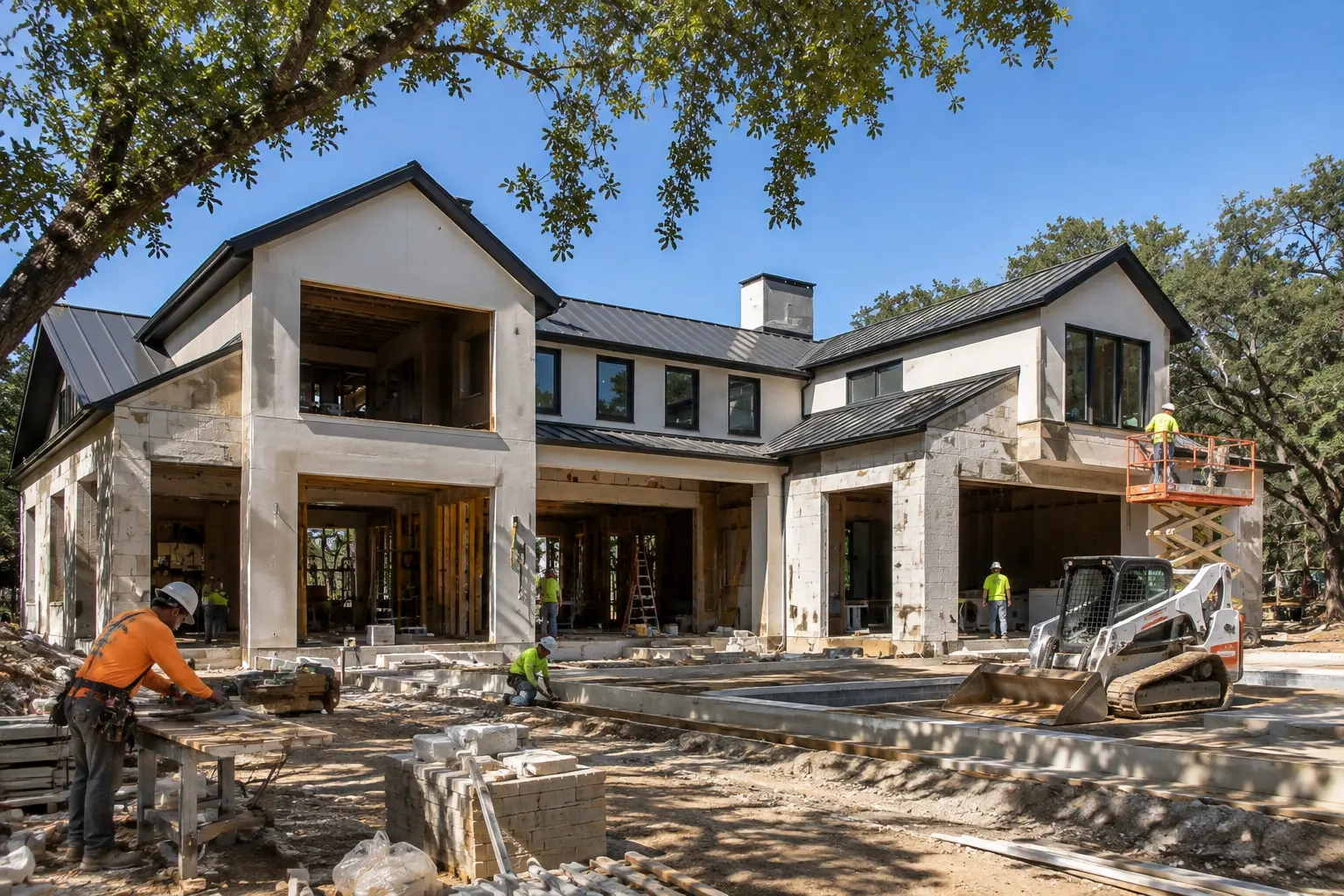
What It Really Costs to Build a Custom Home in Austin in 2026 (And When You Shouldn't)
What it actually costs to build a custom home in Austin in 2026: per-square-foot tiers, the full cost stack, tariffs, permits, and when buying beats building.
2026-08-15 • 16 min read

Downtown Austin Condos in 2026: Texas Built Its Tallest Tower and Put Nothing in It for Sale
Texas built its tallest tower and put zero units up for sale. Downtown Austin condo prices, HOA fees by building, worked carry math, and why the resale market just became the only game in town.
2026-08-12 • 20 min read