Wealth Building Through Luxury Real Estate
How affluent buyers and investors compound capital through scarcity, off-market access, and disciplined micro-market judgment, why the best luxury acquisitions protect capital, create optionality, and reward selectivity over time.
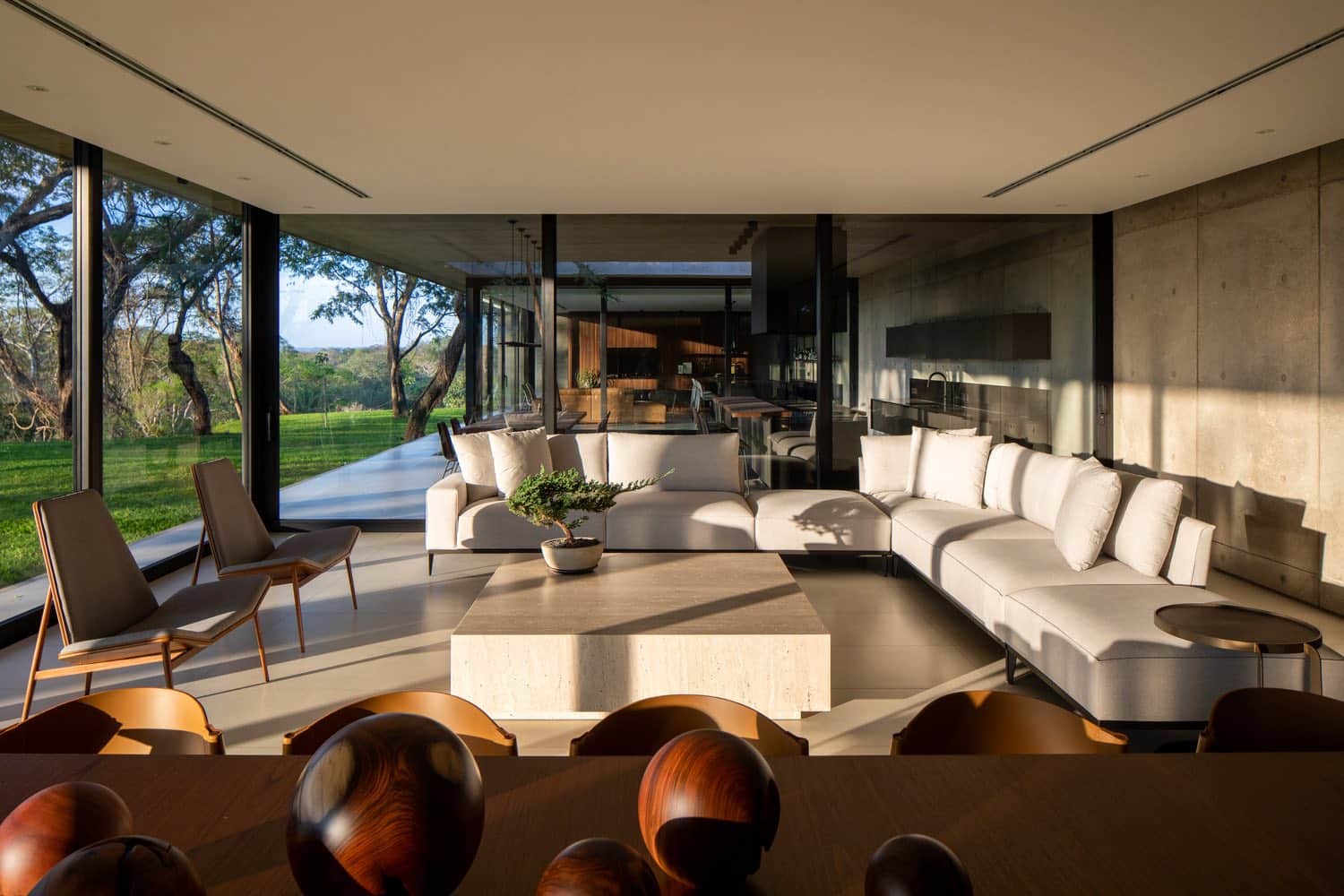
The difference between a luxury home and a luxury asset is rarely the finish level. It is the quality of the location, the scarcity of the offering, and the discipline behind the acquisition. Wealth building through luxury real estate is less about buying something expensive and more about securing something difficult to replicate, difficult to access, and well positioned to compound value over time.
For affluent buyers and investors, that distinction matters. A beautiful property can satisfy a lifestyle objective. A strategic property can do that while also protecting capital, creating optionality, and strengthening a broader wealth plan. Those are not always the same purchase.
Why luxury real estate behaves differently
Luxury property is its own market. It does not move in lockstep with the broader housing cycle, and it is not priced purely by square footage or superficial upgrades. At the top end, value is shaped by scarcity, identity, and buyer psychology just as much as by hard metrics.
That is why the best luxury acquisitions often look obvious only in hindsight. They tend to sit in tightly held pockets, on exceptional lots, with view corridors, privacy, architecture, or land characteristics that cannot easily be reproduced. In select markets, a single block can outperform the surrounding area because the buyer pool understands what is truly rare there.
This is especially true in Austin, where micro-markets matter more than broad headlines suggest. Two homes with similar pricing can have very different long-term trajectories depending on school proximity, topography, protected views, lot depth, walkability, and future inventory pressure nearby. Sophisticated buyers are not just purchasing a residence. They are underwriting a position within a specific segment of the market.
Wealth building through luxury real estate starts with scarcity
Scarcity is the engine. In the luxury segment, the strongest assets usually combine limited supply with enduring demand from a qualified buyer pool. That may mean a legacy neighborhood with little turnover, a custom home on irreplaceable land, or a discreet off-market offering that never reaches broad exposure.
The key is to separate cosmetic scarcity from real scarcity. Imported stone and a dramatic wine room are not scarce. A premier lot on a quiet street with privacy, mature trees, and architectural integrity is. One can be copied. The other cannot.
This is where many otherwise sophisticated buyers lose the plot. They overvalue finishes that photograph well and undervalue the less glamorous drivers of appreciation. In prime luxury markets, the land, setting, and position often matter more than the staging. When values reset upward, it is usually because demand concentrates around the assets that remain hard to replace.
Appreciation is only part of the story
When people discuss wealth building through luxury real estate, they often reduce it to appreciation. That is too narrow. High-end property can build wealth in several ways at once, provided the asset is selected carefully.
First, there is capital preservation. Premium real estate in proven locations tends to attract durable demand, particularly when the asset has true scarcity. That does not make it immune to market shifts, but it can create resilience compared with properties that are more interchangeable.
Second, there is appreciation. Over a full cycle, the right luxury property can compound meaningfully because affluent buyers continue to pay a premium for rarity, privacy, design quality, and location advantages. Our Austin luxury market report breaks down where that premium is concentrating today.
Third, there is optionality. A well-bought luxury home can later serve as a personal residence, a strategic hold, a legacy asset, or a disposition opportunity timed to favorable market conditions. Optionality is a form of value, especially for executives and founders whose timelines may shift quickly.
There are trade-offs, of course. Luxury homes can carry higher holding costs, more specialized maintenance demands, and a narrower buyer pool at resale. If the asset is too personalized or the pricing is detached from local value drivers, that exclusivity can become friction. Wealth creation at this level comes from precision, not simply from price.
The role of off-market access
At the high end, some of the best opportunities never appear in public search portals. Sellers may prefer discretion. Listing agents may test pricing privately before a public launch. In other cases, the property is simply too exceptional to market broadly without first approaching a known pool of qualified buyers. We cover this dynamic in detail in why buyers never see the best homes.
That matters because public visibility changes deal dynamics. Once a property reaches the open market, pricing expectations can harden, competition can intensify, and negotiating leverage may narrow. Off-market access creates room for nuance. It can also surface homes that align with a buyer's exact criteria before the wider market reacts.
For wealth-minded buyers, this is not just about exclusivity. It is about information asymmetry. Better access often means better decision-making. When you see more of the market than everyone else, you can compare quality more accurately, move earlier, and avoid overpaying for a property that is merely well marketed. For a primer on how this channel actually works, see what is a private listing.
Luxury investing requires micro-market judgment
Broad market commentary has limited value in the luxury segment. Serious buyers need neighborhood-level intelligence and, in many cases, street-level judgment. The question is not whether a city is growing. The question is where affluent demand is concentrating, what inventory is coming, and which submarkets are becoming harder to enter.
In Austin, for example, not all prestige addresses behave the same way. Some enclaves, like Westlake Hills, Rollingwood, and Barton Creek, benefit from long-term land constraints and deep buyer loyalty. Others are more vulnerable to shifts in new construction supply or changing buyer preferences. Even within a favored neighborhood, corner placement, grade, view protection, and architectural compatibility can affect exit value. Our guide to the best Austin enclaves for privacy maps where that durability tends to concentrate.
That is why deal-level thinking matters. Why did one home trade quietly at a premium while another lingered? Why did a teardown lot command aggressive pricing in one pocket but not two streets over? The answers often reveal where real wealth is created. It usually comes from reading the market beneath the surface, not from following broad luxury trends.
When to buy, and when to pass
Not every luxury purchase should be made, even for buyers with substantial liquidity. Discipline is part of the strategy. Sometimes the right move is to act quickly because the asset is unusually scarce and the replacement cost of missing it is high. Other times, restraint is the better decision because the home is over-improved for its location, the lot is compromised, or future supply may cap upside.
The strongest buyers know how to distinguish urgency from pressure. They understand that a rare asset deserves conviction, while a merely expensive one deserves scrutiny. That is where experienced advisory representation has real value. The goal is not to win every deal. It is to secure the right positions and avoid the wrong ones.
This is also why headline timing matters less than many assume. Buyers waiting for a perfect macro signal often miss exceptional properties that would have performed well regardless. In luxury real estate, asset selection usually matters more than trying to call the exact bottom or top of the market.
A strategic lens on luxury ownership
The most effective luxury acquisitions align personal use with long-term asset quality. That overlap is where the category becomes especially powerful. If a property enhances lifestyle while also sitting on scarce land, within a tightly held market, with enduring buyer appeal, ownership can serve both emotional and financial goals without forcing a compromise.
That said, not every high-end home should be treated as a pure investment vehicle. Some purchases are lifestyle-first decisions, and there is nothing wrong with that. The issue is clarity. Buyers should know whether they are paying for enduring value, personal preference, or both. Problems arise when lifestyle premiums are mistaken for market fundamentals.
Firms such as Echelon Property Group understand that distinction because the best luxury guidance is not transactional. It is advisory. It accounts for timing, asset quality, private access, and future liquidity before a client ever writes an offer.
Luxury real estate can be a meaningful wealth-building tool, but only when approached with selectivity and a long view. The real advantage is not owning something impressive. It is owning something scarce enough, well located enough, and intelligently acquired enough that the market continues to reward the decision long after the purchase feels ordinary.
Continue Exploring
Three places to go from here

ABOUT THE AUTHOR
Taylor Sherwood
Austin Real Estate Advisor · Echelon Property Group
Taylor Sherwood is a Certified Luxury Home Marketing Specialist (CLHMS) and top-performing Austin real estate advisor. He specializes in luxury residential properties, land development, commercial real estate, and investment property across Austin and the Texas Hill Country. With deep market expertise and a results-driven approach, Taylor helps buyers, sellers, and investors navigate Austin's most competitive real estate segments.
Related Reading

Cost Segregation and 100% Bonus Depreciation for Austin Investors: The 2026 Playbook
100% bonus depreciation is permanent. What a cost segregation study does on a $1M Austin STR and an 8-unit, who can use the loss, and what recapture costs.
2026-08-26 • 22 min read
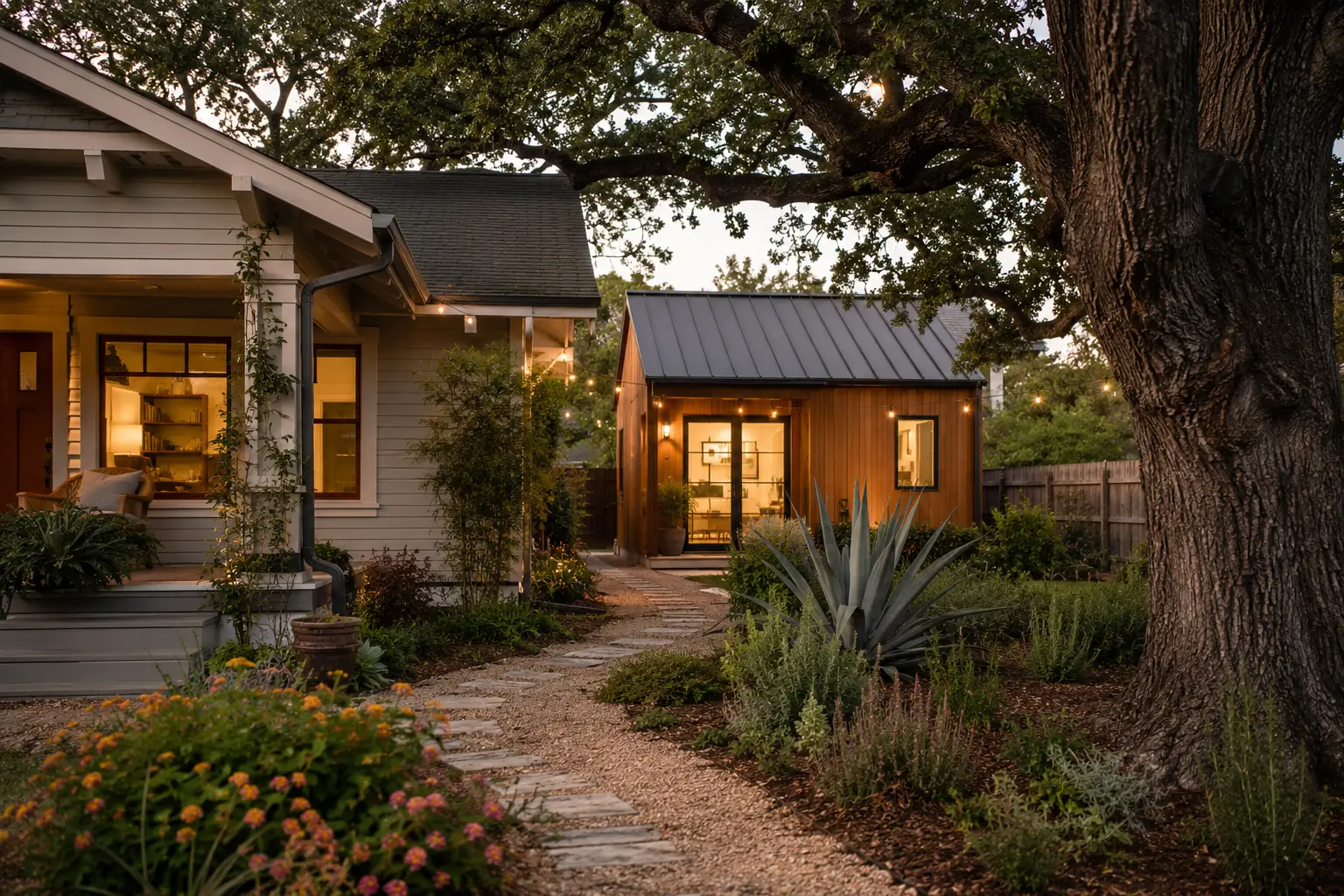
Austin ADU Rules in 2026: What HOME Lets You Build, What It Costs, and When the Math Actually Works
Austin ADU rules under the HOME initiative in 2026: what you can build, what it costs, what it rents for, and a worked investor model that shows when the math works.
2026-08-07 • 16 min read

Austin Short-Term Rental Rules in 2026: The Investor's Guide to the New Ordinance, the License Math, and the Shakeout Ahead
Austin rewrote its STR ordinance. License costs, the July 1 platform crackdown, real revenue data from four sources, and a full worked underwrite for investors.
2026-07-31 • 14 min read

Where Austin Homeowners Are Actually Moving in 2026, and How Investors Should Trade It
Travis County just posted its first population decline in over 20 years. County-by-county migration data, the $992/month carrying-cost arbitrage, and four investment theses.
2026-07-28 • 11 min read