7 Smart Strategies for Buying Austin Waterfront Luxury Homes
Austin's waterfront luxury market, spanning Lake Austin, Lake Travis, and the Colorado River corridor, demands a specialized buying approach. The best properties rarely surface on the MLS, and water rights, dock permits, and flood zone classifications shape value more than price per square foot. Seven proven strategies for buying with clarity.

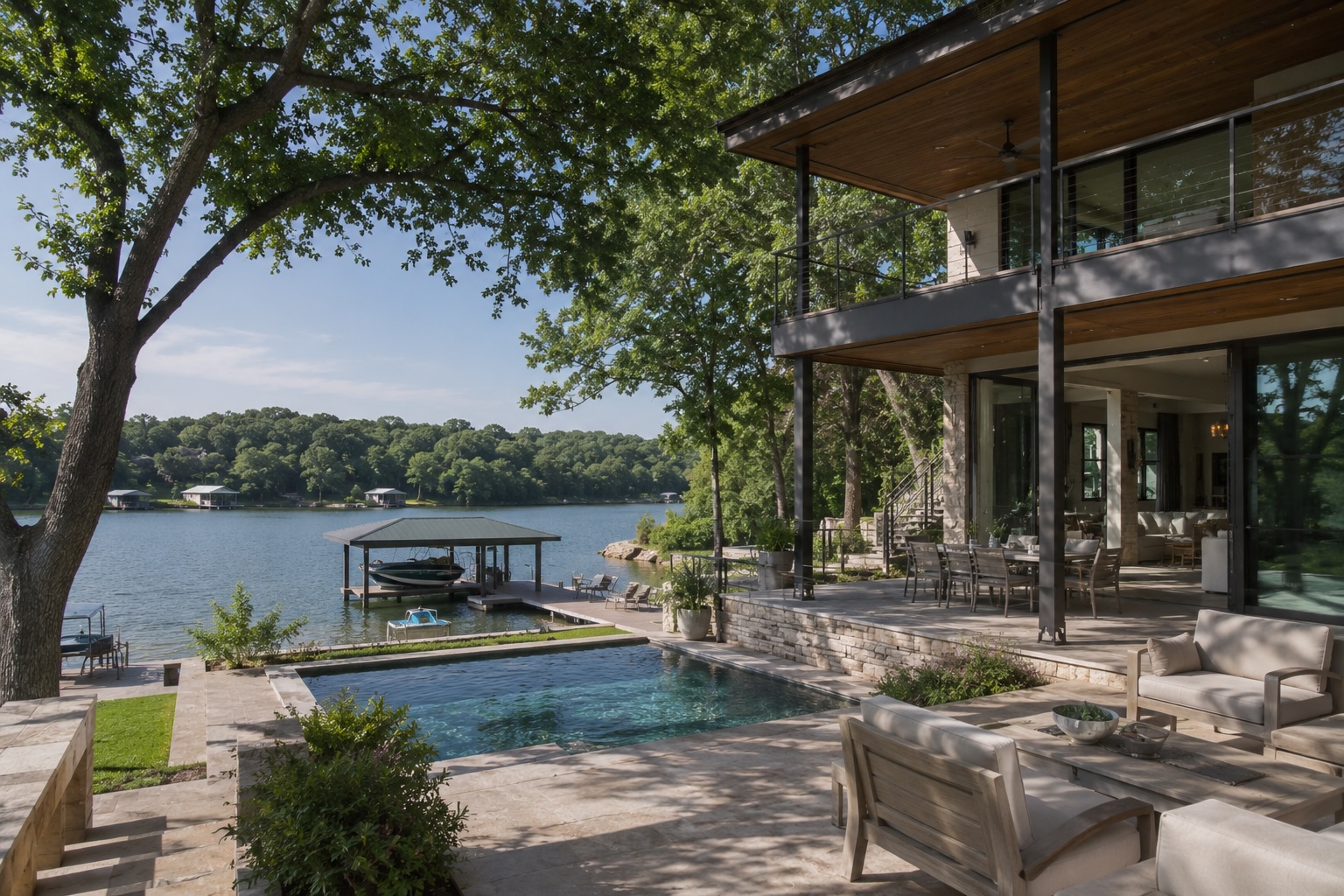
The Lake Austin corridor at sunset. Austin's most significant waterfront properties sit within a few miles of this view, and most of them trade quietly.
Austin's waterfront luxury market operates by its own rules. Properties on Lake Austin, Lake Travis, and the Colorado River corridor attract serious buyers from across the country, and the competition for the best homes is rarely visible from the outside.
Many of the most desirable waterfront properties never appear on the MLS. Those that do often receive multiple offers within days of listing. For buyers who are serious about acquiring a waterfront home in Austin, the approach matters as much as the budget.
Whether you are relocating from out of state, upgrading from an inland Austin luxury home, or acquiring a second home in the Hill Country lake corridor, these seven strategies reflect how experienced buyers navigate this segment with clarity and confidence.
Price per square foot tells only part of the story here. Water rights, dock permits, shoreline conditions, flood zone classifications, and HOA restrictions all play a significant role in long-term value. Understanding how these factors interact before you make an offer is the difference between a sound acquisition and an expensive lesson.
1. Know the Difference Between Lake Austin and Lake Travis Before You Search
The Challenge It Solves
Buyers frequently lump Lake Austin and Lake Travis together as interchangeable options. They are not. Treating them as equivalent leads to misaligned expectations, wasted search time, and in some cases, a purchase that does not deliver the lifestyle or investment profile the buyer was expecting.
The Strategy Explained
Lake Austin is a constant-level lake maintained by the Lower Colorado River Authority through the Tom Miller Dam. The water level stays stable year-round, which makes it highly predictable for dock use, shoreline maintenance, and property planning. It runs through some of Austin's most established neighborhoods, including Rob Roy and sections of West Lake Hills, and properties here are typically closer to the urban core. Our deeper read on that market is in living on Lake Austin.
Lake Travis is a highland reservoir that fluctuates considerably based on rainfall and drought conditions. LCRA publishes current water level data publicly, and the swings can be dramatic. During drought years, docks can sit well above the waterline. During wet cycles, the lake is expansive and stunning. Buyers need to understand this dynamic before evaluating any specific property, which is why we wrote a dedicated guide to buying Lake Travis waterfront property.
Beyond water levels, the two lakes have different regulatory frameworks, permitting processes for docks and waterfront structures, and distinct lifestyle profiles. Lake Austin tends to attract buyers who want proximity to Austin's urban amenities alongside waterfront living. Lake Travis draws buyers who prioritize a more resort-like setting, with communities like Steiner Ranch and the broader northwest corridor offering that experience.
Implementation Steps
- 01Request a side-by-side comparison of both lakes from your advisor before narrowing your search, covering water level history, permit requirements, and neighborhood profiles.
- 02Visit both lakes at different times of day and, if possible, during different seasons to understand how each performs in real conditions.
- 03Define your priority: urban proximity, stable water access, resort atmosphere, or investment liquidity. Let that answer guide which lake deserves your focus.
2. Prioritize Access to Off-Market Inventory
The Challenge It Solves
The most compelling waterfront properties in Austin often sell before they ever reach the MLS. Buyers who rely exclusively on public listings are working with a fraction of the available inventory, and frequently the fraction that other buyers have already passed on.
The Strategy Explained
In the luxury waterfront segment, a meaningful share of transactions happen privately. Sellers at this price point often prefer discretion. They do not want open houses, public price history, or extended days-on-market. They want a qualified buyer brought directly to them by an advisor they trust. Our guide to off-market homes in Austin explains how that inventory actually moves, and private listings in Austin covers the 2026 rules behind it.
Positioning yourself to access these opportunities requires more than browsing Zillow. It requires being known within the right advisory network as a credible, financially ready buyer. That means having financing confirmed, being clear about your criteria, and working with an advisor who has active relationships with other agents and principals in this specific market. Start with our off-market real estate overview and the private opportunities desk.
Austin has experienced sustained in-migration from California, the Northeast, and other high-cost metros, documented by U.S. Census Bureau data and widely reported across major outlets. That sustained demand puts pressure on visible inventory. The buyers who move quickly on the best waterfront properties are often the ones who knew about them before anyone else did.
Implementation Steps
- 01Get your financing in order before you start searching. Pre-approval or proof of funds is the baseline requirement for being taken seriously in off-market conversations.
- 02Work with an advisor who actively participates in luxury networks and has direct relationships with other waterfront specialists in the Austin market.
- 03Be explicit about your criteria. Advisors surface off-market opportunities for buyers whose needs they understand clearly, not for buyers with vague or shifting requirements.
3. Understand What Actually Drives Waterfront Property Value
The Challenge It Solves
Many buyers default to price per square foot as their primary valuation metric. In waterfront real estate, this approach consistently leads to poor comparisons. Two properties with identical square footage and similar list prices can have dramatically different long-term value based on factors that do not show up in a standard listing sheet.
The Strategy Explained
The primary value drivers in Austin waterfront real estate are waterfront footage, dock rights, shoreline type, and property orientation. Each of these deserves serious attention before you make an offer.
Waterfront footage directly affects usability and exclusivity. More footage typically means more privacy, more flexibility for dock placement, and stronger resale demand. Dock rights are not automatic on Texas waterways. Permits are issued by the LCRA, and not every property has an active, transferable permit. Verifying dock status before proceeding is essential.
Shoreline type matters both aesthetically and practically. A natural shoreline requires ongoing maintenance and can be subject to erosion. A bulkhead provides structure and protection but has its own maintenance and replacement costs. Neither is inherently superior, but buyers need to understand what they are acquiring.
Orientation affects how a property is used day to day. West-facing properties get afternoon sun on the water, which many buyers prefer for evening entertaining. East-facing properties offer morning light and afternoon shade. This is a lifestyle preference, but it also influences buyer demand at resale.
Waterfront footage
- What to verify
- Recorded plat and survey measurements
- Why it moves price
- Drives privacy, dock flexibility, and resale demand
Dock rights
- What to verify
- Active, transferable LCRA permit
- Why it moves price
- An unpermitted or missing dock is a six-figure variable
Shoreline type
- What to verify
- Natural bank versus engineered bulkhead
- Why it moves price
- Determines long-term maintenance and erosion exposure
Orientation
- What to verify
- Sun exposure across the day
- Why it moves price
- Shapes daily use and the depth of the resale buyer pool
Flood zone
- What to verify
- FEMA map designation
- Why it moves price
- Affects insurance premiums and lender requirements
Implementation Steps
- 01Build a waterfront-specific comparison framework with your advisor that includes footage, dock status, shoreline type, flood zone classification, and orientation for every property you evaluate.
- 02Request documentation on dock permits directly from the LCRA or ask your advisor to verify permit status before advancing to due diligence.
- 03Adjust your price analysis to weight waterfront-specific attributes rather than relying on cost-per-square-foot comparisons with non-waterfront properties.
4. Get Ahead of the Due Diligence Process
The Challenge It Solves
Standard residential due diligence is not sufficient for waterfront properties. Buyers who rely on a general home inspection and skip waterfront-specific assessments routinely discover costly problems after closing. The issues are often not visible during a standard walkthrough.
The Strategy Explained
Waterfront due diligence requires a distinct set of assessments beyond what a general inspector covers. Dock and bulkhead condition, LCRA permit verification, flood zone classification, and shoreline erosion evaluation each carry real financial implications and should be completed before you commit to a purchase.
A dock that looks functional from the surface may have structural issues below the waterline. Bulkheads can fail gradually, and replacement costs are significant. Shoreline erosion is a longer-term risk that varies considerably by property and by lake. These are not theoretical concerns. They are common findings in waterfront transactions that were not properly vetted.
LCRA permit status is particularly important. If a dock was built or modified without proper permitting, the buyer inherits that liability. Correcting unpermitted work can be expensive and time-consuming, and in some cases, structures may need to be removed entirely.
Implementation Steps
- 01Hire a marine or waterfront specialist, separate from your general home inspector, to assess the dock, bulkhead, and shoreline condition before the inspection period closes.
- 02Verify LCRA permit status on all waterfront structures. Your advisor should be able to facilitate this process, but confirm it is on the due diligence checklist from the start.
- 03Pull the FEMA flood zone designation and request flood insurance quotes before removing contingencies. The annual cost may affect your overall acquisition calculus.
5. Work With a Buyer's Representative Who Specializes in This Market
The Challenge It Solves
Generalist agents handle a wide range of transactions across many property types and price points. That breadth is a liability in the waterfront luxury segment, where valuation nuances, regulatory details, and network access require focused expertise. Buyers who work with generalists in this segment frequently pay more, miss off-market opportunities, and overlook risks that a specialist would catch early.
The Strategy Explained
A buyer's representative who specializes in Austin waterfront luxury brings three things a generalist cannot replicate: network access, negotiation experience in this specific segment, and market intelligence built from repeated transactions in comparable properties. Our market intelligence desk exists for exactly this reason.
Network access means relationships with listing agents, private sellers, and other advisors who hold waterfront inventory that is not publicly listed. This is how off-market opportunities surface. Without those relationships, you are limited to what is already visible.
Negotiation experience in this segment matters because waterfront transactions involve contingencies, permit issues, and valuation disputes that rarely come up in standard residential deals. An advisor who has navigated these situations repeatedly knows how to structure offers, manage due diligence timelines, and negotiate around complications without losing the deal. Our record is documented in past transactions.
Market intelligence means understanding not just what properties are listed, but what they actually sold for, what did not sell and why, and what conditions are driving demand in specific corridors right now. That context is what separates informed decisions from expensive guesses. See the current Austin luxury real estate market report for the latest read.
Implementation Steps
- 01Interview advisors specifically about their waterfront transaction history. Ask how many waterfront properties they have represented buyers on in the past two years, and in which specific corridors.
- 02Ask directly about their off-market access and how they surface private opportunities for clients.
- 03Confirm they hold or have pursued relevant credentials. A Certified Luxury Home Marketing Specialist (CLHMS) designation reflects a documented focus on the luxury segment. More about Taylor Sherwood.
6. Evaluate the Broader Lake Corridor, Not Just the Address
The Challenge It Solves
Buyers who fixate on a single neighborhood or a single lake often miss strong opportunities in adjacent corridors that offer comparable or superior value. The Austin waterfront market spans a wide geographic range, and understanding the full picture helps buyers make better decisions and often find better fits.
The Strategy Explained
The Austin waterfront corridor includes distinct communities with meaningfully different profiles. Understanding what each offers helps you match your priorities to the right location rather than defaulting to the most familiar name. Our communities library covers each in depth, and the best luxury neighborhoods in Austin compares them side by side.
Steiner Ranch is a master-planned community in northwest Austin with Lake Austin access and its own waterfront amenity areas. It offers a more suburban feel with strong community infrastructure, making it popular with families relocating from other metros.
Rob Roy is a gated enclave in West Lake Hills known for large lots and direct proximity to Lake Austin. It attracts buyers who want privacy, established landscaping, and quick access to downtown Austin without sacrificing waterfront access.
West Lake Hills, commonly called Westlake, is an incorporated city within Travis County with its own school district, Eanes ISD. It is consistently ranked among the top school districts in Texas, and that drives sustained buyer demand from families with school-age children. Proximity to Lake Austin is a major draw in this corridor. See our Austin ISD versus Eanes ISD comparison for the detail behind that demand.
Barton Creek is an established luxury neighborhood southwest of downtown Austin. While not directly on the major lakes, it offers proximity to Barton Creek Greenbelt and access to the broader waterfront corridor. Buyers who want luxury amenities with a slightly different lifestyle profile often find strong value here.
Implementation Steps
- 01Map out your priorities: school district quality, proximity to downtown, direct water access, privacy, or community amenities. Let those priorities guide which corridors deserve serious attention.
- 02Visit each relevant corridor in person before narrowing your search. Aerial photography and listing photos do not convey the actual feel of a neighborhood.
- 03Ask your advisor to run a comparative analysis across corridors, not just within a single neighborhood, to identify where your budget delivers the most value against your specific criteria.
7. Think Like an Investor Even If You Are Buying a Primary Residence
The Challenge It Solves
Buyers focused entirely on lifestyle preferences sometimes overlook factors that significantly affect long-term value and resale flexibility. Waterfront luxury properties are major capital commitments, and approaching them with an investor's discipline protects the acquisition regardless of your intent at purchase.
The Strategy Explained
Austin waterfront properties have historically held value well relative to the broader residential market. Supply is genuinely constrained. There is a finite amount of waterfront footage on Lake Austin and Lake Travis, and regulatory frameworks make new development on those shorelines increasingly difficult. That supply constraint supports long-term value, but it does not eliminate risk entirely. Our Austin real estate investment framework applies the same discipline to primary residences.
Resale liquidity is a meaningful consideration. Some waterfront properties are highly liquid because they appeal to a broad buyer pool: good school district, functional dock, manageable maintenance profile, and reasonable drive time to Austin's employment centers. Others are more specialized, with features that appeal to a narrower audience. Understanding where a property falls on that spectrum affects how you value it and how you plan for eventual resale. If you are thinking about the exit before the entry, how long it takes to sell a house in Austin is worth reading now rather than later.
Short-term rental regulations are another factor worth understanding before you buy. Regulations differ between Austin city limits, Travis County, and unincorporated areas around Lake Travis. If short-term rental income is part of your financial model, verify the regulatory environment for the specific property before proceeding. Our guide to Austin short-term rental rules in 2026 covers the current landscape. Rules in this area continue to evolve, and what is permissible today may be restricted in the future.
Implementation Steps
- 01Ask your advisor to assess the resale profile of any property you are seriously considering. What buyer pool would this property appeal to in five or ten years? What are the potential limitations?
- 02If short-term rental income is relevant to your acquisition, verify current regulations for the specific jurisdiction before making an offer, not after.
- 03Factor ongoing maintenance costs into your financial model. Waterfront properties carry higher maintenance requirements than inland properties, and those costs compound over time.
Your Implementation Roadmap
Buying a waterfront property in Austin is a significant decision, and the margin for error is smaller than in standard residential transactions. The buyers who navigate this market well share a few common traits: they understand the differences between submarkets, they have access to inventory that is not publicly listed, they complete thorough due diligence before committing, and they work with advisors who know this specific market.
The seven strategies above are not theoretical. They reflect how informed buyers approach this segment in practice. Start by clarifying which lake corridor aligns with your priorities. Get your financing confirmed before you start having serious conversations. Build your waterfront-specific due diligence checklist before you need it, not after you are already under contract.
If you are beginning your search or refining an existing one, the most productive first step is usually a direct conversation with an advisor who focuses on this segment. The right guidance at the outset can save considerable time and help you avoid properties that look strong on paper but carry hidden complications.
Frequently Asked Questions
Is Lake Austin or Lake Travis better for a waterfront home?
Lake Austin is a constant-level lake maintained by the LCRA, which makes dock use and shoreline planning predictable year-round, and it sits closer to central Austin. Lake Travis is a highland reservoir with significant water level swings, larger lots, and a more resort-oriented feel. Lake Austin generally suits primary-residence buyers who want urban proximity and stable water access. Lake Travis suits second-home and recreational buyers who accept seasonal volatility for views and space.
Do all Austin waterfront homes come with dock rights?
No. Dock permits on Texas waterways are issued by the Lower Colorado River Authority and are not automatic with ownership. Some properties have no permit, and some have structures that were built or modified without one. Verify active, transferable permit status before advancing to due diligence, because correcting unpermitted work can be expensive and in some cases requires removal.
What extra due diligence does a waterfront purchase require?
Beyond a standard home inspection, plan for a dock and bulkhead assessment by a marine or waterfront specialist, LCRA permit verification, FEMA flood zone designation and insurance quotes, and a shoreline erosion evaluation. Build waterfront-specific contingencies into the contract so a general inspection contingency does not become your only protection.
How do I find off-market waterfront homes in Austin?
Off-market access is relationship-driven rather than search-driven. There is no public portal of private inventory. Buyers gain access by confirming financing early, defining criteria clearly, and working with an advisor who is actively in conversation with other agents and principals holding waterfront listings.
Does flood zone classification affect what I can borrow?
It can. A higher-risk FEMA designation typically raises annual insurance premiums and may trigger lender requirements for flood coverage. Pull the designation and request quotes early in the evaluation, because the carrying cost can change your acquisition math meaningfully.
Is waterfront property in Austin a good long-term investment?
Supply is structurally constrained. Shoreline footage on Lake Austin and Lake Travis is finite, and regulatory frameworks make new shoreline development increasingly difficult, which has historically supported value. Risk still exists at the property level, so evaluate resale liquidity, maintenance load, and any permit or erosion complications before treating a purchase as a safe store of value.
Echelon Property Group works with buyers across Lake Austin, Lake Travis, and the greater Central Texas waterfront corridor. If you would like a candid assessment of current market conditions or access to properties not yet publicly listed, reach out directly. Learn more about our services.
Continue Exploring
Three places to go from here

ABOUT THE AUTHOR
Taylor Sherwood
Austin Real Estate Advisor · Echelon Property Group
Taylor Sherwood is a Certified Luxury Home Marketing Specialist (CLHMS) and top-performing Austin real estate advisor. He specializes in luxury residential properties, land development, commercial real estate, and investment property across Austin and the Texas Hill Country. With deep market expertise and a results-driven approach, Taylor helps buyers, sellers, and investors navigate Austin's most competitive real estate segments.
Related Reading
Living on Lake Austin: Why Austin's Most Exclusive Waterfront Costs What It Does
Why Lake Austin is Austin's most exclusive address: constant-level water, fixed supply, dock permit scarcity, and waterfront pricing from $4M to $35M+.
2026-07-21 • 10 min read

Buying Lake Travis Waterfront Property: 7 proven Strategies
How to buy luxury waterfront property on Lake Travis: LCRA dock permits, water levels, off-market access, and 7 strategies from Echelon Property Group.
2026-07-14 • 15 MIN READ

Builder Incentives in Austin, 2026: What the 4.99 Percent Rate Really Costs and What Is Actually Negotiable
Austin builders are spending 10 to 12 percent of the price to move new homes. The 2026 math on 4.99% buydowns, price cuts, MUD taxes and new build vs resale.
2026-09-18 • 22 min read

The Eanes Premium: What Austin Buyers Really Pay for Westlake Schools, and Whether It Holds in 2026
Eanes ISD homes sell at $563 a square foot, double the districts next door. The premium, the 2026 tax offset, and what held through the correction.
2026-09-14 • 24 min read