Build or Buy a House in Austin: An Honest Guide for Luxury Buyers
Should you build or buy a house in Austin? Compare cost, timeline and risk, plus SOS, tree, septic and permit rules and a lot due diligence checklist.
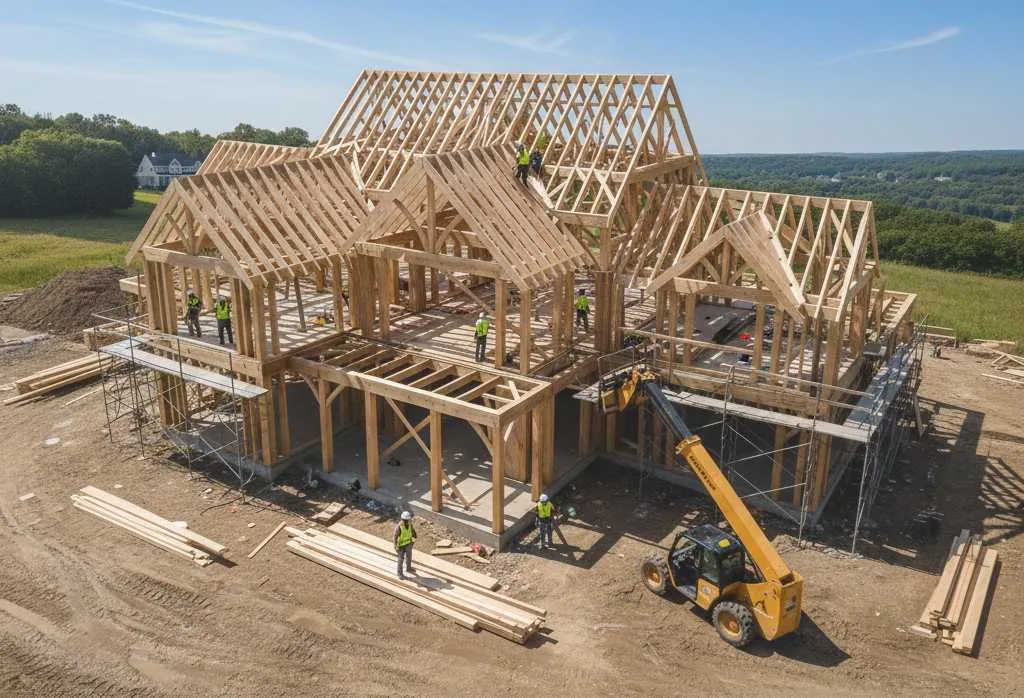
Short answer: Whether to build or buy a house in Austin comes down to time, certainty and the lot. A contractor-built custom home averaged 11.7 months from permit to completion nationally in 2025, per NAHB's analysis of Census data, before lot search and design. Buying wins on speed and certainty. Building wins when the lot is right and the design truly matters.
I get this question from buyers almost every week. Many of them have toured a dozen homes in Westlake Hills, Barton Creek or Tarrytown and still feel they are compromising. A custom build sounds like the answer. Sometimes it is. This guide is the framework I walk clients through so the decision is made with real numbers and real rules, not a rendering.
Key takeaways
- Building takes longer than most expect. Contractor-built homes averaged 11.7 months from permit to completion in 2025, and homes over 6,000 square feet averaged 16.3 months, per NAHB and Census data.
- Construction is the biggest line. Construction was 64.4% of the average new home's price in NAHB's 2024 survey, and the finished lot was 13.7%. Those are national averages, not Austin luxury figures.
- Water rules can cap your footprint. The SOS Ordinance limits impervious cover to 15% of net site area in the Barton Springs recharge zone, per a City of Austin staff report, though many older platted single-family lots are exempt.
- Big trees are regulated. In Austin, trees 19 inches in diameter and up need a permit to remove, and heritage species at 24 inches and up need a variance, per the City Arborist.
- Septic needs land. Travis County requires at least one acre per home served by septic, even with public water, under County Code Chapter 448.
- Jurisdiction decides the rulebook. City of Austin, its ETJ, Travis County and independent cities like West Lake Hills, Rollingwood, Lakeway and Bee Cave each run their own permitting.
Should you build or buy a house in Austin?
Buy if you need to move soon, want a known price, or love an existing home's setting. Build if you have found a lot you cannot replicate, have a clear design brief that no existing home meets, and can carry a long, uncertain schedule and budget without strain. Most of my clients land on buying.
That is not a sales preference. A finished home in an established luxury neighborhood comes with a known lot, mature trees, settled drainage and a price you can appraise today. A build trades all of that for control.
Build vs buy in Austin: how do they compare?
Cost certainty
- Buy an existing home
- High: price known at contract
- Build on a lot
- Lower: bids, change orders and site surprises
- Source or basis
- NAHB cost breakdown; qualitative
Timeline
- Buy an existing home
- Weeks, set by the closing date in your contract
- Build on a lot
- Lot search and design, then about 11.7 months permit to completion on average
- Source or basis
- NAHB / Census
Customization
- Buy an existing home
- Limited to renovation
- Build on a lot
- Full, within code, HOA and deed limits
- Source or basis
- Qualitative
Site risk
- Buy an existing home
- Visible and inspectable
- Build on a lot
- Rock, slope, trees, water rules, utilities
- Source or basis
- City, TCEQ and County rules below
Financing
- Buy an existing home
- Standard purchase mortgage
- Build on a lot
- Lot loan, then construction loan with draws, then permanent loan
- Source or basis
- Qualitative; confirm with your lender
Carrying cost
- Buy an existing home
- Starts at closing, with a home to live in
- Build on a lot
- Land taxes, insurance and interest before move-in
- Source or basis
- Qualitative
How long does it take to build a house in Austin?
Plan on the lot search, design and engineering, permitting, and then construction. Nationally, contractor-built homes averaged 11.7 months from permit to completion in 2025, and homes of 4,000 to 4,999 square feet averaged 10.7 months, per NAHB's Census analysis. Design and approvals come before that clock starts.
What does permitting look like in Austin and nearby cities?
The City of Austin's Development Services Department targets 10 business days per review cycle for new construction and 7 business days for each update, effective July 1, 2026, per DSD Residential Plan Review. Those times are per cycle. A custom home often needs more than one round of comments.
Other cities set their own pace. West Lake Hills says the first round of comments can take up to four weeks after an application is complete, then repeats until every comment is resolved, per the City of West Lake Hills. In unincorporated Travis County, new homes need a County development permit, and builder projects require at least three third-party inspections, per Travis County TNR.
What does it cost to build a custom home in Austin?
The total is land plus design and engineering, site work, hard construction costs, soft costs, contingency, carrying costs and financing. I do not quote a single Austin per-square-foot figure here because luxury builds vary too widely by site and finish. For context, NAHB's 2024 national average construction cost was about $162 per square foot, per its cost survey.
That national home averaged 2,647 square feet, so treat it as a floor for comparison, not an Austin estimate. Our deeper cost to build a house in Austin article walks through local pricing tiers.
What goes into the full cost of a build?
- 01Land. The lot price, closing costs and any demolition on a teardown.
- 02Design and engineering. Architect, structural and civil engineer, surveyor and, on hillsides, a geotechnical engineer.
- 03Site work. Clearing, excavation, rock removal, retaining walls, driveway and utility runs. In NAHB's survey, foundations and excavation alone were 10.5% of construction cost.
- 04Hard costs. The house itself: framing, systems, finishes.
- 05Soft costs. Permits, fees, insurance, utility connections and professional fees.
- 06Contingency. A reserve for change orders and site surprises. Agree on it with your builder and lender in writing.
- 07Carrying costs and financing. Property taxes and insurance on the lot, plus interest on construction draws until you move in.
Construction loans usually fund in draws as work is inspected, and many convert to a permanent mortgage. Terms vary widely, so talk with a lender before you write a lot offer.
What Austin site factors change the math?
Austin's west side sits on Hill Country limestone, steep slopes and the Edwards Aquifer. Those conditions drive excavation cost, how much of a lot you can cover, where you can build and which agencies review your plans. Two lots at the same price can support very different houses.
How do the SOS Ordinance and Edwards Aquifer rules affect a lot?
In the Barton Springs Zone, the SOS Ordinance caps impervious cover at 15% of net site area in the recharge zone, 20% in the Barton Creek contributing zone and 25% elsewhere in the contributing zone, per a City of Austin staff report. A single-family lot that existed on November 1, 1991 is generally exempt from those caps, per the codified ordinance. Where the ordinance applies, no home may be built in the critical water quality zone, which runs at least 400 feet from the centerline of Barton Creek's main channel.
The state layers on top. TCEQ's Edwards Aquifer rules generally do not require an individual plan for a single-family home if the lot is over five acres, impervious cover stays at or under 20%, or the home is in a community with an approved plan, per TCEQ.
What about slopes, trees and floodplains?
In many Austin watersheds, city code bars a building on slopes steeper than 25% and limits driveways on slopes over 15%, per a Watershed Protection presentation. Protected and heritage trees can fix where the house goes, per the City Arborist.
Austin now regulates floodplain development using the larger FEMA 500-year floodplain while Atlas 14 maps are updated, per Watershed Protection. Where building is allowed, foundation slabs must sit at least two feet above the 100-year floodplain, per the city's floodplain regulations.
City, ETJ or county: who permits a home in western Travis County?
It depends on the address. Inside Austin, DSD reviews. In the ETJ and unincorporated areas, Travis County issues development permits and some city rules can still apply. Lost Creek, for example, left Austin's city limits on September 9, 2024 and moved into the ETJ, per the City of Austin and a notice to residents.
State law since September 1, 2023 also lets owners petition out of Austin's ETJ under SB 2038, per the City of Austin. West Lake Hills, Rollingwood, Lakeway and Bee Cave are separate cities with their own codes.
Which utility, septic and fire rules apply?
Confirm water, wastewater and electric providers before you buy. Where there is no sewer, Travis County requires at least one acre per home on septic, per Chapter 448. Near Lake Travis, LCRA permits septic within 2,000 feet of the lake and inside Lakeway's city limits, per LCRA, and its Highland Lakes Watershed Ordinance can require a development permit above 10,000 square feet of impervious cover or one acre of disturbance.
Some emergency services districts require fire sprinklers. Travis County ESD 9, the Westlake Fire Department, requires them in all new residences in its unincorporated area, per its permit notice. Wooded lots should also be checked for wildfire risk.
Do HOA, ACC and deed restrictions matter?
Yes. Many Barton Creek, Lake Travis and Westlake area subdivisions have an architectural control committee and recorded restrictions on setbacks, height, materials and minimum size. Read them before your option period ends, and confirm review timelines with the ACC.
When does buying win, and when does building win?
Buying usually wins when you need certainty, a known budget or a near-term move. Building usually wins when the lot is irreplaceable, your program is unusual, and you have the time, liquidity and appetite to manage a long project. Neither path is guaranteed to cost less.
Buying tends to win when:
- 01You need to move in on a predictable date.
- 02You value mature landscaping and established streets.
- 03You want financing and appraisal to be simple.
Building tends to win when:
- 01You found a view, water or acreage lot that rarely trades.
- 02Your needs, such as a guest house, studio or accessibility, are not met by the existing homes for sale.
- 03You can absorb cost overruns without stress.
Is a teardown a good middle path?
A teardown can be. In established areas like Tarrytown or Westlake Hills, an older home may sit on a lot with existing utilities and a known location. But demolition still needs permits, trees and impervious cover rules still apply, and in Austin a replacement home in a floodplain must meet elevation rules. Price the lot, not the house.
What should you check before buying a lot in Austin?
Use your option period to answer whether your house can be built, for what cost, and on what timeline. If you cannot answer those three questions, extend the option period or walk away. Our guide to buying land in the Texas Hill Country covers rural tracts in more depth.
Pre-purchase lot due diligence checklist
- 01Survey with boundaries, easements, topography and a tree survey.
- 02Geotechnical report on rock, soils and foundation design.
- 03Title commitment and restrictions: plat notes, deed restrictions, HOA and ACC rules, setbacks.
- 04Jurisdiction check: city, ETJ or county, plus ESD and LCRA.
- 05Environmental screen: recharge or contributing zone, SOS status, critical water quality zone, floodplain.
- 06Utility confirmation: water, sewer or septic feasibility, electric, and connection costs in writing.
- 07Professional review by a civil engineer or land-use attorney on buildable area and impervious cover.
- 08Builder and architect input on a rough budget for your program on this site.
- 09An option period long enough to finish the steps above.
Frequently Asked Questions
Is it cheaper to build or buy a house in Austin?
Not reliably. Building adds land, site work, design, permits, carrying costs and financing on top of construction, which was 64.4% of the average new home's price nationally in NAHB's 2024 survey. Austin hillside lots can add rock and slope costs. Compare a real bid on a specific lot against comparable sales.
How long does it take to build a custom home in Austin?
Expect design, approvals and construction to stack. Nationally, contractor-built homes averaged 11.7 months from permit to completion in 2025, and homes over 6,000 square feet averaged 16.3 months, per NAHB's analysis of Census data. Lot search and design come before that, and Austin permit reviews run in cycles.
Can I build on a lot in the Barton Springs Zone?
Often, yes, with limits. The SOS Ordinance caps impervious cover at 15% to 25% of net site area depending on the zone, but single-family lots that existed on November 1, 1991 are generally exempt. TCEQ Edwards Aquifer rules and critical water quality zones still apply. Have an engineer confirm before you close.
Do I need a permit to remove a tree on my Austin lot?
Inside Austin city limits, trees 19 inches in diameter or larger measured 4.5 feet above ground are protected and need a permit. Heritage species such as oaks and pecans at 24 inches or larger need a variance, and those 30 inches or larger go through a public process. Other cities have their own tree rules.
What is the minimum lot size for septic in Travis County?
In Travis County's septic jurisdiction, the minimum is one acre for each home served by an on-site sewage facility, whether or not the lot has public water. Some older lots are exempt under state rules. Near Lake Travis and in Lakeway, LCRA handles septic permitting instead, so confirm the right agency first.
Who issues building permits in West Lake Hills, Rollingwood and Lakeway?
Each is its own city with its own building code, tree rules and review process, so the City of Austin does not issue their permits. West Lake Hills says first comments can take up to four weeks. Unincorporated areas go through Travis County, and ESDs and LCRA may add reviews.
What should I check before buying a lot to build a house?
Get a survey with topography and trees, a geotechnical report, title and deed restrictions, a jurisdiction and utility check, and an engineer's or land-use attorney's view on buildable area. Ask a builder for a rough budget. Set an option period long enough to finish all of it.
Sources
- 01National Association of Home Builders, *Cost of Constructing a Home 2024* (January 2025): https://www.nahb.org/-/media/NAHB/news-and-economics/docs/housing-economics-plus/special-studies/2025/special-study-cost-of-constructing-a-home-2024-january-2025.pdf
- 02NAHB Eye On Housing, "Single-Family Home Construction Time Declines in 2025" (Sept. 8, 2026), based on the Census Bureau Survey of Construction: https://eyeonhousing.org/2026/09/single-family-home-construction-time-declines-in-2025/
- 03U.S. Census Bureau, New Residential Construction, Length of Time: https://www.census.gov/construction/nrc/data/time.html
- 04City of Austin Development Services, Residential Plan Review (review times effective July 1, 2026): https://www.austintexas.gov/development-services/residential-plan-review
- 05City of Austin Development Services, City Arborist: https://www.austintexas.gov/development-services/city-arborist
- 06City of Austin, Staff Report on Barton Creek Interceptor, Resolution No. 20240530-116 (SOS impervious cover limits): https://services.austintexas.gov/edims/document.cfm?id=440975
- 07City of Austin, Ordinance No. 920903-D codifying the SOS Ordinance (existing lot exemption, critical water quality zone): https://services.austintexas.gov/edims/document.cfm?id=56558
- 08City of Austin Watershed Protection, Environmental Code and Common Variances (slope rules): https://services.austintexas.gov/edims/document.cfm?id=366467
- 09City of Austin Watershed Protection, Floodplain Management (Atlas 14): https://www.austintexas.gov/watershed-protection/programs/floodplain-management
- 10City of Austin Watershed Protection, Floodplain Regulations: https://www.austintexas.gov/watershed-protection/floodplain-regulations
- 11Texas Commission on Environmental Quality, Edwards Aquifer: Private Residences: https://www.tceq.texas.gov/permitting/eapp/edwards-aquifer-private-residences
- 12Travis County Code Chapter 448, Rules for On-Site Sewage Facilities: https://www.traviscountytx.gov/images/commissioners_court/Doc/county-code/subtitle19/Ch448_Rules_On-Site_Sewage_Facilities.pdf
- 13Travis County TNR, Single Family Home Permit: https://www.traviscountytx.gov/tnr/development-services/apply-for-a-permit/single-family-home-manufactured-home-permit
- 14City of West Lake Hills, Building and Development: https://www.westlakehills.gov/95/Building-Development
- 15City of Austin, Annexation and Disannexation Address Ranges (Lost Creek): https://www.austintexas.gov/technology/annexation-disannexation-address-ranges
- 16City of Austin, notice to Lost Creek Limited District residents on HB 3053 disannexation: https://www.westlakefd.org/wp-content/uploads/2024/08/LCHB_3053_ResidentLetter.pdf
- 17City of Austin, Petition for an ETJ Release (SB 2038): https://www.austintexas.gov/services/petition-extraterritorial-jurisdiction-etj-release
- 18LCRA, On-Site Sewage Facilities Program: https://www.lcra.org/water/permits-contracts/on-site-sewage/
- 19LCRA, Highland Lakes Watershed Ordinance: https://www.lcra.org/water/permits-contracts/watershed-management-ordinance/
- 20Travis County ESD No. 9 (Westlake Fire Department), Residential Fire Sprinkler Requirement: https://www.westlakefd.org/wp-content/uploads/2026/03/ESD-9-Residential-Fire-Sprinkler-Requirement.pdf
Thinking about building or buying in Austin?
If you are weighing a lot against a finished home, I am happy to walk the site with you, pull the restrictions and help you pressure-test the numbers with your builder, engineer and lender. There is no pressure and no obligation. Start a private conversation.
About the author: Taylor Sherwood, REALTOR®, CLHMS, ABR, GRI, is the founder of Echelon Property Group, brokered by Engel & Völkers Austin, licensed in Texas and Tennessee. Taylor is not an engineer, attorney or lender, and this article is general information, not legal, engineering or financial advice. Confirm site-specific rules with the agency that has jurisdiction.
*Echelon Property Group brokered by Engel & Völkers Austin | 3700 Bee Caves Rd STE 102, Austin, TX 78746 | Equal Housing Opportunity*
Continue Exploring
Three places to go from here

ABOUT THE AUTHOR
Taylor Sherwood
Austin Real Estate Advisor · Echelon Property Group
Taylor Sherwood is a Certified Luxury Home Marketing Specialist (CLHMS) and top-performing Austin real estate advisor. He specializes in luxury residential properties, land development, commercial real estate, and investment property across Austin and the Texas Hill Country. With deep market expertise and a results-driven approach, Taylor helps buyers, sellers, and investors navigate Austin's most competitive real estate segments.
Related Reading
What It Really Costs to Build a Custom Home in Austin in 2026 (And When You Shouldn't)
What it actually costs to build a custom home in Austin in 2026: per-square-foot tiers, the full cost stack, tariffs, permits, and when buying beats building.
2026-08-15 • 16 min read

Buying Land in the Texas Hill Country: The 2026 Guide to Wells, Septic, Ag Exemptions, and Everything the Per-Acre Price Hides
What Hill Country acreage really costs in 2026: per-acre prices, well drilling, septic, power, ag exemptions, and the rollback tax rules most buyers get wrong.
2026-07-30 • 12 min read
New Construction in Austin: What Wins
What actually defines new construction luxury in Austin today, how site selection, architectural coherence, builder credibility, and micro-market positioning separate homes that hold value from those that simply photograph well.
2026-05-03 • 9 min read
Austin Wildfire Risk and Luxury Homes: What to Check Before You Buy or Remodel
Check Austin wildfire risk on any address: WUI code zones, the 2026 wildfire plan, lessons from Steiner Ranch, and a buyer and owner checklist.
2026-11-16 • 12 min read