New Construction in Austin: What Wins
What actually defines new construction luxury in Austin today, how site selection, architectural coherence, builder credibility, and micro-market positioning separate homes that hold value from those that simply photograph well.
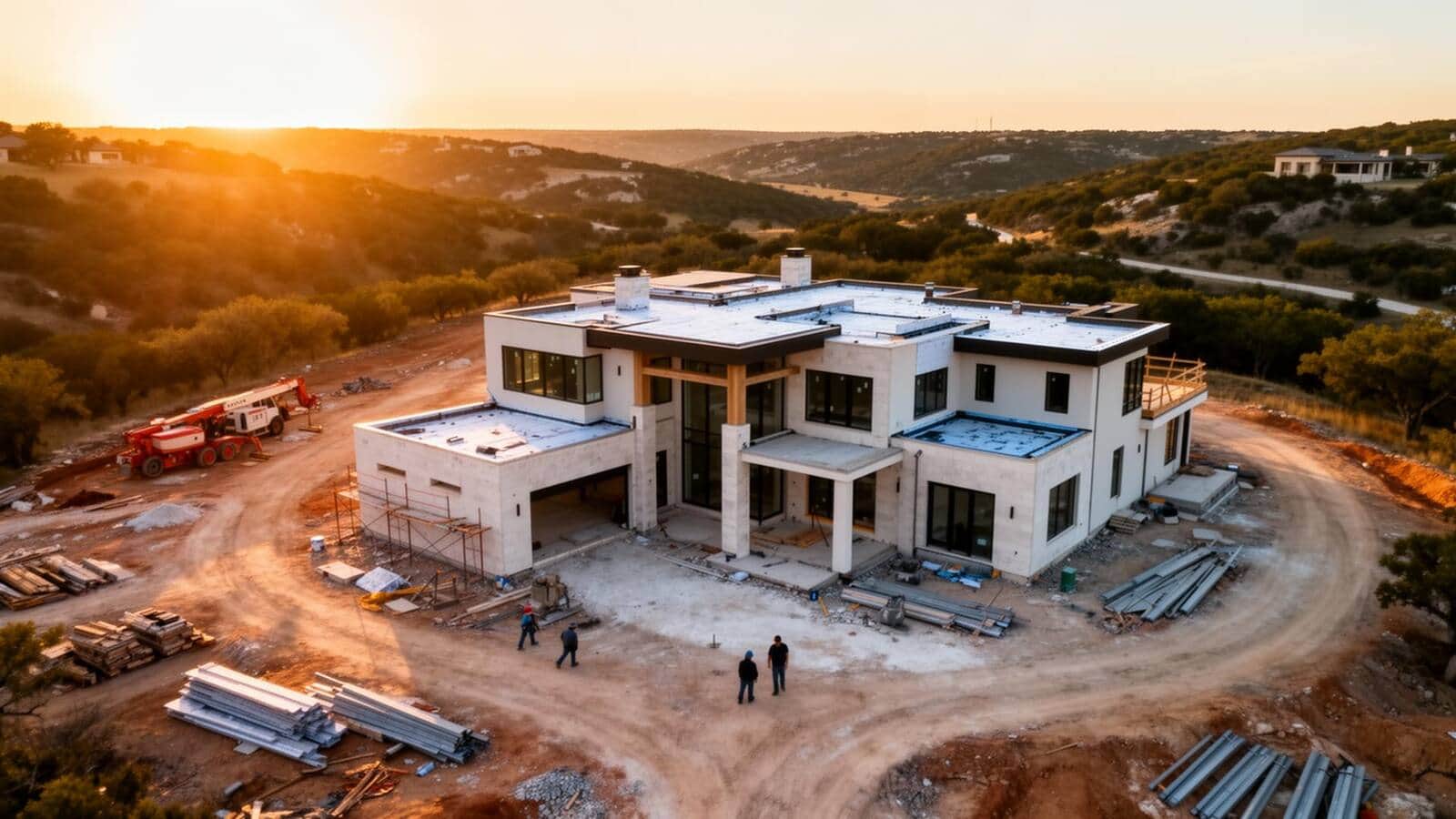
A glass-walled spec home with a pool and downtown views can command immediate attention. In new construction luxury Austin, that first impression matters, but it is rarely the whole story. The homes that hold status and value over time are not just photogenic. They are well-positioned, carefully executed, and aligned with how affluent buyers actually live.
That distinction matters more now than it did a few years ago. Luxury buyers in this segment are more selective, more informed, and less interested in paying a premium simply because a property is brand new. They want architecture with presence, but they also want privacy, efficient floor plans, quality materials, and a location that still reads as prime five years from now.
What defines new construction luxury Austin now
The top tier of new construction has become more nuanced. It is no longer enough to offer oversized square footage, imported finishes, and a dramatic great room. Buyers at the upper end are evaluating the full package, lot quality, street appeal, natural light, ceiling height, acoustics, wellness features, guest separation, and the credibility of the builder and design team.
In Austin, this is especially relevant because luxury new construction is not a single market. A modern build in Tarrytown competes on a different set of strengths than a hillside estate in Westlake or a design-forward home in Barton Creek. In some neighborhoods, walkability and social proximity drive premium pricing. In others, gated privacy, topography, and protected views are the real currency.
That is why broad pricing averages often miss the mark. Sophisticated buyers are not just comparing by square foot. They are looking at replacement difficulty. Can this lot, this orientation, and this level of finish be reproduced easily? If the answer is no, the property tends to separate itself. Our Austin luxury market trends breakdown shows where that scarcity is concentrating.
Why some new luxury homes outperform others
At a glance, many high-end new builds can appear similar. White oak floors, slab stone, steel-framed glass, integrated appliances, resort-style outdoor space, these features are common in the category. Yet some homes trade quickly and strongly, while others linger or require price adjustments.
The difference usually comes down to a few fundamentals.
First is site selection. A remarkable house on a compromised lot often underperforms a slightly less dramatic house on a premier street. Privacy, topography, tree coverage, view corridors, and proximity to neighborhood anchors all influence long-term desirability. Our guide to the best luxury neighborhoods in Austin maps where those fundamentals are strongest.
Second is architectural coherence. Luxury buyers tend to recognize when a home was designed as a fully considered product versus assembled from trend-driven choices. Clean sight lines, proportional rooms, intuitive transitions, and restrained material palettes age better than homes chasing the latest aesthetic.
Third is usability. A buyer may admire a floating staircase or a two-story wall of glass, but if the primary suite lacks privacy, the kitchen is underscaled, or the outdoor living area gets punishing afternoon sun, the emotional high fades quickly. In this segment, daily livability matters as much as visual drama.
Finally, there is builder reputation. In luxury real estate, execution risk is real. Finish level can be photographed. Build quality usually cannot. Buyers who understand the market pay close attention to who built the home, how their previous projects have performed, and whether details behind the walls match the presentation up front.
New construction luxury Austin by micro-market
The phrase new construction luxury Austin covers several distinct buying environments, each with its own pricing logic.
Central legacy neighborhoods
In areas such as Tarrytown, Pemberton, and parts of Bouldin Creek, new construction commands a premium when it delivers rarity. These neighborhoods are constrained, highly established, and difficult to replicate. Buyers are often paying as much for placement as for the structure itself. See our deep dive on Tarrytown vs Bryker Woods for how block-level positioning drives pricing here.
Here, the best new homes respect the neighborhood while still feeling current. Oversized or overly commercial design can meet resistance, while homes that balance modern livability with a sense of permanence often perform best. In these enclaves, walkability, tree canopy, and a street's social status can matter as much as the interior finish package.
Westlake and hillside settings
In Westlake and surrounding elevated terrain, the value equation shifts toward privacy, school access, larger lots, and view orientation. New construction can be compelling here because buyers want modern systems and amenities without sacrificing retreat-like setting. Rollingwood offers a similar profile in a more intimate footprint.
But hillside product carries trade-offs. A dramatic site can create exceptional views, yet also introduce layout compromises, steeper driveways, or more limited usable yard space. The best homes solve these constraints elegantly rather than forcing architecture onto a lot that does not naturally support it.
Gated golf and resort-oriented communities
In Barton Creek and other gated luxury environments like Spanish Oaks and Rob Roy, new construction competes on turnkey ease, lot size, club proximity, and a polished lock-and-leave feel for certain buyers. The appeal here is less about urban energy and more about controlled environment and lifestyle continuity.
That said, not every new home in these settings carries equal upside. Some trade at a premium because they combine updated design with exceptional positioning inside the community. Others are simply newer than the resale inventory. That is not the same thing.
What sophisticated buyers are screening for
At the top of the market, buyers are making faster judgments, but not shallower ones. They tend to screen new construction through a strategic lens.
One major filter is whether the home feels distinct enough to justify its ask. If a property could be substituted by several others in the same price band, pricing power weakens. Distinction can come from architecture, lot quality, interior restraint, or a layout that solves for real life in a polished way.
Another filter is privacy. This is often underestimated in listing presentation. Buyers in the $2M and up range are not just buying beauty. They are buying control, control over sight lines, guest experience, security, and how exposed daily life feels from the street or neighboring homes. Our guide to the best Austin enclaves for privacy maps where that control is most achievable.
They are also evaluating future buyer depth. Even when purchasing a long-term residence, experienced buyers think ahead. A home with broad appeal inside its segment tends to be a stronger asset than one built around highly personal or overly theatrical choices. This is the same principle that drives wealth building through luxury real estate, selectivity over spectacle.
The hidden risk in high-end spec construction
Spec construction can create excellent opportunities. It can also produce expensive mistakes if the property was built for visual impact rather than lasting quality.
The risk is not always obvious during a showing. Some homes present beautifully but reveal cost-saving decisions in insulation, window quality, drainage planning, cabinet construction, or exterior material durability. Others are overbuilt for their immediate block, which can narrow resale liquidity even if the home itself is impressive.
This is where advisory representation matters. The right lens is not simply, *Is this a beautiful home?* It is, *Does this home deserve its price relative to the lot, the submarket, the builder, and the likely future buyer pool?* Those are different questions.
For clients evaluating private inventory or newly completed product, Echelon Property Group approaches that decision with a market intelligence framework, not a tour-first mindset. That distinction can materially change what gets shortlisted and what gets avoided.
Timing, leverage, and off-market access
One of the persistent myths in luxury new construction is that the best properties are always obvious and publicly available. Often, they are not. Some of the strongest opportunities trade quietly through builder relationships, private networks, or limited-market exposure before becoming broadly visible. We cover this dynamic in why buyers never see the best homes and in our overview of off-market real estate in Austin.
This matters because timing affects leverage. A finished home that has sat too long can create negotiation opportunity, but only if the underlying asset is still strong. A pre-completion opportunity can offer customization or favorable terms, but only if the builder is credible and the basis makes sense. There is no universal rule. It depends on the quality of the project, the submarket, and how much competition exists for that specific type of product.
Well-advised buyers do not chase freshness alone. They look for asymmetry, situations where the market has not fully priced a home's strengths, or where private access creates an advantage before demand becomes obvious.
What holds value when the market gets selective
When the luxury market tightens, the homes that continue to command attention usually share a few traits. They sit in proven locations. They offer privacy that cannot be manufactured later. They avoid gimmicks. And they feel expensive in the ways that matter after the showing ends.
That last point is worth sitting with. In premium real estate, quality is not just visual. It is sensory and structural. It is how the home sits on the lot, how quiet it feels inside, how natural the light reads throughout the day, and whether the layout supports both entertaining and ordinary mornings without friction.
A new luxury home should feel current on day one. The better ones still feel relevant years later. If you are evaluating this market seriously, the smartest move is to focus less on what is newly built and more on what is genuinely difficult to replace.
Continue Exploring
Three places to go from here

ABOUT THE AUTHOR
Taylor Sherwood
Austin Real Estate Advisor · Echelon Property Group
Taylor Sherwood is a Certified Luxury Home Marketing Specialist (CLHMS) and top-performing Austin real estate advisor. He specializes in luxury residential properties, land development, commercial real estate, and investment property across Austin and the Texas Hill Country. With deep market expertise and a results-driven approach, Taylor helps buyers, sellers, and investors navigate Austin's most competitive real estate segments.
Related Reading

Cost Segregation and 100% Bonus Depreciation for Austin Investors: The 2026 Playbook
100% bonus depreciation is permanent. What a cost segregation study does on a $1M Austin STR and an 8-unit, who can use the loss, and what recapture costs.
2026-08-26 • 22 min read
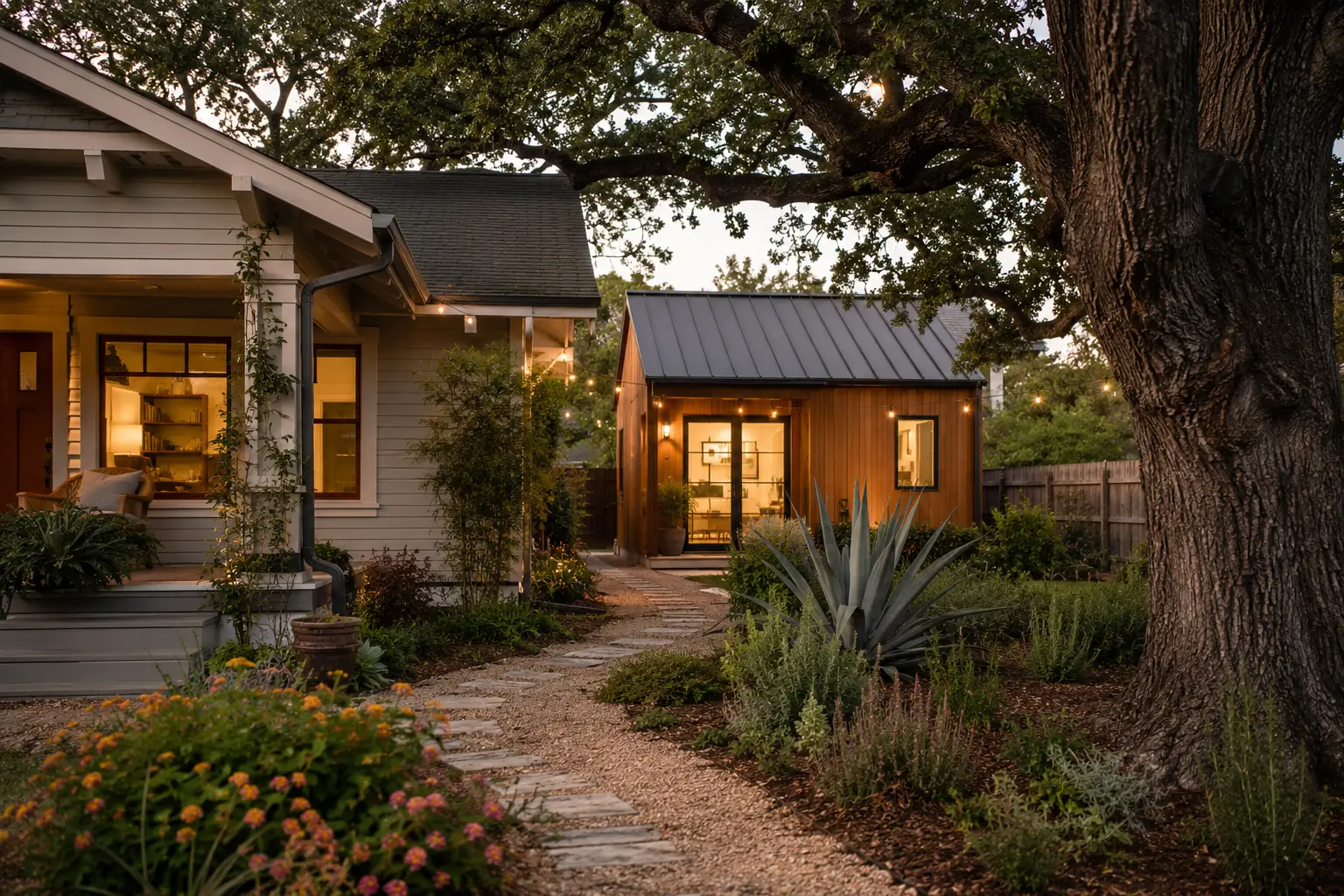
Austin ADU Rules in 2026: What HOME Lets You Build, What It Costs, and When the Math Actually Works
Austin ADU rules under the HOME initiative in 2026: what you can build, what it costs, what it rents for, and a worked investor model that shows when the math works.
2026-08-07 • 16 min read

Austin Short-Term Rental Rules in 2026: The Investor's Guide to the New Ordinance, the License Math, and the Shakeout Ahead
Austin rewrote its STR ordinance. License costs, the July 1 platform crackdown, real revenue data from four sources, and a full worked underwrite for investors.
2026-07-31 • 14 min read

Where Austin Homeowners Are Actually Moving in 2026, and How Investors Should Trade It
Travis County just posted its first population decline in over 20 years. County-by-county migration data, the $992/month carrying-cost arbitrage, and four investment theses.
2026-07-28 • 11 min read