Austin Population Growth: What's Driving It and What It Means for Real Estate
Austin population growth has made the metro one of the fastest-expanding regions in the U.S., driven by corporate relocations, high-income migration, and structural demand that continues reshaping land values, neighborhood dynamics, and investment opportunities across submarkets from Westlake to the Hill Country.

Sustained in-migration continues to reshape Austin's submarkets, land values, and investment landscape.
Austin has been among the fastest-growing metros in the United States for well over a decade. That's not a talking point, it's a structural reality that shapes land values, neighborhood dynamics, infrastructure investment, and long-term real estate strategy across the entire region.
Understanding Austin population growth isn't about celebrating a headline number. It's about using demographic data the way a disciplined investor or informed buyer would: as one layer of analysis that helps explain why certain submarkets hold value, where development pressure is building, and which opportunities are likely to compound over time. Our ongoing Austin market intelligence briefings and quarterly Austin luxury market report track how these forces move quarter over quarter.
Whether you're evaluating a home purchase in Westlake Hills, considering land in the Hill Country, or building a real estate portfolio across multiple Austin submarkets, the demographic forces at work here are directly relevant to your decision. This article breaks down what's driving Austin's growth, who's actually arriving, and what it means across residential, land, and commercial real estate. For a broader relocation frame, our moving to Austin guide covers the practical side.
The Numbers Behind Austin's Growth, and Why They Hold Up
The Austin-Round Rock-Georgetown Metropolitan Statistical Area has grown substantially over the past two decades. According to U.S. Census Bureau data, the metro is now home to well over 2 million residents, representing one of the most sustained growth trajectories of any major metro in the Sun Belt.
An important distinction often gets lost in coverage of Austin's growth: the difference between the city of Austin proper and the broader metro. The city itself has grown considerably, but the more significant story is metro-wide expansion. Cities like Georgetown, Cedar Park, Pflugerville, Kyle, and Buda have absorbed enormous population volume, and that geographic distribution of growth matters for understanding where development pressure is actually concentrated. Our best Austin suburbs 2026 breakdown maps that dispersion.
Georgetown, for example, has ranked among the fastest-growing cities in the United States in recent Census releases. Kyle and Buda in Hays County represent the high-volume, more affordable end of the growth story, attracting buyers priced out of closer-in markets but still seeking access to Austin's employment base.
What makes Austin's growth more durable than other Sun Belt metros that have seen boom-bust cycles? Several structural factors contribute. Texas has no state income tax, which is a meaningful financial consideration for high-income households and corporations relocating from California, New York, or Illinois. UT Austin creates a consistent pipeline of talent that feeds local employers and retains young professionals who might otherwise leave after graduation. Austin functions as the state capital, providing a stable government employment base that doesn't fluctuate with private sector cycles. And the city's economic base has diversified significantly across technology, healthcare, education, government, and a growing manufacturing and semiconductor sector.
That diversification matters. Single-industry metros are vulnerable when their anchor sector contracts. Austin's layered economy has historically provided resilience, which is one reason population growth here has proven more sustained than in metros that grew rapidly on a narrower foundation.
Who Is Actually Moving to Austin
Austin's in-migration profile is not uniform, and understanding who is arriving matters as much as how many are arriving. The composition of in-migrants shapes housing demand by price point, location preference, and property type.
Tech workers and remote professionals from California, New York, and the Pacific Northwest represent a significant share of recent arrivals. Many relocated during the remote work expansion of the early 2020s and have remained, either because their employers formalized Austin as a hub or because they built professional networks and community ties here. Our moving from New York to Austin primer covers the practical mechanics for that specific corridor. This cohort skews toward higher household incomes and tends to concentrate demand in close-in neighborhoods and the North Austin corridor near the Domain.
Corporate relocations have brought entire teams rather than individual professionals. Major employers in semiconductor manufacturing, financial services, and enterprise technology have established or expanded Austin operations in recent years. When a company relocates a significant portion of its workforce, it creates concentrated, predictable demand in specific corridors. The 183 Tech Corridor, the Domain area, and North Austin have benefited most visibly from this dynamic. Investors underwriting income assets in those corridors should also review our Austin commercial real estate overview and the Austin multifamily report 2026.
Retirees and semi-retirees seeking a lower tax burden, warmer climate, and access to a culturally active city represent another meaningful segment. Texas's lack of state income tax is particularly relevant for retirees drawing from investment accounts or retirement distributions, and Austin's amenities, arts, dining, healthcare infrastructure, and proximity to Hill Country, make it a competitive destination against other retirement markets.
Younger professionals and recent UT Austin graduates continue to feed the market from within. The university creates a steady local supply of talent that either enters Austin's job market directly or returns after gaining experience elsewhere. This demographic tends to drive rental demand initially, then transitions into buyer activity as careers and incomes mature.
The income profile of recent in-migrants is worth noting. Austin has attracted a disproportionately high share of higher-income households relative to national averages, which has directly influenced housing demand at the upper end of the market. This is one reason why price floors in premium Austin submarkets have proven more resilient than might be expected during periods of broader market softening. Our high-net-worth home buying tips and Austin luxury homes for sale inventory reflect this composition directly.
How Population Growth Reshapes Austin Neighborhoods
Growth pressure doesn't distribute evenly across a metro. In Austin, it moves outward in waves, and understanding that pattern helps explain why different submarkets behave so differently from each other.
Central Austin and close-in neighborhoods face the most constrained supply. Areas like Travis Heights, Barton Hills, Tarrytown, Hyde Park, and the Westlake Hills corridor have limited redevelopment opportunity due to lot sizes, topography, deed restrictions, and neighborhood character protections. Supply in these areas doesn't expand meaningfully in response to demand, which creates sustained price floors even when broader market conditions soften. Buyers competing for a finite number of properties in these locations are operating in a fundamentally different market than buyers in outer suburbs. Our Tarrytown vs. Westlake comparison and best luxury neighborhoods guide unpack how these enclaves differ block by block.
The ripple effect extends well into the Hill Country. Dripping Springs, Bee Cave, and Lakeway have transitioned from rural retreats into established suburban markets largely because Austin's growth pressure expanded the metro's footprint. These communities now have their own commercial infrastructure, school systems with strong reputations, and housing stock that ranges from attainable to premium. They are no longer peripheral, they are part of the metro's functioning core for a large segment of the population.
Infrastructure investment tends to follow population concentration, and it also signals where the next wave of development is likely to land. Highway expansions, toll road extensions, and planned transit corridors are worth tracking closely because they reduce commute friction and open previously underserved areas to development. When travel times compress, land that was too remote becomes viable, and values adjust accordingly. That trajectory is the same one land buyers evaluate in our land and ranch advisory practice.
The southwest and northwest growth corridors illustrate this well. Areas along the SH-45 and 290 West corridors have seen increased development activity as infrastructure improvements made them more accessible. Watching where TxDOT and Capital Metro are investing gives a reasonable forward-looking signal about where residential and commercial development will follow.
School district boundaries also shape neighborhood-level demand in ways that population data alone doesn't capture. Families relocating to Austin often filter their search by school district first, which concentrates demand in specific geographic pockets within already growing areas. Eanes ISD, Lake Travis ISD, and Round Rock ISD, among others, carry meaningful weight in buyer decision-making. Our Austin ISD vs. Eanes ISD comparison covers the highest-stakes side of that decision.
Supply Constraints, Zoning, and What They Mean for Buyers
Austin's population growth creates demand. Austin's supply constraints shape how that demand gets absorbed, and at what price.
The city has made incremental zoning reforms over the years, including efforts to allow more density in certain residential areas. Our Austin zoning changes briefing tracks the recent updates. But meaningful density in the most desirable close-in neighborhoods remains limited by a combination of political resistance, topographic constraints, and existing development patterns. The result is that established, supply-constrained neighborhoods hold value more reliably than areas where new supply can enter the market freely.
For buyers, this distinction is consequential. Purchasing in a location where supply is structurally limited means you're buying into a market where demand growth has fewer outlets. Purchasing in a high-growth outer suburb means you're competing with new construction, and your resale value is more directly tied to the builder's pricing decisions and the pace of new lot delivery. Buyers weighing those tradeoffs will also find our buyer advisory framework useful, along with the home valuation tool for sellers evaluating the other side of the same market.
Land scarcity in premium locations becomes more acute as the population grows. Lakefront properties on Lake Travis and Lake Austin, Hill Country acreage with views, and close-in lots with privacy are finite assets. As the metro population expands, the pool of buyers capable of purchasing these properties also grows, while the supply of the properties themselves does not. This dynamic supports long-term value in ways that are relatively independent of short-term market cycles. It's also why we cover Lake Austin vs. Lake Travis waterfront so carefully for waterfront buyers.
New supply delivery faces its own friction. Permitting timelines in Austin have historically been longer than in many comparable metros, though the city has worked to address this. Construction cost pressures and labor market tightness in the trades have also slowed the pace at which new inventory can respond to demand signals. When supply can't move quickly, price discovery happens through competition among buyers rather than through new inventory entering the market. Our Austin inventory levels coverage tracks that dynamic downtown.
For investors evaluating yield versus appreciation, the supply constraint question is central. High-supply suburban markets may offer better initial yields but more price competition from new construction. Supply-constrained close-in markets typically offer lower initial yields but stronger long-term appreciation and lower vacancy risk. Our Austin cap rates in 2026 breakdown covers the underwriting side in depth.
Investment Implications Across Property Types
Population growth creates investment opportunity across multiple asset classes, but the nature of the opportunity differs significantly by property type and submarket. Our Austin real estate investment overview and the invest with Echelon Property Group service page frame how we approach each of these categories with clients.
Residential investment: Sustained population growth creates durable rental demand, particularly in submarkets near major employers and university corridors. The Domain area, the 183 Tech Corridor, and areas near major semiconductor facilities have seen consistent rental demand from incoming professionals who are not yet ready to purchase. Build-to-rent communities have expanded significantly in outer suburbs like Kyle, Buda, and Pflugerville, where land costs support the development economics and rental demand follows population concentration. Investors deploying 1031 proceeds into these positions should review our 1031 exchange for Texas investors primer.
Land and development: Growth pressure on the metro perimeter continues to drive land value appreciation in areas with development entitlement potential. The Dripping Springs corridor, areas moving toward Fredericksburg along US-290, and the northwest corridor toward Liberty Hill have all seen increased interest from developers and land investors. Entitlement risk, the uncertainty around whether a parcel can be developed as intended, remains a critical factor, and working with advisors who understand local zoning and municipal planning processes is essential for land buyers. Our Austin land development opportunities, land development advisory, and land for sale in Austin resources are built specifically for this side of the market. Active tracts and entitled sites also live on our dedicated Austin development advisory platform.
Commercial and mixed-use: Retail and office absorption tends to follow rooftops. Understanding where residential population is concentrating gives investors a forward-looking signal about where commercial demand will build. Grocery-anchored retail, neighborhood service retail, and medical office have generally performed well in growth corridors precisely because population growth creates predictable demand for these uses. Investors who identify residential growth patterns early often find commercial opportunities before they become widely recognized. Our Austin commercial real estate practice tracks these transitions submarket by submarket.
Across all property types, the key discipline is distinguishing between markets with durable fundamentals and those experiencing speculative activity without underlying demand support. Austin has seen both, and not every submarket or product type carries equal risk-adjusted opportunity. Investors building longer-term exposure should think carefully about how to construct diversified Austin portfolios with fundamentals in mind, and about the private opportunities and off-market real estate in Austin that rarely surface through public channels.
Reading Austin's Growth Trajectory as a Forward-Looking Signal
Population data tells you where you've been. The more useful question for buyers and investors is what the trajectory suggests about where Austin is heading.
Several forward-looking indicators support the case for sustained growth. Major semiconductor and advanced manufacturing investments in the Austin region signal long-term employment commitments that will continue to attract workers and their families. UT Austin's continued expansion in research and graduate programs creates ongoing talent retention. State-level infrastructure commitments, including highway investment and water infrastructure planning, reflect Texas's acknowledgment that the Austin metro will continue growing and needs the capacity to support it.
At the same time, growth creates risk as well as opportunity. Markets that attract significant speculative attention can experience price inflation that outpaces the underlying demand fundamentals. When that happens, corrections follow. Austin experienced this dynamic during the 2021-2022 period, when prices in some submarkets moved well ahead of what income levels and absorption rates could sustain. The subsequent correction was sharpest in markets where speculative demand had driven prices furthest from fundamental value.
The lesson is that population growth is a powerful tailwind, but it doesn't make every market or every property a sound investment. The discipline is in the analysis: absorption rates, days on market, price-per-square-foot trends, new permit activity, and off-market transaction volume all provide texture that raw population numbers don't capture. Tracking these signals is central to understanding Austin luxury market trends as they evolve.
An experienced Austin advisor uses population data as one layer in a broader market analysis, not as a standalone justification for a purchase or investment thesis. Growth is the context. The specific asset, location, price point, and timing determine whether a given decision makes sense within that context.
It's also worth watching migration patterns at the county and ZIP code level, not just the metro level. Travis County, Williamson County, and Hays County are growing at different rates and attracting different buyer profiles. Those distinctions matter for anyone trying to identify where value is building versus where it may already be fully reflected in pricing.
Putting This to Work for Your Situation
Austin's population growth is not a marketing narrative. It's a structural force that has reshaped land values, neighborhood character, and investment dynamics across the entire metro over the past two decades, and the underlying drivers remain intact.
What that means for your specific situation depends on what you're trying to accomplish. A buyer evaluating close-in Austin is operating in a supply-constrained market where demographic pressure supports long-term value, and our buyer advisory and Austin luxury homes for sale resources are the right starting point. A seller in the same corridor should begin with our sell advisory and a current home valuation. A land investor looking at the metro perimeter is working with growth corridor dynamics where timing and entitlement expertise matter significantly, better addressed through our land and ranch, land development, and dedicated Austin development opportunities platforms. A portfolio investor building rental exposure needs to think carefully about which submarkets have durable rental demand versus which ones are oversupplied with new construction.
These are not questions with generic answers. They require local market intelligence, an understanding of how Austin's submarkets actually behave, and the kind of off-market awareness that comes from being active in this market consistently. That's the mandate behind our private access practice.
Echelon Property Group tracks these trends closely and works with buyers, sellers, and investors who want market intelligence, not just listings. If you're making decisions in the Austin market and want an advisor who understands the data behind the headlines, contact Taylor Sherwood or learn more about the Echelon approach.
Continue Exploring
Three places to go from here

ABOUT THE AUTHOR
Taylor Sherwood
Austin Real Estate Advisor · Echelon Property Group
Taylor Sherwood is a Certified Luxury Home Marketing Specialist (CLHMS) and top-performing Austin real estate advisor. He specializes in luxury residential properties, land development, commercial real estate, and investment property across Austin and the Texas Hill Country. With deep market expertise and a results-driven approach, Taylor helps buyers, sellers, and investors navigate Austin's most competitive real estate segments.
Related Reading

Texas Homestead Exemption 2026: The New $140,000 Rules, What They Actually Save in Austin, and the Cap That Dies in December
The Texas homestead exemption jumped to $140,000 in November 2025 ($200,000 at 65+). Full Austin entity-by-entity math, worked examples at $650K and $2.5M, the two-year refund window, and the investor cap expiring December 31, 2026.
2026-08-20 • 17 min read

Assumable Mortgages in Austin: How Buyers Are Getting 2.75% in a 6.67% World
294 Austin homes have assumable 3% mortgages right now. The 2026 guide to finding them, funding the equity gap, and what sellers should charge for the note.
2026-08-18 • 16 min read
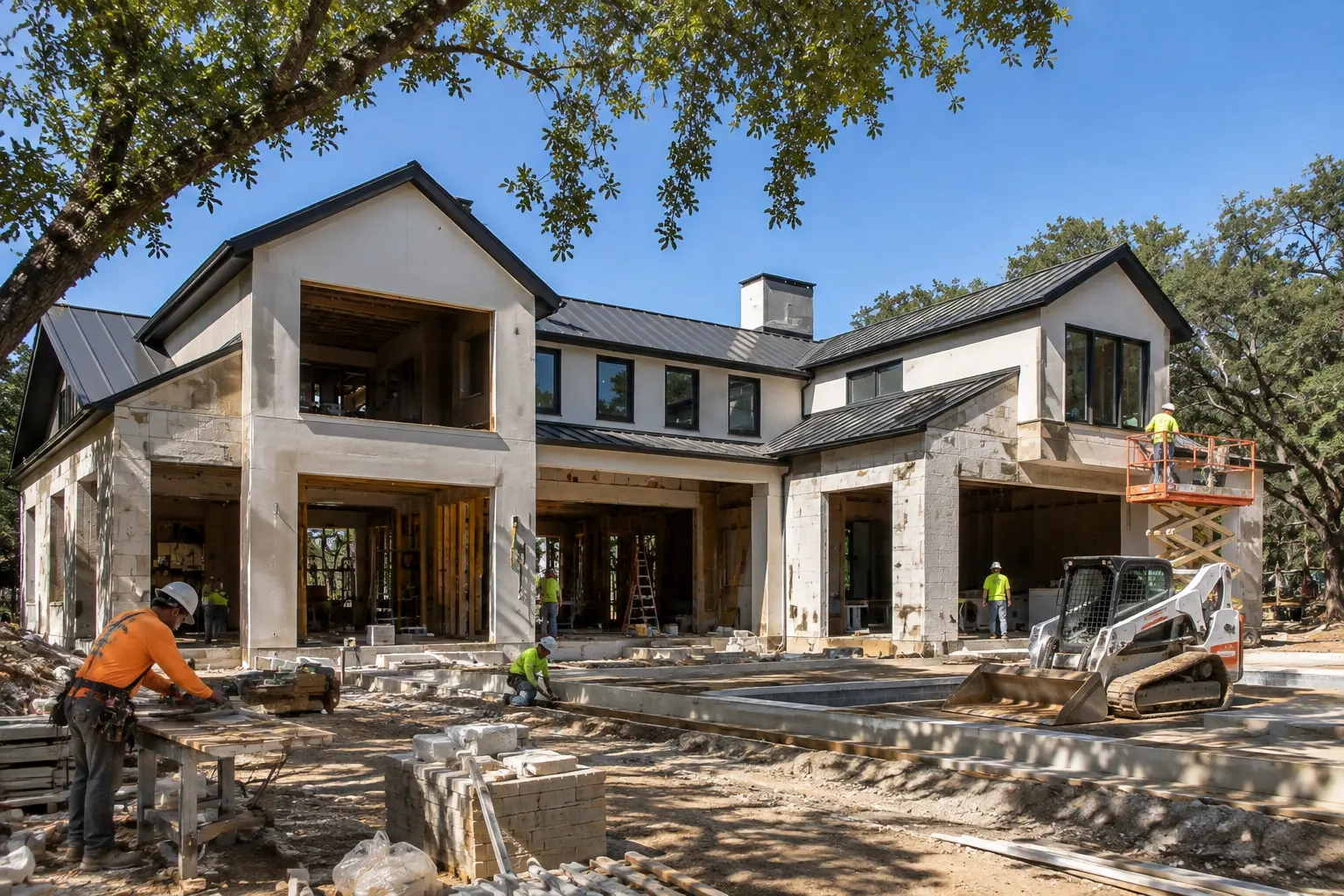
What It Really Costs to Build a Custom Home in Austin in 2026 (And When You Shouldn't)
What it actually costs to build a custom home in Austin in 2026: per-square-foot tiers, the full cost stack, tariffs, permits, and when buying beats building.
2026-08-15 • 16 min read

Downtown Austin Condos in 2026: Texas Built Its Tallest Tower and Put Nothing in It for Sale
Texas built its tallest tower and put zero units up for sale. Downtown Austin condo prices, HOA fees by building, worked carry math, and why the resale market just became the only game in town.
2026-08-12 • 20 min read