8 High Net Worth Home Buying Tips That Protect Your Capital and Your Privacy
Buying luxury real estate in Austin requires a fundamentally different approach than standard transactions, and these eight high net worth home buying tips cover everything from navigating off-market opportunities to protecting your privacy and capital in a less transparent market. Whether you're relocating, repositioning wealth, or acquiring a primary residence, these strategies help serious buyers operate with clarity and long-term discipline at the upper end of the Austin market.

At the upper end of Austin's market, the right strategy protects both capital and privacy. Eight tips for serious buyers in 2026.
Buying a high-value property in Austin is a fundamentally different exercise than a standard residential transaction. The stakes are higher, the market is less transparent, and the decisions you make early in the process carry long-term financial consequences.
Most generic buying advice assumes you're working with a lender, browsing public listings, and competing in a straightforward multiple-offer environment. None of that reliably describes how serious buyers operate at the upper end of the Austin luxury market.
At this level, properties change hands quietly. Valuations are genuinely difficult to pin down. Negotiation is more nuanced. And the right advisor relationship matters far more than it does in a conventional transaction.
This guide outlines eight strategies that experienced high-net-worth buyers use to approach Austin real estate with clarity, discipline, and an eye toward long-term value. Whether you're relocating from out of state, repositioning capital, or acquiring a primary residence in one of Austin's most sought-after submarkets, these principles apply.
1. Treat Privacy as a Non-Negotiable from Day One
The Challenge It Solves
High-profile buyers face real exposure through public property records, MLS activity, and even open house attendance. Texas property records are public by law, which means any transaction recorded under your personal name is searchable by anyone. For buyers with significant public profiles, business interests, or security considerations, that exposure is not theoretical.
The problem is that most buyers don't think about privacy until after they've already created a trail.
The Strategy Explained
Entity structuring is the most common and effective approach. Purchasing through a properly formed LLC or family trust keeps your personal name out of the deed and the public record. This is a well-established legal strategy used routinely in luxury real estate, and it's particularly relevant in Texas given the state's public records framework.
Beyond the entity itself, how you conduct your search matters. Working through a trusted advisor who can make inquiries on your behalf, attending private showings rather than open houses, and limiting the number of parties who know you're actively looking all reduce unnecessary exposure.
Implementation Steps
- 01Consult with a Texas real estate attorney before you begin your search to determine the appropriate entity structure for your situation.
- 01Establish the LLC or trust before making any offers, since transferring title after closing creates its own paper trail and potential tax complications.
- 01Brief your advisor on your privacy requirements upfront so they can manage inquiries, showings, and negotiations in a way that limits your personal visibility throughout the process.
Pro Tips
Make sure your entity structure is coordinated with your estate planning and tax advisors, not just your real estate attorney. A structure that works well for privacy may have unintended implications for financing, insurance, or long-term estate planning if those advisors aren't aligned from the start. Buyers who want a deeper look at how confidential property transactions work in practice will find the mechanics are more accessible than most assume.
2. Access the Off-Market Layer Before You Look at Public Listings
The Challenge It Solves
The most compelling properties at the upper end of Austin's market frequently never appear on the MLS. Sellers at this level often prefer to test buyer interest quietly, avoid the disruption of public showings, or transact with a known buyer rather than through an open competitive process. If you're starting your search on Zillow or Realtor.com, you're starting with what's already been passed over or publicly exposed.
The Strategy Explained
Private listing networks, advisor-to-advisor relationships, and direct seller outreach represent a distinct layer of inventory that operates outside public channels. Gaining access to off-market luxury homes in Austin isn't about having a special membership. It's about working with an advisor who has genuine relationships with other top producers in Austin's luxury market and who is actively plugged into those conversations.
Buyers who are known quantities, meaning those who have demonstrated financial credibility and a clear sense of what they're looking for, are far more likely to hear about off-market opportunities than buyers who are still browsing broadly. Our piece on exclusive listing access in Austin covers how that access actually gets built.
Implementation Steps
- 01Get specific about your criteria before you engage with the market. Advisors are more likely to surface off-market opportunities for buyers with well-defined parameters than for those who are still exploring.
- 01Establish your financial credibility early. For cash buyers, a proof-of-funds letter from a private bank or wealth management firm signals seriousness. For financed buyers, a pre-approval from a lender experienced in jumbo or portfolio lending accomplishes the same.
- 01Work with an advisor who can articulate their specific off-market relationships in Austin, not just their general reputation. Ask directly what private networks they participate in and how they typically surface properties that aren't publicly listed.
Pro Tips
Off-market doesn't automatically mean better value. Some properties are off-market because the seller has an inflated price expectation and doesn't want public feedback. Your advisor's job is to help you distinguish between a genuine opportunity and a seller who simply hasn't accepted market reality yet.
3. Understand How Luxury Valuations Actually Work in Austin
The Challenge It Solves
Standard appraisal methodology relies heavily on comparable sales data. In Austin's upper-tier submarkets, that data is often thin. Lake Austin waterfront properties, custom builds in Barton Creek, and estate lots in Westlake Hills may see only a handful of transactions per year, sometimes fewer. When comparables are scarce, valuations become more judgment-dependent, and that creates real risk for buyers who don't understand the dynamics.
The Strategy Explained
Luxury property valuation in Austin is less a science and more an informed negotiation between what the seller believes the asset is worth and what the market can support. Buyers need to approach pricing with their own independent analysis rather than accepting an asking price as a validated number. Our deeper look at high-end home valuation problems explains where standard appraisal logic tends to break down.
This means looking at price per square foot trends within specific submarkets, understanding the premium or discount that applies to specific features like lake frontage, guest structures, or lot size, and factoring in how long similar properties have sat before selling. Days on market is one of the most honest signals in a thin-data environment. For ongoing context, the Austin luxury market report tracks these dynamics by submarket.
Implementation Steps
- 01Ask your advisor for a detailed comparable analysis that includes not just recent sales but also active and expired listings. Expired listings tell you where the market drew the line on price.
- 01If you're financing any portion of the purchase, understand the appraisal risk upfront. In submarkets with few comps, appraisals can come in below contract price, which creates a gap you'll need to bridge or negotiate through.
- 01For waterfront properties specifically, get a clear breakdown of how much of the value is attributed to the land and water access versus the structure. Those two components often appreciate at different rates. Our Lake Austin vs. Lake Travis breakdown details how these dynamics differ between the two waterfront markets.
Pro Tips
Don't rely solely on your buyer's agent for valuation analysis. An independent appraisal ordered before you make an offer, particularly on a high-value or unusual property, is a modest cost relative to the asset size and can give you meaningful negotiating leverage.
4. Choose Representation Based on Market Access, Not Marketing Materials
The Challenge It Solves
The luxury real estate market is full of advisors who market themselves well. Polished websites, high production value, and impressive-sounding designations are easy to produce. What's harder to find is an advisor with genuine relationships in Austin's upper-tier market, real access to off-market inventory, and the negotiating experience to protect your interests in a complex transaction.
The Strategy Explained
At the luxury level, your advisor's network and relationships determine what you can see and how you're positioned. An advisor who knows the listing agent personally, who has closed deals in the specific submarket you're targeting, and who is respected by other top producers in Austin operates in a fundamentally different way than one who simply has access to the same MLS data you can find yourself. Our piece on exclusive real estate representation in Austin walks through what that distinction looks like in practice.
In Texas, buyers are also required to sign a buyer representation agreement before an agent can formally represent their interests. Understanding what that agreement covers, including exclusivity terms, duration, and compensation structure, is important before you commit.
Implementation Steps
- 01Interview at least two or three advisors before committing. Ask each one to walk you through recent transactions they've closed in your target submarket and price range. Specific examples matter more than general claims.
- 01Ask directly about their off-market relationships. Who do they know in the submarkets you're targeting? What private networks do they participate in? How often do their buyers see properties before they hit the MLS?
- 01Review the buyer representation agreement carefully. Understand the duration, the scope of exclusivity, and how compensation works. A good advisor will explain all of this clearly and won't pressure you to sign before you're comfortable.
Pro Tips
The best advisors at this level will also tell you when not to buy. If an advisor is consistently enthusiastic about every property you see, that's a signal. Genuine market expertise includes the willingness to say a property is overpriced, has a structural issue, or doesn't fit your criteria as well as you might think.
5. Structure Your Offer to Win Without Overpaying
The Challenge It Solves
Many buyers at the luxury level assume that price is the primary lever in any negotiation. It's often not. Luxury sellers frequently have motivations and priorities that go well beyond the highest number on the page. Buyers who understand this can structure offers that are more compelling to the seller without simply bidding more aggressively on price.
The Strategy Explained
Terms, contingency structure, closing flexibility, and demonstrated buyer credibility all influence how a seller receives an offer. A seller who is relocating internationally may value a flexible closing date more than a marginally higher price. A seller who has had deals fall apart over financing contingencies may respond strongly to a cash offer or a reduced inspection period. Understanding what the seller actually needs is often more valuable than knowing what they're asking.
This is where advisor relationships matter again. An advisor who has a direct line to the listing agent can gather intelligence about seller priorities before the offer is submitted, which allows you to structure terms that address the seller's actual concerns.
Implementation Steps
- 01Before submitting any offer, have your advisor gather as much information as possible about the seller's timeline, motivation, and any previous offer history on the property.
- 01Consider which contingencies are genuinely necessary for your protection and which ones can be tightened or removed without meaningful risk. A shorter option period or a reduced inspection window signals seriousness without costing you price.
- 01Present your financial credibility clearly and early. For cash transactions, a clean proof-of-funds letter from a recognized financial institution carries real weight. For financed buyers, a pre-approval from a lender who specializes in jumbo or portfolio loans is more credible than a standard pre-approval letter.
Pro Tips
In Austin's current luxury market, where inventory in certain submarkets has improved and sellers are more negotiable than they were a few years ago, buyers have more room to negotiate on price than the asking figures suggest. Don't anchor too heavily to list price. Use days on market, expired listing history, and comparable data to anchor your offer to actual market value. A broader look at buying in Austin's current buyer's market can help calibrate your expectations before you submit.
6. Conduct Due Diligence That Matches the Asset's Complexity
The Challenge It Solves
A standard home inspection is designed for a standard home. High-value properties, particularly custom builds, waterfront estates, and ranch or land acquisitions, carry risks and complexities that a general inspection won't surface. Buyers who rely on a single inspection report to clear due diligence on a complex asset are taking on risk they may not fully understand until after closing.
The Strategy Explained
Due diligence at this level is a multi-layered process that should be scoped to the specific property type. A custom home in Barton Creek may require a structural engineer's review in addition to a general inspection. A Lake Austin waterfront property requires a shoreline assessment, a review of dock permits and LCRA compliance, and an understanding of any restrictions on water access or shoreline modification. A Hill Country ranch acquisition involves an entirely different set of considerations, including water rights, agricultural exemptions, easements, and deed restrictions.
Implementation Steps
- 01Start with a general inspection, but treat it as a baseline rather than a complete picture. Based on the property type, identify which additional specialists you need to engage during the option period.
- 01For waterfront properties, engage a professional familiar with LCRA regulations to review the current permits and identify any compliance issues or restrictions on future improvements to the shoreline or dock structures.
- 01For any property with an HOA, request and review the full governing documents, financial statements, and meeting minutes. HOA governance issues, underfunded reserves, or pending special assessments are risks that don't show up in a physical inspection but can affect both your ownership experience and future resale value.
Pro Tips
Budget your due diligence costs proportionally to the asset value. Spending an additional few thousand dollars on specialized inspections and legal reviews on a multi-million dollar acquisition is not a place to economize. The option period in Texas is your protected window to conduct this work. Use it fully.
7. Think About Liquidity and Resale Before You Close
The Challenge It Solves
Some Austin luxury properties are harder to exit than they appear at the time of purchase. Buyers who focus entirely on the acquisition and don't think carefully about the eventual disposition are sometimes surprised by how narrow the buyer pool is for certain property types, how long resale timelines can run, and how specific features that seem like obvious positives can actually limit your universe of future buyers.
The Strategy Explained
Liquidity in luxury real estate is a function of buyer pool depth, submarket size, and property type. Westlake Hills and the surrounding 78746 zip code have a relatively active luxury market with consistent buyer demand. Lake Austin waterfront properties have a much smaller and more specific buyer pool, which means resale timelines tend to be longer and pricing is more sensitive to market conditions. Hill Country ranch and land acquisitions represent a distinct asset class with their own liquidity profile, which is generally less liquid than urban residential.
None of this means you shouldn't buy in these markets. It means you should factor liquidity into your decision-making alongside price, quality, and lifestyle considerations. Our Tarrytown vs. Westlake comparison is a good example of how two adjacent high-end markets carry meaningfully different liquidity profiles.
Implementation Steps
- 01Before closing, ask your advisor to walk you through the historical sales velocity for comparable properties in the specific submarket. How long do similar properties typically sit? What price adjustments have sellers made to achieve a sale?
- 01Assess whether the property's specific characteristics, such as lot size, architectural style, or unique features, expand or narrow the future buyer pool. A highly customized home with very specific finishes may appeal to a narrower range of buyers than a property with more broadly appealing design.
- 01If the property is also being considered as an investment or capital preservation vehicle, model a realistic exit scenario, including carrying costs, potential price appreciation, and transaction costs on the sale side. Investors should also consider whether a 1031 exchange fits into their long-term strategy.
Pro Tips
Properties in established Austin neighborhoods with strong school districts, including Eanes ISD in the Westlake area, tend to have more durable buyer demand than properties in more isolated locations. School district quality is one of the most consistent drivers of long-term residential demand, even at price points where buyers don't have school-age children.
8. Consider Austin's Broader Investment Context
The Challenge It Solves
High-net-worth buyers often approach a real estate acquisition as a lifestyle decision and analyze the financial implications afterward. For buyers repositioning capital or considering Austin real estate as part of a broader portfolio, the investment context matters from the beginning, not as an afterthought.
The Strategy Explained
Texas has no state income tax, which is a meaningful structural advantage for buyers relocating from California, New York, Illinois, or other high-tax states. That advantage is real and worth quantifying in your overall financial picture. At the same time, Texas property taxes are relatively high compared to national averages, which affects the total cost of ownership calculation and should be factored into any financial modeling you do around a purchase. Buyers establishing primary residency should also understand the Texas homestead exemption and how it affects ongoing tax exposure.
Austin's long-term growth story, driven by employment diversification, continued in-migration, and a maturing technology and life sciences sector, supports the case for residential real estate as a capital preservation vehicle. But the market has also matured. The appreciation rates of the early 2020s are not a realistic baseline for forward-looking projections. Buyers who want current context on where the market stands should review the latest Austin luxury market trends before finalizing their financial assumptions.
For buyers with interest in land or ranch acquisitions in the Hill Country, those assets represent a distinct category with different return drivers, different tax treatment under agricultural exemptions, and different considerations around water rights and long-term development potential.
Implementation Steps
- 01Work with a CPA or tax advisor familiar with Texas real estate to model the total cost of ownership, including property taxes, insurance, HOA fees where applicable, and any entity maintenance costs if you're purchasing through an LLC or trust.
- 01If you're relocating from a high-tax state, quantify the income tax savings in your first year of Texas residency alongside the property tax increase. For many buyers, the net position is meaningfully favorable, but the math is worth doing explicitly. Our moving to Austin guide covers the broader relocation considerations.
- 01If Hill Country land or ranch acquisitions are part of your consideration set, engage an advisor with specific experience in that asset class. The due diligence requirements, valuation methodology, and long-term considerations are materially different from urban residential.
Pro Tips
Austin real estate at the upper end of the market is best understood as a long-duration asset. Buyers who approach it with a short-term trading mentality tend to underperform relative to those who buy well, manage the asset thoughtfully, and hold through market cycles. The transaction costs on both sides of a luxury purchase are significant enough that short holding periods rarely pencil out favorably.
Putting It All Together
The buyers who navigate Austin's upper-tier market most effectively share a few common traits. They do their homework before they start looking. They work with advisors who have genuine market access rather than just a license. And they think about each acquisition as a financial decision, not just a lifestyle one.
Austin's luxury market has matured considerably. Pricing is more rational than it was a few years ago, inventory in certain submarkets has improved, and there are real opportunities for buyers who approach the process with discipline. For an ongoing read on conditions, our Austin market intelligence dashboard is updated continuously.
To prioritize these strategies, start with privacy and representation. Those two decisions shape everything else. Then move into off-market access and valuation analysis before you get deep into specific properties. Due diligence and resale liquidity are deal-level considerations, but they're far easier to think through clearly when you've already established the right framework and the right team.
If you're preparing to buy at this level in Austin, the most productive first step is usually a direct conversation with an advisor who can give you an honest read on current conditions, off-market availability, and what realistic expectations look like for your specific criteria.
Echelon Property Group works with buyers across Austin's luxury residential, waterfront, ranch, and commercial and investment markets. If you'd like a straightforward conversation about where the market stands and what's actually available, learn more about our services.
Continue Exploring
Three places to go from here

ABOUT THE AUTHOR
Taylor Sherwood
Austin Real Estate Advisor · Echelon Property Group
Taylor Sherwood is a Certified Luxury Home Marketing Specialist (CLHMS) and top-performing Austin real estate advisor. He specializes in luxury residential properties, land development, commercial real estate, and investment property across Austin and the Texas Hill Country. With deep market expertise and a results-driven approach, Taylor helps buyers, sellers, and investors navigate Austin's most competitive real estate segments.
Related Reading
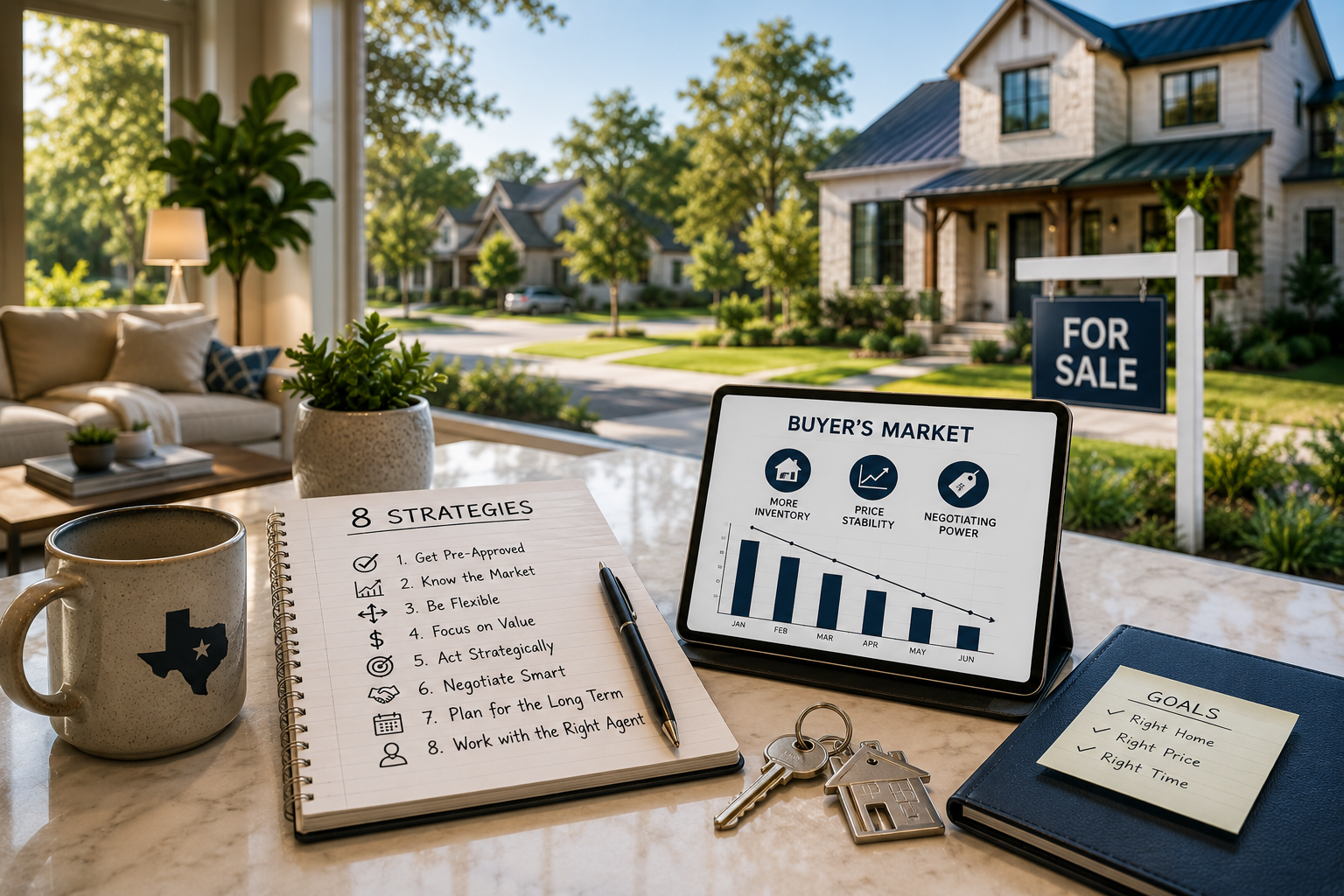
8 Strategies to Buy a Home in Austin's Buyer's Market (Mid-2026 Edition)
Austin has shifted to a buyer's market with 5.3 months of inventory and homes closing 3-4% under list. Eight tactics for negotiating price, structuring seller-paid rate buydowns, using contingencies as leverage, and targeting stale listings while mortgage rates hover near 6.5%.
2026-06-21 • 16 min read

How to Buy a Luxury Home in Austin: 9 Insider Strategies for High-End Buyers
Nine Austin-specific strategies for buying a high-end home above $2M, from neighborhood-by-neighborhood market realities and Lake Austin waterfront nuance to off-market access, pricing logic, and relocation considerations most national guides miss.
2026-06-01 • 20 min read

7 Proven Strategies to Find the Best Luxury Real Estate Agents in Austin
Discover the best luxury real estate agents austin buyers trust. These 7 proven strategies help you find top experts for $2M+ luxury properties today.
2026-05-15 • 12 min read

How to Access Exclusive Home Inventory
How sophisticated buyers actually access exclusive and off-market home inventory in Austin, why the best properties trade quietly, what separates real access from noise, and how to position yourself to see the right homes early.
2026-05-14 • 8 min read