High End Home Valuation Problems: Why Luxury Properties Are Notoriously Hard to Price
High end home valuation problems are especially pronounced in luxury markets like Austin's Barton Creek and Lake Austin waterfront, where thin transaction data, highly individualized properties, and sophisticated buyers make standard appraisal tools and automated valuation models unreliable, and where pricing errors can cost sellers hundreds of thousands of dollars or leave a listing stagnant for months.
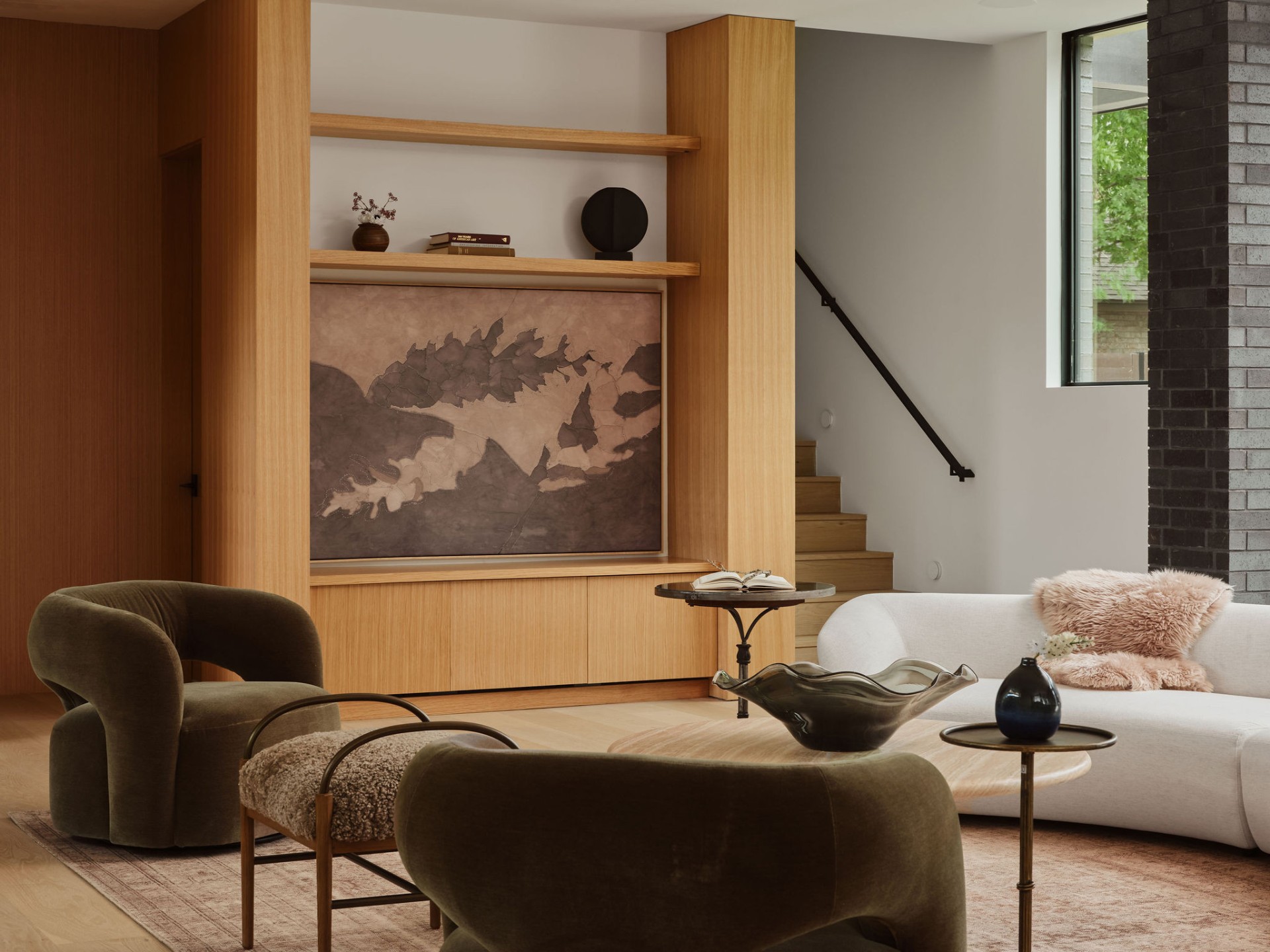
Bespoke craftsmanship and custom design choices are exactly the features standard appraisal tools struggle to value accurately.
Pricing a luxury home is not a variation of standard residential valuation. It is a fundamentally different exercise, and the tools built for the middle market often fail completely when applied to properties at the top of the price spectrum.
Most appraisal methodologies, automated valuation models, and even agent pricing strategies were developed in environments with abundant transaction data, relatively homogeneous properties, and predictable buyer pools. Luxury real estate operates in the opposite environment: thin data, highly individualized properties, and a small, sophisticated buyer audience that responds to factors a standard appraisal form was never designed to capture.
The consequences of getting valuation wrong at this level are significant. Overprice a property in Barton Creek or on Lake Austin waterfront, and you can watch it sit for months while the buyer pool quietly moves on. Underprice it, and you may leave hundreds of thousands of dollars on the table, or more, without ever knowing it happened.
This article is for buyers and sellers who want to understand why high-end home valuation is structurally complicated, not just anecdotally tricky. Understanding the underlying problems is the first step toward making better decisions, whether you are preparing to list a property or evaluating one to purchase.
Where Standard Appraisal Methods Hit Their Limits
The sales comparison approach is the foundation of residential appraisal. An appraiser identifies recent sales of similar properties, adjusts for differences, and arrives at an estimated value. It is a sound methodology when the inputs are reliable. At the luxury tier, those inputs are often unreliable or simply absent.
In Austin's top submarkets, including Rob Roy, the Lake Austin waterfront corridor, and gated communities within Barton Creek, the pool of genuinely comparable recent sales can be extremely thin. You might find two or three transactions in the past twelve months that share a general price range, but differ significantly in lot size, construction quality, view orientation, or access to water. Those differences are not minor adjustments. They can represent hundreds of thousands of dollars in value, and the appraisal process has no clean mechanism for handling them precisely.
Automated valuation models face an even steeper challenge. Tools like Zillow's Zestimate are calibrated on high-volume, relatively uniform transaction data. They perform reasonably well in neighborhoods where dozens of similar homes have sold recently. They perform poorly on a custom-built estate with a private boat dock, a guest house, and a specific Hill Country view corridor. The model has no meaningful data to anchor to, so it either extrapolates from distant or dissimilar sales or generates estimates with wide confidence intervals that are not particularly useful to anyone. Buyers who rely on these tools exclusively should understand why Zillow falls short for luxury buyers in markets like Austin.
Appraiser familiarity is a variable that rarely gets discussed openly, but it matters enormously at this price point. A generalist appraiser working a Lake Austin waterfront property for the first time may not understand the premium difference between true open-water frontage and a filtered or seasonal view. They may not know how to value a temperature-controlled wine cellar, a fully equipped detached guest house, or a private gate with staffed entry. These are not obscure features. They are exactly the kind of attributes that drive purchase decisions at the $3M to $10M level, and an appraiser who underweights or ignores them will produce a number that does not reflect what an informed buyer would actually pay.
This is not a criticism of the appraisal profession. It is an acknowledgment that luxury real estate requires specialized knowledge, and that specialization is not evenly distributed across the appraiser community. The same principle applies to the agents and advisors involved in the transaction.
The Features That Resist Easy Comparison
One of the most persistent problems in luxury valuation is the gap between cost and value. A seller who invested $400,000 in hand-laid limestone, custom ironwork, and imported European fixtures reasonably expects that investment to be reflected in the price. The market may see it differently.
Bespoke improvements often cost far more than they return at resale. This is not because they lack quality. It is because they reflect specific taste, and the buyer who shares that taste precisely is a rare individual. The broader market may appreciate the craftsmanship in the abstract while placing a more conservative value on it in practice. Distinguishing between what something cost and what the market will pay for it is one of the most difficult and most important judgments in luxury appraisal.
Location premiums in Austin's luxury market are highly specific and often invisible to outside analysis. A home on open water on Lake Austin commands a meaningfully different premium than one with a partial or seasonal view of the same lake. Understanding what drives value on Lake Austin waterfront is essential context for any serious valuation exercise. A West Lake Hills property within the Eanes Independent School District carries a premium that reflects both the school system and the proximity to downtown, two factors that compound each other. A Hill Country estate with documented hunting rights and wildlife management status carries value that a standard appraisal form has no field for.
These distinctions are not subtle to the buyers who care about them. They are often the primary driver of purchase interest. But they are exactly the kind of nuanced, local factors that generic valuation tools cannot capture.
Privacy, acreage, and land utility present similar challenges. For high-net-worth buyers, the value of a gated compound on multiple acres in Rob Roy or a private retreat in the Dripping Springs corridor may have as much to do with lifestyle, security, and exclusivity as with any measurable physical attribute. You cannot assign a reliable per-square-foot adjustment to the ability to not see your neighbors. But that value is real, and informed buyers price it in.
There is a related layer that standard appraisal rarely surfaces: highest and best use. An estate parcel in West Lake Hills, a large infill lot in Tarrytown, or a Hill Country tract with future development potential can carry meaningfully different value depending on whether it is priced as the existing improvement or as the underlying land. A 1.5-acre lot in an established luxury neighborhood may be worth more to a builder planning a tear-down and rebuild than to a buyer purchasing the current house. Hill Country acreage with viable subdivision, conservation, or wildlife-management pathways can also support a value range that no comparable-sales grid can fully capture. Our analysis of highest and best use in Austin walks through how current use and future potential can create significant valuation differences on the same piece of land.
Neighborhoods like Tarrytown and Pemberton Heights carry historical and architectural prestige that influences value in ways that are difficult to quantify but easy to observe in transaction patterns. Rollingwood's proximity to Barton Creek Greenbelt access and its own municipal identity create a micro-market dynamic that diverges from surrounding zip codes. These are the kinds of granular, local observations that only come from sustained presence in the market. A detailed Austin luxury neighborhood review reveals just how much these micro-market distinctions matter to pricing.
The Off-Market Problem: When the Data Simply Does Not Exist
Here is a valuation challenge that rarely gets addressed directly: a meaningful portion of luxury transactions in Austin never appear on the MLS at all.
Private sales, negotiated directly between parties or facilitated through advisory relationships, leave no public record. The transaction closes, ownership transfers, and the sale price never enters the comparable sales database that appraisers and agents rely on. For the broader market, it is as if the transaction never happened.
This is not unusual or irregular. It is simply how a portion of the luxury market operates. Sellers at certain price points actively prefer privacy. They do not want their property publicly listed, photographed, and broadcast across real estate platforms. They want qualified buyers introduced through trusted channels. When those transactions close, the public dataset loses another data point. Understanding how confidential property transactions work in Austin helps explain why public data consistently undercounts activity at the top of the market.
The downstream effect is significant. When off-market sales are excluded from the comparable sales pool, the remaining public comps may skew toward properties that could not sell privately. These are often, though not always, less desirable properties, ones with longer marketing periods, more price reductions, or characteristics that made them harder to move through private channels. Using this subset as the primary valuation reference can introduce a downward bias that disadvantages sellers of premium properties.
Advisors and agents with access to private transaction networks have a genuine informational advantage in this environment. If you know that a comparable Lake Austin waterfront property sold privately six months ago at a price that never appeared in any public database, that knowledge changes the analysis materially. You can reference it in a pricing conversation, use it to calibrate a seller's expectations, or use it to inform a buyer's offer strategy.
This is one of the clearest reasons why local relationships and market presence matter more than platform access at the luxury tier. The data that matters most is often the data that is hardest to find. Buyers who want to understand how to find off-market homes in Austin will quickly discover that access depends almost entirely on relationships, not search platforms, and that the same access gap shapes the broader question of why luxury buyers miss Austin's best properties.
Why Luxury Appraisals and Market Value Often Diverge
There is a specific risk in luxury transactions that does not exist in the same form at lower price points: the appraisal gap. A willing buyer and a willing seller can agree on a number that genuinely reflects the property's value to the active buyer pool, and the lender's appraisal can still come in lower. In a luxury home appraisal Austin context, this is not a rare edge case. It is a recurring feature of how high-end financing intersects with thin comparable data.
The mechanics are straightforward. A lender's appraiser is constrained by guidelines that prioritize closed, arms-length, public comparable sales within a defined radius and timeframe. On a custom estate home in Barton Creek or a Lake Austin waterfront property, the appraiser may find only one or two technically eligible comparables, neither of which truly resembles the subject property. The appraised value reflects what the available data supports, not necessarily what the market would actually pay.
When the appraisal comes in below contract, the consequences are real. The buyer may need to bring additional cash to close. The parties may need to renegotiate price, restructure the deal, or extend timelines while a second appraisal is ordered. In some cases, the transaction stalls entirely. None of this means the agreed price was wrong. It often means the appraisal framework was never designed to evaluate a property of that profile.
This is the practical distinction between luxury valuation and lender valuation. Market value reflects what a qualified, informed buyer is genuinely willing to pay for a specific property given its full set of attributes. Lender valuation reflects what a regulated appraisal process can defensibly document using a constrained data set. Both are legitimate, and they do not always agree. Sellers and buyers entering an estate home valuation conversation at the $3M-plus level should plan for the possibility that these two numbers will diverge and understand in advance how they intend to handle it. A more detailed treatment of pricing strategy lives in our guide on how to price high-end real estate.
How Relocation and Out-of-Market Buyers Shift the Valuation Picture
Luxury valuation is also shaped by who is in the room. Austin's buyer pool at the top of the market includes a meaningful share of relocation buyers from California, New York, Florida, and other major wealth centers, as well as tech executives, founders, and entrepreneurs moving into the region. Their reference frame is not the local one.
A Barton Creek home valuation that feels aggressive to an Austin-based buyer may look like fair value, or even a relative bargain, to a buyer comparing it against Bay Area, Manhattan, or Miami pricing. The same Lake Austin property value can read very differently depending on whether the buyer is benchmarking against Hill Country comps or against waterfront in Marin County or the Hamptons. West Lake Hills home value is interpreted through similar lenses: a relocating tech executive evaluating Eanes ISD and proximity to downtown may price the school and location premium more heavily than a local buyer who has always considered Eanes the baseline.
This divergence in perception is one reason a property can sit on the market for a local audience and then trade quickly once it surfaces in front of the right out-of-market buyer. It is also why luxury home valuation Austin analysis benefits from understanding both audiences simultaneously, not just the local comparable set. Pricing strategy at this level often involves a deliberate decision about which buyer pool the property is being positioned for, and that decision changes the defensible price range. Buyers approaching Austin from outside the market can pair this perspective with our insider strategies for buying a luxury home in Austin.
The Real Cost of Mispricing a Luxury Property
Overpricing a luxury home is a common mistake, and it tends to compound over time. At the $3M and above price point, the active buyer pool is small and attentive. These buyers and their advisors are tracking the market closely. They notice when a property has been listed for 90 days without movement, and they draw conclusions.
Days on market becomes a signal at the luxury tier in a way it does not at lower price points. A buyer looking at a $4M property that has been listed for four months is not thinking great opportunity. They are thinking what is wrong with it. That perception is difficult to reverse, even with a price reduction. The reduction itself can reinforce the narrative that the property was overpriced to begin with, which further erodes negotiating leverage.
Extended time on market can become a stigma that follows a listing, sometimes for years. In a submarket like Barton Creek or West Lake Hills, where the universe of potential buyers is limited and word travels, a property with a troubled listing history carries that history into future sale attempts. Sellers who want to avoid this outcome should study proven strategies for selling a luxury home in Austin before committing to a list price.
Underpricing carries its own set of risks, and they are less visible because the damage happens quietly. A seller who accepts an offer without full market intelligence may never know they left significant value on the table. For unique properties, where buyers may be willing to pay a premium that a naive valuation would never surface, this gap can be substantial. The absence of competing offers does not mean the price was right. It may mean the property was not exposed to the right buyers.
Strategic pricing in the luxury segment often involves controlled exposure before public listing. Testing price with selective, targeted outreach to qualified buyers allows a seller to gather real market feedback without creating a public record of days on market. If the response is strong, the seller can move forward with confidence. If it is not, adjustments can be made before the property ever appears publicly. This approach requires access to a real buyer network, not just a database.
The common strategy of listing high and reducing is tempting but often costly. Each reduction signals weakness, and the buyers who were watching from the beginning are now negotiating from a position of information advantage.
What a Credible Luxury Valuation Actually Requires
A serious luxury valuation is not a single number produced by a formula. It is a structured analysis that combines quantitative data with qualitative judgment, and it requires honesty about the limits of both.
The quantitative side includes recent comparable sales, both public and private where accessible, current active competition, and any relevant market trend data at the submarket level. For a property in West Lake Hills, that means understanding not just what has sold in the past six months, but what is currently active, what has expired without selling, and what the absorption rate looks like at various price thresholds. Reviewing current Austin luxury inventory trends provides essential context for understanding where supply and demand pressures are shifting.
The qualitative side requires a clear-eyed assessment of what the market actually rewards versus what a seller believes the property is worth. These are often different things. A seller may have deep emotional and financial investment in specific features. A credible advisor helps them understand which of those features the buyer pool will pay for and which they will view as neutral or even as a liability.
Engaging an appraiser with specific luxury market experience is essential. Ideally, this means someone who has worked extensively in the relevant Austin submarket, not just someone who handles occasional high-value assignments. The same standard applies to selecting a real estate advisor. Understanding the difference between a luxury real estate agent and a true advisor is a distinction that matters significantly at this price point. Local specialization matters more at this price point than brand name recognition or transaction volume in other segments.
For properties with truly limited comparables, a range-of-value approach is more honest and more useful than a single-point estimate. Rather than asserting that a property is worth exactly $4.75M, a credible analysis might establish a range of $4.4M to $5.1M, with a clear explanation of what factors could push toward the high or low end. Sellers and buyers who understand this range and the variables that influence it are better equipped to make decisions than those anchored to a single number that carries false precision.
This kind of analysis cannot be automated. It requires someone who knows the market, knows the buyers, and has the judgment to weigh factors that no algorithm can quantify.
How Buyers and Sellers Can Navigate These Challenges
If you are preparing to sell a luxury property in Austin, the most important thing you can do before setting a price is understand the full market, not just the visible market.
That means investing in a pre-listing advisory consultation that includes a review of private sales data, not just MLS history. It means understanding where your property sits relative to current active competition and recent closings, including deals that never appeared publicly. It means having an honest conversation about which of your property's features the target buyer pool will pay a premium for, and which they will not.
Sellers should also think carefully about exposure strategy before defaulting to a public listing. In many cases, controlled pre-market outreach to qualified buyers produces better outcomes than immediate public listing, particularly for properties with distinctive characteristics that appeal to a specific buyer profile. Sellers who want to understand this process in depth should explore how to sell privately the right way before making any public commitments.
If you are a buyer evaluating a luxury property, be cautious about anchoring to list price or AVM estimates. The right question is not what the property is listed for. The right question is what genuinely comparable real estate has transacted for, including off-market deals, and what the specific attributes of this property suggest about where it falls within that range.
Buyers should also understand that in thin-data markets, there may not be a clean comparable sale that answers the valuation question definitively. In those situations, the analysis becomes more about understanding the range of reasonable value and making a decision you can defend, rather than finding a number that feels precise.
Both parties benefit from working with advisors who have deep local relationships and access to transaction data that does not appear in public databases. In Austin's most competitive and private luxury submarkets, that informational edge is not a minor advantage. It is often the difference between a transaction that works and one that does not. For buyers who want to evaluate properties at the level of detail this requires, private property showing services are part of how serious diligence actually gets done.
Why Experienced Professionals Can Arrive at Different Valuations
A point that rarely gets stated plainly: two qualified, experienced luxury professionals can review the same property and arrive at different valuations. This is not a sign that one of them is wrong. It is a structural feature of luxury real estate appraisal in a thin-data, high-variance environment.
The differences usually trace back to a few specific inputs. One advisor may have direct visibility into a recent private sale on the same street that the other has never seen. One may maintain an active dialogue with three qualified buyers currently searching for exactly this kind of property; the other may not. One may have spent fifteen years working in West Lake Hills specifically and read the micro-market in a way a generalist cannot replicate. Different assumptions about demand, marketability, time horizon, and exposure strategy all feed into the final number.
This is why credible luxury home valuation Austin work is more honestly expressed as a range than as a single point. A property might reasonably support a value of $4.4M to $5.1M depending on the buyer pool targeted, the exposure strategy chosen, the timing of the listing, and which private comparables are weighted most heavily. A second-opinion conversation is not adversarial. It is often the most useful diligence step a seller or buyer can take at this price point, because it surfaces the assumptions behind the number rather than treating the number as fixed.
Sellers evaluating advisors should ask each one to walk through the inputs behind their valuation, including which private transactions they referenced, which buyer pool they envision, and how their range would shift under different assumptions. That conversation tends to reveal far more about the quality of the analysis than the headline figure itself. Pairing this kind of advisor-level reasoning with a current Austin luxury real estate market analysis gives both parties a more honest read on where a property actually sits in today's market.
The Bottom Line on Luxury Valuation
High-end home valuation problems are not a flaw in the market. They are a structural feature of how luxury real estate works. Low transaction volume, highly individualized properties, private sales channels, and a small buyer pool all combine to create an environment where standard valuation tools consistently underperform.
The solution is not a better algorithm. It is better local intelligence, access to private transaction data, and an advisor who understands what the market actually rewards in Austin's luxury segments. That means knowing the difference between open-water frontage and a filtered lake view, understanding how Eanes ISD affects West Lake Hills pricing, and having relationships that surface off-market deals before they disappear from the record entirely.
Pricing a luxury property well requires the same discipline as any high-stakes decision: gather the best available information, apply sound judgment, and be honest about what you know and what you do not.
If you are preparing to buy or sell a luxury property in Austin and want a confidential, grounded assessment of value, Echelon Property Group works exclusively in this space. Learn more about our services and reach out to start a conversation about your specific situation.
Continue Exploring
Three places to go from here

ABOUT THE AUTHOR
Taylor Sherwood
Austin Real Estate Advisor · Echelon Property Group
Taylor Sherwood is a Certified Luxury Home Marketing Specialist (CLHMS) and top-performing Austin real estate advisor. He specializes in luxury residential properties, land development, commercial real estate, and investment property across Austin and the Texas Hill Country. With deep market expertise and a results-driven approach, Taylor helps buyers, sellers, and investors navigate Austin's most competitive real estate segments.
Related Reading
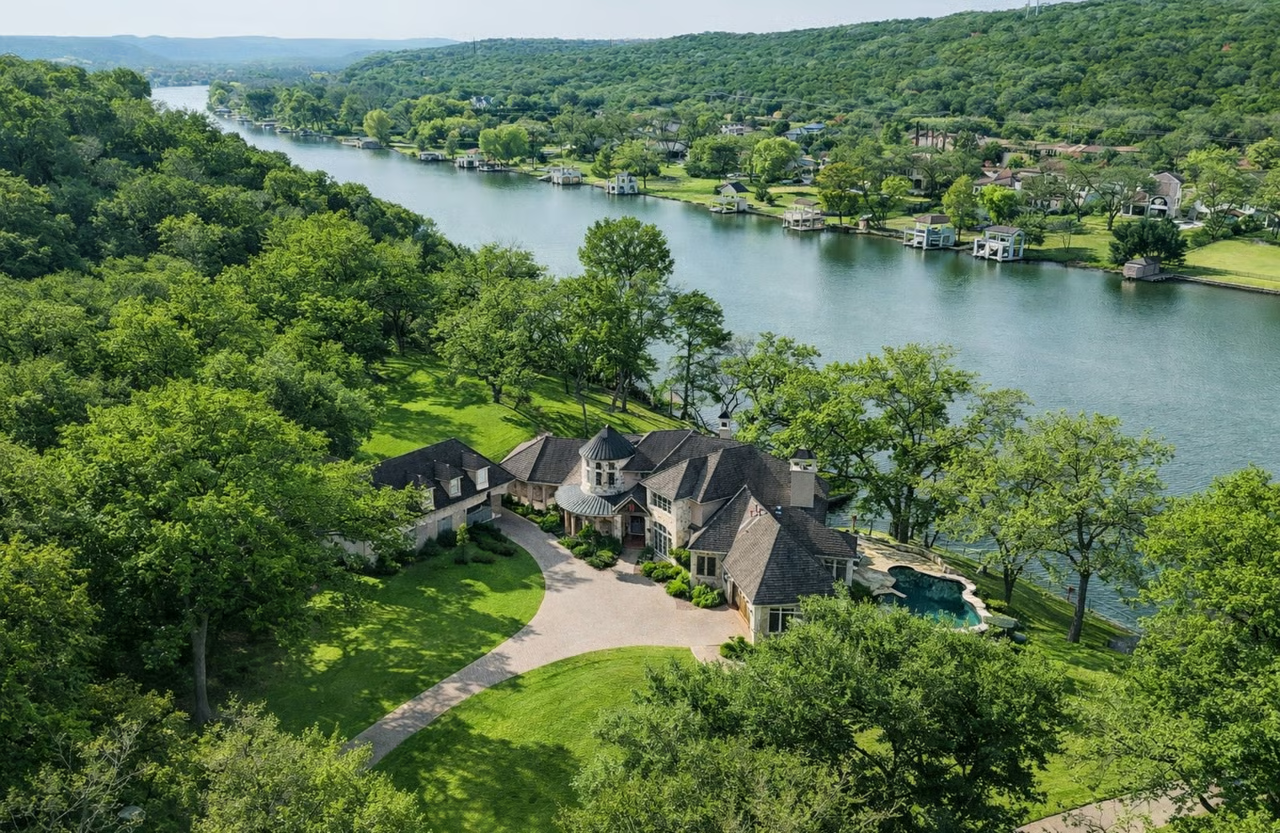
7 Strategies for Buying Waterfront Luxury Homes in Austin
Acquiring waterfront luxury homes in Austin requires more than browsing listings. The best properties on Lake Austin, Lake Travis, and the Colorado River corridor move through private networks before reaching public markets. This guide outlines seven strategies high-net-worth buyers use to gain early access, evaluate critical variables, and compete effectively in one of the country's most sought-after waterfront real estate markets.
2026-06-04 • 14 min read
How to Choose the Right Luxury Real Estate Advisor in Austin
A strategic guide for buyers, sellers, and off-market opportunities, how sophisticated clients evaluate Austin luxury real estate advisors and build the right representation before entering the market.
2026-05-20 • 12 min read

What Makes a Property Luxury Real Estate? looking Beyond Price
Discover what makes property luxury real estate beyond price. Learn the defining traits, design, exclusivity, and craftsmanship, that set luxury homes apart.
2026-05-18 • 11 min read

Exclusive Austin Properties: Your Complete City Guide
Discover exclusive austin properties in this comprehensive guide to the city's most coveted addresses, top neighborhoods, and luxury real estate insights.
2026-05-14 • 10 min read