7 Strategies for Buying Waterfront Luxury Homes in Austin
Acquiring waterfront luxury homes in Austin requires more than browsing listings. The best properties on Lake Austin, Lake Travis, and the Colorado River corridor move through private networks before reaching public markets. This guide outlines seven strategies high-net-worth buyers use to gain early access, evaluate critical variables, and compete effectively in one of the country's most sought-after waterfront real estate markets.
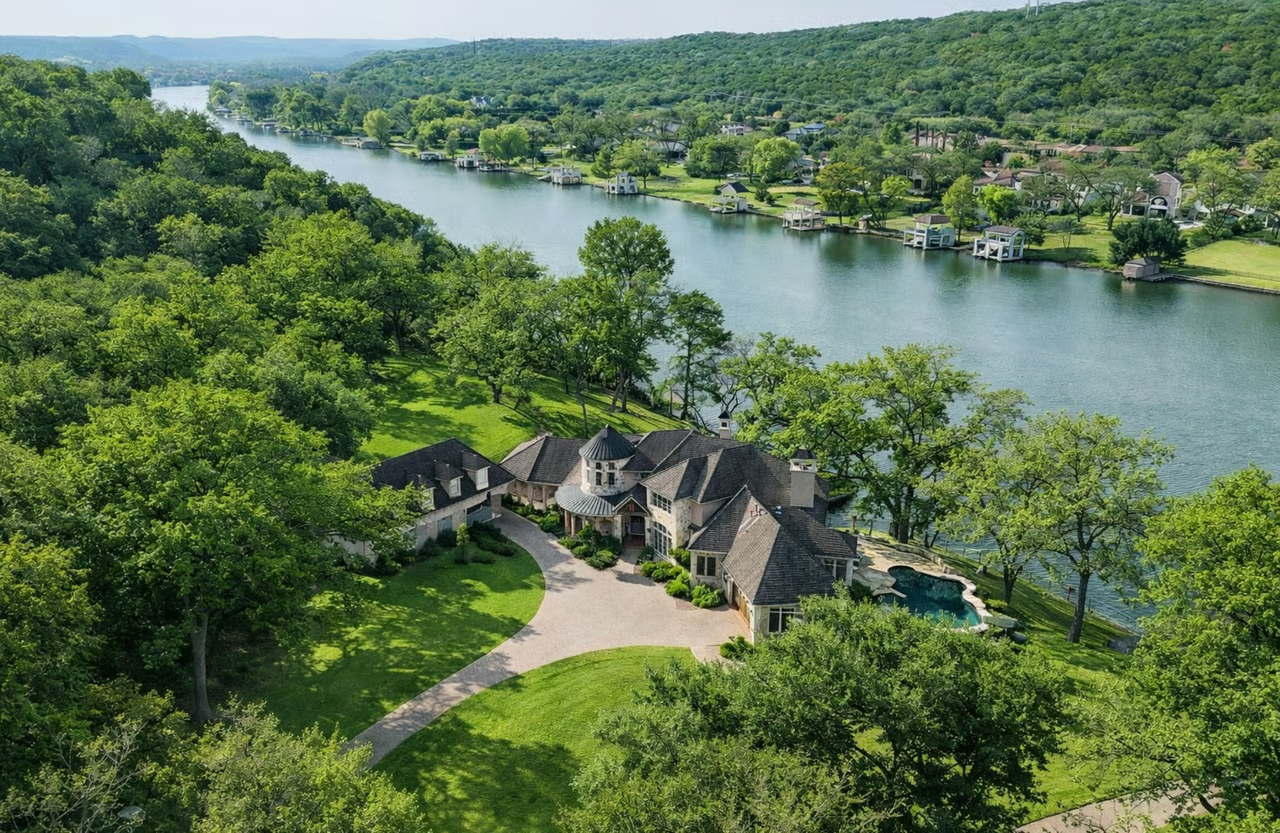
A representative waterfront estate above Lake Austin. The most significant properties along Austin's water corridors trade through private networks long before they reach the open market.
Austin's waterfront market operates by its own rules. Properties on Lake Austin, Lake Travis, and the Colorado River corridor attract serious buyers from across the country, and the best ones rarely sit on the open market long enough for a casual search to catch them.
For high-net-worth buyers, the challenge is not finding a waterfront home listed on a portal. The challenge is gaining early access, evaluating the right variables, and positioning yourself to move decisively when the right property surfaces.
This guide covers seven strategies that experienced buyers use to acquire waterfront luxury homes in Austin. Each one addresses a specific gap between how most buyers approach the market and how the market actually works. Whether you are relocating from California, looking to establish a primary residence with direct lake access, or adding a significant asset to your portfolio, these strategies will sharpen your approach and reduce the risk of costly missteps.
Austin Waterfront Intelligence: What Buyers Should Know Right Now
Before getting into the strategies, it helps to frame how Austin's waterfront market actually behaves today. The buyer pool, the inventory dynamics, and the priorities driving acquisition decisions look very different across Lake Austin, Lake Travis, and the Westlake waterfront. Understanding those differences upfront prevents months of misaligned searching and sets the foundation for every strategy that follows. Our broader read on the segment lives in market intelligence, and the points below are observations we apply with clients evaluating Austin lakefront property today.
Buyer Demand Looks Different on Each Lake
Lake Austin demand is dominated by primary-residence buyers who want a year-round home with reliable water access and proximity to central Austin and the Eanes Independent School District. Lake Travis attracts a higher concentration of second-home and recreational buyers, often willing to accept seasonal water level volatility in exchange for sweeping views, larger lots, and a different lifestyle pace. Lake Austin waterfront homes consistently draw a deeper bench of competing offers in any given price band.
Lake Austin Inventory Is Structurally Constrained
Lake Austin has a finite shoreline, the LCRA actively limits new dock permits, and long-held legacy properties tend to stay within families or change hands quietly. The result is a market where Lake Austin luxury real estate often trades through private channels well before reaching public platforms. Most active buyers materially overestimate how much they will see on portals at any given time.
Proximity to Downtown Quietly Drives the Premium
Lake Austin frontage inside the 78746 zip code, particularly the stretches closest to Westlake and Tarrytown, commands the strongest premium per linear foot of shoreline. The shorter the drive to downtown Austin, the tighter the inventory and the more aggressive the bidding when something does surface. Lake Travis pricing softens meaningfully as drive time from the urban core increases, even when the property itself is equivalent.
What Sophisticated Buyers Are Prioritizing
The most experienced buyers we work with weight permitted dock and lift configuration, water depth at the dock, open-water versus cove positioning, and clean LCRA permit history alongside the architecture itself. They also treat a property's resale audience as a primary variable from day one, not an afterthought. Pure square-footage and finish comparisons rarely drive the decision in this segment.
The Most Common Mistakes Austin Waterfront Buyers Make
The recurring misses we see are predictable: evaluating Lake Travis at a high-water moment without modeling median or low-water conditions, assuming a dock permit transfers cleanly without confirming it, underestimating ongoing carry costs from flood insurance and shoreline maintenance, and waiting to engage an advisor until after they have already toured the wrong corridor for their actual priorities.
Austin Waterfront Corridor Comparison
A side-by-side view of the three primary corridors makes the structural differences easier to weigh before you tour. Use it as a filter for which corridor aligns with your priorities, not as a substitute for property-level analysis.
1. Map the Waterfront Tiers Before You Tour a Single Property
The Challenge It Solves
Lake Austin, Lake Travis, and the Colorado River corridor are not interchangeable. Buyers who treat them as variations of the same market often spend months comparing properties that are not truly comparable, evaluating different regulatory environments, different water level dynamics, and different lifestyle profiles as if they were equal alternatives.
Defining your search with precision starts with understanding what each corridor actually offers.
The Strategy Explained
Lake Austin is a constant-level lake managed by the Lower Colorado River Authority (LCRA). That stability makes it the more predictable environment for dock planning, shoreline improvements, and year-round water access. It is also the more constrained market in terms of available inventory, which tends to support pricing.
Lake Travis is a highland reservoir with water levels tied to rainfall and LCRA releases. Levels can fluctuate significantly across seasons and drought cycles, which affects dock usability, shoreline access, and how you should evaluate a property's water features at any given point in the year.
The Colorado River corridor, particularly through the 78746 zip code and Westlake Hills, offers a different profile: closer proximity to central Austin, strong school districts, and a more urban-adjacent lifestyle with riverfront access.
Implementation Steps
- 01Decide which lifestyle profile aligns with your priorities: deep-water boating access, year-round dock reliability, proximity to central Austin, or a more secluded hill country setting.
- 01Research current LCRA water level data for Lake Travis before evaluating any property there. The LCRA publishes this publicly at lcra.org, and it provides essential context for what you are actually buying.
- 01Ask your advisor to pull recent comparable sales within each specific corridor separately. Cross-corridor comparisons distort your price expectations.
Pro Tips
Visit any Lake Travis property you are seriously considering at both high and low water levels if possible, or request historical photography from the listing agent. A dock that looks functional in spring may be stranded by late summer. What the property looks like at median water level is the more honest baseline. Understanding the differences between Lake Austin and Lake Travis before you tour will save you significant time and prevent misaligned comparisons.
2. Position Yourself for Off-Market Access Before the Search Begins
The Challenge It Solves
A meaningful portion of Austin's luxury waterfront properties trade privately. They change hands before a listing is ever prepared, through conversations between advisors who know which clients are looking and which owners are quietly open to the right conversation. Buyers who rely solely on public portals are working with an incomplete picture of what is available.
The Strategy Explained
Off-market activity in this segment is driven by a few consistent factors. Waterfront homeowners at the luxury level often have strong privacy preferences. The buyer pool for properties above a certain price threshold is limited enough that a targeted private outreach can be more efficient than a public listing. And many long-held waterfront properties change hands through relationships rather than formal marketing campaigns.
Positioning yourself for off-market access is not about luck. It is about working with an advisor who has active relationships in this specific segment and communicating your criteria clearly enough that you become a credible, identifiable buyer when a relevant property surfaces.
Implementation Steps
- 01Engage an advisor with a documented track record in Austin's waterfront luxury segment specifically. General residential experience does not translate to off-market access in this tier.
- 01Prepare a clear buyer profile: price range, preferred corridor, minimum shoreline or dock requirements, timeline, and proof of financial capacity. Sellers and their representatives need to know you are a serious counterparty before they will engage privately.
- 01Be explicit with your advisor about your willingness to move quickly and your financing structure. Off-market conversations move faster than listed transactions, and hesitation signals that a buyer is not ready.
Pro Tips
The best off-market opportunities often come through outbound outreach to owners of properties that are not for sale. If there is a specific street, cove, or section of shoreline you are focused on, an experienced advisor can identify ownership and initiate a discreet inquiry. This approach works more often than most buyers expect, and understanding why most buyers never see Austin's best homes helps explain why this proactive strategy matters. For a deeper read on the private side of the market, see our overview of off-market real estate in Austin.
Private Waterfront Opportunities
Many waterfront owners on Lake Austin and the Westlake reach have no active intention of selling, yet would consider the right offer if approached privately. What we often see is that the most productive way to surface those opportunities is targeted outreach to a specific street, cove, or shoreline segment, not a saved search waiting for a listing that may never appear publicly. Waterfront inventory in Austin is rarely an information problem. It is almost always an access problem. We maintain ongoing dialogue with owners across the most desirable waterfront corridors and regularly identify private opportunities that fit a client's criteria before any formal marketing begins. For broader context on how the upper tier is moving today, our Austin luxury real estate market analysis is a useful companion read.
Many waterfront opportunities never reach public platforms. Tell us the shoreline, cove, or corridor you are focused on.
Explore Private Waterfront OpportunitiesWhat We Evaluate First When Reviewing a Waterfront Property
Before we focus on architecture, interior finishes, or square footage, there is a different set of variables that experienced waterfront advisors weight first. These are the characteristics that are difficult or impossible to change after closing, and they typically have a larger impact on long-term ownership experience and resale value than any cosmetic upgrade.
A common mistake is evaluating waterfront homes the same way a buyer would evaluate an interior Westlake estate. The shoreline itself is the irreplaceable asset, and it should be analyzed first.
Water Depth at the Dock
Water depth determines what type of vessel the property can accommodate, how usable the dock is across seasons, and whether the slip will continue to function if shoreline silt accumulates. On Lake Austin, deeper water at the dock is structurally scarcer than people assume, and it materially affects resale audience. On Lake Travis, depth assessments must be modeled against median pool elevation, not the level on the day of the showing.
Dock Permit Status and Transferability
A permitted dock and boat lift in good standing with the LCRA is one of the most valuable features a waterfront property carries. Permits are not automatic, and new permits on Lake Austin are increasingly difficult to obtain. We always verify the permit on file, confirm its scope, and confirm transferability before a buyer commits. In our experience, the dock is frequently more difficult to replace than the house.
Shoreline Configuration and Frontage
Linear shoreline footage tells only part of the story. Configuration matters: a 100-foot stretch of straight, open frontage often outperforms 150 feet of irregular shoreline tucked into a tight cove. Usable beach, gradient into the water, and orientation to wind and boat traffic all factor in.
Open-Water Versus Cove Positioning
Open-water frontage on Lake Austin typically commands a premium for view, light, and boating access. Cove positions can offer protection, privacy, and calmer water, which some buyers prefer. Neither is inherently better, but they appeal to different resale audiences and they should be priced accordingly.
Flood Exposure and Elevation
We pull the FEMA flood map and the property's elevation certificate, where available, before getting deep into a financial analysis. Flood zone classification drives insurance cost, lender requirements, and what can be built or modified on the lot. Two homes one street apart can have meaningfully different insurance and improvement profiles.
Seawall Condition and Erosion History
A seawall approaching the end of its useful life is a six- or seven-figure liability that does not show up in a standard home inspection. We look at age, materials, visible distress, and the erosion behavior of adjacent properties. On Lake Travis, where water level fluctuation accelerates erosion cycles, this analysis is especially important.
Future Improvement Potential
What you can add later often matters as much as what already exists. Permitted boat houses, guest quarters, expanded docks, and additional shoreline structures are difficult to replicate under current LCRA regulations. A property with headroom for these improvements carries optionality that a fully built-out lot does not.
Resale Audience
Every waterfront property has a defined resale audience, and that audience should be visible from day one. A configuration that appeals broadly to year-round primary buyers will trade differently than one that appeals primarily to second-home buyers. We treat resale audience as a primary variable, not an afterthought.
Two seemingly similar waterfront homes can have dramatically different long-term value profiles once these variables are weighed. The interior can be renovated. The shoreline cannot.
3. Evaluate Waterfront Value Drivers Beyond the Price-Per-Square-Foot
The Challenge It Solves
Price per square foot is a useful starting point for residential comparisons, but it tells you very little about what you are actually paying for in a waterfront acquisition. Two properties with identical price-per-square-foot figures can have dramatically different long-term value profiles depending on their water access characteristics and regulatory standing.
The Strategy Explained
The variables that materially affect waterfront value include shoreline length and configuration, dock permit status and transferability, water depth at the dock, flood zone classification, and any LCRA regulatory constraints on future improvements.
Open water frontage on Lake Austin typically commands a premium over cove or canal positions because of direct access and unobstructed views. Understanding what drives value in Lake Austin waterfront homes goes well beyond interior finishes. Shoreline that is permitted for a boat dock and lift is worth more than equivalent frontage without that permit, because obtaining new permits through the LCRA involves a process that is not guaranteed. Flood zone classification affects both insurance costs and what you can build or modify on the property.
Implementation Steps
- 01Request the current dock permit documentation for any property you are seriously evaluating. Confirm it is transferable and verify its scope through the LCRA permit registry at lcra.org.
- 01Pull the FEMA flood map for the property at msc.fema.gov. Understand whether the structure sits within a Special Flood Hazard Area and what that means for insurance requirements and future improvement limitations.
- 01Have a waterfront-experienced appraiser or advisor walk you through a value analysis that weights these access and regulatory variables, not just interior square footage and finish level.
Pro Tips
Shoreline erosion is a slow variable that most buyers underweight. Ask about the history of shoreline stabilization on the property, whether a seawall exists and when it was last assessed, and whether neighboring properties show signs of erosion that could eventually affect your shoreline. This is especially relevant on Lake Travis where water level fluctuation accelerates erosion cycles.
4. Structure Your Offer to Signal Conviction, Not Just Price
The Challenge It Solves
Waterfront luxury sellers are often not primarily motivated by the highest number on paper. Many of these properties have been held for years or decades and carry real emotional weight. Sellers want to know that the buyer is serious, financially capable, and unlikely to create friction during the transaction. An offer that communicates certainty often outperforms a higher offer that introduces doubt.
The Strategy Explained
Cash offers carry obvious advantages in this segment: no financing contingency, faster close timelines, and a clear signal of financial capacity. But if financing is involved, a pre-underwritten commitment from a lender who has experience with jumbo waterfront transactions is the closest equivalent. A pre-qualification letter from a retail bank is not the same thing and sophisticated sellers and their advisors will recognize the difference.
Beyond financing, offer structure matters. A compressed inspection period, a meaningful earnest money deposit, and a flexible closing timeline that accommodates the seller's preferences all communicate that you have done your homework and are prepared to perform. Reviewing how to buy a luxury home in Austin can help you understand the full framework for structuring competitive offers in this segment.
Implementation Steps
- 01If financing, secure a full underwriting commitment before submitting offers on properties you are serious about. This requires more upfront effort but materially strengthens your position.
- 01Work with your advisor to understand the seller's motivations before structuring the offer. A seller who is downsizing and needs time to find their next property may value a flexible close more than a higher price.
- 01Keep the offer clean. Excessive contingencies and requests for seller concessions signal uncertainty. In this segment, a cleaner offer at a slightly lower price often wins over a higher offer loaded with conditions.
Pro Tips
Long-held waterfront properties often involve sellers who have a strong sense of who should own the home next. A brief, direct letter from the buyer outlining their intended use, their connection to Austin, and their appreciation for the property can carry real weight. This is not a universal strategy, but in the right circumstances it has influenced outcomes in this segment.
5. Conduct Waterfront-Specific Due Diligence Before Releasing Contingencies
The Challenge It Solves
A standard home inspection is designed for standard residential properties. It will not tell you whether the seawall is approaching failure, whether the dock structure is sound, whether the shoreline has erosion issues that will require expensive remediation, or whether the LCRA permit history has any complications that could restrict future use. Skipping waterfront-specific review is one of the more expensive mistakes buyers make in this segment.
The Strategy Explained
Waterfront due diligence requires specialists, not generalists. A licensed home inspector provides a useful baseline on the structure, systems, and interior. But a separate marine contractor or dock inspector should evaluate the dock, boat lift, and any underwater structural components. A seawall specialist should assess the seawall's condition and remaining useful life if one exists. And a review of the LCRA permit file for the property will surface any compliance issues, expired permits, or restrictions on improvements.
Riparian rights in Texas are governed by the Texas Water Code, which follows the reasonable use doctrine for surface water. Understanding what rights convey with the property and whether there are any encumbrances on water access is part of a complete due diligence process. Buyers relocating from other states will find that buying a luxury home from out of state introduces additional layers of complexity that make specialist guidance especially valuable.
Implementation Steps
- 01Hire a licensed home inspector with waterfront experience as your baseline, then layer in a marine contractor for dock and lift evaluation and a structural specialist for seawall assessment.
- 01Request the full LCRA permit history for the property and review it with your advisor. Confirm that all existing structures are permitted and that no outstanding compliance issues exist.
- 01Verify riparian rights and any easements affecting water access through a title review. Your title company should flag these, but confirm explicitly that waterfront access rights are part of the search.
Pro Tips
Budget for these inspections as a cost of doing business, not a variable to minimize. The combined cost of specialized waterfront inspections is a small fraction of what a seawall replacement or dock rebuild will cost if a problem is discovered after closing. The inspection period is your window to negotiate repairs, adjust pricing, or walk away with your earnest money intact.
Waterfront Acquisition Planning
Waterfront transactions involve variables that do not exist in standard residential purchases. LCRA permit history, shoreline configuration, dock and seawall condition, flood exposure, insurance posture, and future improvement potential all shape what a property is actually worth and what it will cost to own and eventually resell. One pattern that consistently emerges in this segment: the buyers who make the cleanest acquisitions establish their evaluation framework before they begin touring, not after. Pair that framework with current Lake Austin luxury real estate context and a clear-eyed read of Austin luxury market trends, and the right property becomes recognizable quickly.
Considering a waterfront acquisition? We can walk you through corridor selection, permitting, due diligence, and ownership economics before you tour.
Schedule a Waterfront Strategy Consultation6. Model the Full Cost of Waterfront Ownership Before You Close
The Challenge It Solves
The purchase price is the largest number in a waterfront acquisition, but it is not the only number that matters. Buyers who focus exclusively on the purchase price and underestimate ongoing ownership costs often find themselves surprised by the annual carrying costs of a lakefront property, particularly at the luxury level.
The Strategy Explained
Waterfront ownership introduces a set of recurring costs that do not apply to standard residential properties. Flood insurance is typically required separately from standard homeowners coverage, either through the National Flood Insurance Program (NFIP) or a private flood carrier. Costs vary significantly based on flood zone classification, elevation certificate data, and coverage limits.
Dock and boat lift maintenance, seawall upkeep, and shoreline stabilization are ongoing expenses that accumulate over time. Lake community fees or homeowners association assessments, where applicable, add another layer. Watercraft liability insurance is also common for properties with active dock use.
None of these costs are prohibitive for a buyer at this level, but they affect the true cost basis of the asset and should be factored into any investment return analysis.
Implementation Steps
- 01Request flood insurance quotes from both NFIP and private carriers before closing. Costs can vary meaningfully between the two, and an elevation certificate can sometimes reduce premiums substantially. Obtain the certificate if one does not already exist for the property.
- 01Ask the seller for a history of dock, seawall, and shoreline maintenance expenditures over the past several years. This gives you a realistic baseline for what ongoing upkeep will look like.
- 01Build a full annual cost model that includes property taxes, insurance (homeowners plus flood), dock and shoreline maintenance estimates, HOA or lake community fees, and any deferred maintenance items identified during inspections.
Pro Tips
Property tax assessments on waterfront properties in Travis County can be significant, and the assessed value may not reflect recent market conditions accurately in either direction. Review the current appraisal district record and understand whether a protest is warranted after closing. This is a routine part of ownership at this level and can yield meaningful savings.
7. Evaluate Resale Strength and Investment Positioning from the Start
The Challenge It Solves
Not all Austin waterfront locations hold value equally over time. Buyers who approach a waterfront acquisition purely from a lifestyle perspective sometimes discover later that their specific location, regulatory constraints, or property configuration limits their resale audience in ways they did not anticipate. Thinking about exit positioning from the beginning does not require treating the purchase as a trade. It requires treating it as a serious asset decision.
The Strategy Explained
Lake Austin has historically demonstrated strong price resilience, driven by constrained supply, consistent water access, and proximity to central Austin. Properties with permitted docks, open water frontage, and clean regulatory histories tend to hold their value and attract the broadest buyer pool at resale. Reviewing current Austin luxury market trends provides useful context for understanding where this market stands today and how it has performed through recent cycles.
For buyers considering investment use, short-term rental regulations in Travis County and the City of Austin have evolved and continue to be subject to policy changes. Any buyer evaluating a waterfront property as a short-term rental investment should verify current STR ordinances directly with the City of Austin's Development Services Department before closing, not after.
Waterfront properties can also qualify as 1031 exchange targets when held for investment or business purposes under IRS Section 1031. Buyers with capital gains exposure from prior real estate dispositions should discuss this with a qualified intermediary and tax advisor before structuring the acquisition.
Implementation Steps
- 01Ask your advisor to pull a 10-year price trend analysis for the specific corridor you are considering. Look at how prices held during periods of market softness, not just during appreciation cycles.
- 01If STR income is part of your return calculation, verify current regulations with the City of Austin's Development Services Department and model your projections conservatively. Policy environments in this area shift.
- 01If you are considering a 1031 exchange, engage a qualified intermediary early. The identification and closing timelines under IRS rules are strict, and waterfront transactions often require more time for due diligence than the standard process accommodates without advance planning.
Pro Tips
Properties with permitted guest houses, boat houses, or accessory structures tend to command a premium at resale because those improvements are difficult to replicate under current LCRA regulations. If you are evaluating two otherwise comparable properties, the one with a greater scope of permitted waterfront improvements typically offers stronger long-term positioning.
Frequently Asked Questions
Are Lake Austin waterfront homes a good investment?
Lake Austin waterfront homes have historically been one of the more resilient asset classes in the Austin luxury market. Supply is structurally constrained because the shoreline is finite and the LCRA limits new dock permits, and demand stays steady from primary-residence buyers tied to the Eanes Independent School District and proximity to downtown. Properties with a permitted dock and lift, open-water frontage, and a clean LCRA permit history tend to hold value and attract the deepest resale audience.
What is the difference between Lake Austin and Lake Travis?
Lake Austin is a constant-level lake managed by the Lower Colorado River Authority, which means dock usability, shoreline access, and year-round water enjoyment are predictable. Lake Travis is a highland reservoir whose levels rise and fall with rainfall and LCRA releases, so the same property can present very differently across seasons and drought cycles. Lake Austin trades closer to central Austin and skews toward primary residences, while Lake Travis attracts more recreational and second-home buyers.
Do Austin waterfront homes require flood insurance?
Most Austin waterfront homes carry separate flood coverage, either through the National Flood Insurance Program or a private flood carrier, even when the main residence sits above the Special Flood Hazard Area. Flood zone classification, elevation certificate data, and dock and shoreline structures all affect what is required and what it costs. Buyers should request quotes from both NFIP and private carriers before closing rather than assuming a single source.
Can you build a dock on Lake Austin?
Dock construction on Lake Austin is governed by the LCRA, and new permits are not guaranteed. Many properties already carry a permitted dock and lift that can transfer with the sale, and those permits are part of what drives value. If a property does not have a permitted dock, buyers should verify with the LCRA whether a new permit is realistic for the specific shoreline before assuming one can be added.
What should buyers know before purchasing a waterfront property in Austin?
Beyond the architecture and interior, buyers should evaluate dock permit status and transferability, water depth at the dock, shoreline length and configuration, flood zone classification, seawall condition, and the property's LCRA permit history. Carrying costs, including flood insurance, dock and seawall maintenance, and watercraft liability, should be modeled before closing. Specialized waterfront inspections from a marine contractor and seawall specialist are essential and not covered by a standard home inspection.
Are waterfront homes commonly sold off market in Austin?
Yes. A meaningful share of Austin's luxury waterfront transactions happen privately, particularly on Lake Austin and the Westlake waterfront. Long-held properties often change hands through advisor relationships before any public listing is prepared. Buyers who rely solely on portals see only part of what is actually trading in this segment, which is why working with an advisor active in off-market real estate in Austin materially expands the opportunity set.
Why Westlake Waterfront Continues to Command a Premium
Waterfront property inside the 78746 zip code, the Westlake reach of Lake Austin, behaves differently than almost any other segment of the Austin luxury market. Understanding why is essential context for any buyer weighing this corridor against Lake Travis or other waterfront alternatives.
Eanes ISD demand is structural, not cyclical. Eanes Independent School District anchors a buyer pool that is willing to pay a meaningful premium to live within its boundaries, and that demand persists through both up and down cycles. Waterfront inside Eanes carries a double premium: the school district and the shoreline.
Proximity to downtown changes the lifestyle equation. Westlake waterfront is ten to fifteen minutes from downtown Austin in normal traffic. That commute differential is what allows the corridor to support both year-round primary residences and the executives and founders who need to be close to the office without sacrificing waterfront living.
Inventory is structurally constrained, not seasonally constrained. The Westlake waterfront shoreline is finite, almost entirely built out, and the LCRA actively limits new dock permits. Many parcels have been held within the same families for decades. New supply does not arrive. When something trades, it often trades privately.
Executive relocation demand is concentrated here. Relocating executives from California, New York, and the Bay Area frequently anchor their search on Westlake waterfront because it solves for schools, commute, and lifestyle in a single decision. That buyer pool has remained active even when broader luxury demand has softened.
Long-term wealth concentration sustains the floor. A meaningful share of Austin's accumulated wealth lives along this stretch of shoreline. Owners are typically not forced sellers, which keeps inventory tight and supports pricing through cycles that would pressure other luxury submarkets.
The result is a waterfront submarket where pricing power is durable, off-market activity is high, and the resale audience for a well-positioned property is consistently deep. Westlake waterfront does not behave like a discretionary luxury asset. In this corridor, it behaves closer to a constrained-supply hard asset with a defined and persistent buyer pool.
Putting It All Together
Buying a waterfront luxury property in Austin is one of the more complex real estate decisions a buyer can make. The variables are layered: water access rights, regulatory restrictions, insurance exposure, off-market dynamics, and long-term value positioning all intersect in ways that do not apply to standard residential transactions.
The buyers who navigate this well tend to share a few common traits. They engage an advisor with direct waterfront experience before they start touring. They understand what they are buying at a technical level, not just an aesthetic one. And they are prepared to move with conviction when the right property surfaces, because hesitation is expensive in this segment.
To summarize the approach: define your corridor before you search, position for off-market access early, evaluate water access variables as seriously as interior finishes, structure offers that communicate certainty, conduct waterfront-specific due diligence, model true ownership costs accurately, and think about resale positioning from day one. For ongoing context on where the broader segment is heading, our Lake Austin luxury real estate outlook and our Austin luxury real estate market analysis are useful companions to this guide.
Many of Austin's most desirable waterfront properties never reach public listing platforms. Whether you are evaluating Lake Austin waterfront homes, Lake Travis estates, or riverfront opportunities in Westlake, access to inventory and informed guidance often matter as much as budget.
Echelon Property Group advises buyers across Austin's premier waterfront corridors and regularly assists clients with private opportunities, waterfront due diligence, and acquisition strategy. Contact us for a confidential discussion about your search criteria and what may currently be available beyond the public market.
Continue Exploring
Three places to go from here

ABOUT THE AUTHOR
Taylor Sherwood
Austin Real Estate Advisor · Echelon Property Group
Taylor Sherwood is a Certified Luxury Home Marketing Specialist (CLHMS) and top-performing Austin real estate advisor. He specializes in luxury residential properties, land development, commercial real estate, and investment property across Austin and the Texas Hill Country. With deep market expertise and a results-driven approach, Taylor helps buyers, sellers, and investors navigate Austin's most competitive real estate segments.
Related Reading

How to Choose the Right Luxury Real Estate Advisor in Austin
A strategic guide for buyers, sellers, and off-market opportunities, how sophisticated clients evaluate Austin luxury real estate advisors and build the right representation before entering the market.
2026-05-20 • 12 min read

What Makes a Property Luxury Real Estate? looking Beyond Price
Discover what makes property luxury real estate beyond price. Learn the defining traits, design, exclusivity, and craftsmanship, that set luxury homes apart.
2026-05-18 • 11 min read

Exclusive Austin Properties: Your Complete City Guide
Discover exclusive austin properties in this comprehensive guide to the city's most coveted addresses, top neighborhoods, and luxury real estate insights.
2026-05-14 • 10 min read

Luxury Home Advisor Austin: What Matters
What a luxury home advisor in Austin really does, how strategy, micro-market judgment, off-market access, and selective representation shape outcomes for buyers and sellers in the upper tier.
2026-04-26 • 9 min read