Who Pays the Buyer's Agent in Texas? A 2026 Guide to Commissions
Buyer-agent commissions in Texas are negotiable and disclosed up front. Here is who pays, how the fee gets covered, and how to keep it out of pocket.

In Texas, the buyer-agent fee is negotiated openly in writing before the first showing, not quietly settled behind the scenes at closing.
Since the rules changed in 2024, nearly every Texas buyer asks some version of the same question: do I have to pay my own agent now? The honest answer is that you might, you might not, and you have far more control over the outcome than most people realize. What actually changed is transparency, not necessarily who writes the check. The cost of buyer representation was always part of the transaction and has always been negoitable. Now, it is truly visible and spelled out in writing before you ever tour a home.
This guide covers how buyer-agent commissions work in Texas in 2026, what the fee actually buys, who can pay it, what it looks like in real numbers, and how a sharp agent structures a deal so the cost does not land on you.
What changed, and why buyers are suddenly asking
Two events reshaped this. The national NAR settlement, effective August 17, 2024, ended the practice of advertising buyer-agent compensation through the MLS. Then Texas required, by law, that buyers and agents put their arrangement in writing before the agent does any real work. The result is that the buyer's agent fee, which used to be handled quietly behind the scenes, is now stated plainly in an agreement the buyer signs.
That feels like a new cost, but it usually is not. The fee was always built into how deals were done. What buyers gained is leverage. You now see the number, you negotiate it, and you decide how it gets covered. Transparency replaced a system most buyers never actually saw. The old model assumed the seller's side would pay your agent and rarely said so out loud. The new model makes you a party to that decision, which is a better position to be in, not a worse one.
What you are actually paying for
Before worrying about who pays, it helps to know what the fee buys, because that is what makes it worth negotiating for rather than around. A buyer's agent is not a door-opener. Under a representation agreement, the agent is your fiduciary, and the work behind that word is where the value sits:
- Pricing analysis so you do not overpay, backed by real comparable sales rather than a hopeful list price.
- A trained read on disclosures, inspection reports, and surveys, so a problem gets caught before closing instead of after.
- Offer strategy, including the concession and rate-buydown structures that can save you far more than the fee itself.
- Negotiation on price, repairs, timelines, and terms, with someone whose duty runs to you alone.
- Management of the contract calendar, the option period, and the financing and appraisal deadlines, the small steps where a missed date can cost you your earnest money or the house.
- Problem-solving when something goes sideways during the transaction, and on most deals, something does.
The real question is not only who pays, but what competent representation is worth on a purchase this size. Framed that way, the fee is rarely the expensive part of the deal. A weak agent is.
How much is a buyer's agent paid?
There is no set rate, and that is the point. Texas law is explicit that broker fees are not set by law and are fully negotiable, and the required disclosures now say exactly that. Compensation can be structured as a percentage of the price, a flat fee, or in some cases an hourly arrangement. A percentage is the most familiar, a flat fee can make sense on higher-priced homes where a percentage would overstate the work, and an hourly model is less common but exists. Whatever the form, it has to be an objective, stated amount in your agreement, not a vague "to be determined."
The practical takeaway is that you should talk through the fee and the structure with any agent before you commit, the same way you would with any professional you hire. You are allowed to ask what you are paying for, and to negotiate it.
Where the fee is set: your buyer representation agreement
The number does not float around in the ether. It is defined in your buyer representation agreement, the written contract that also makes the agent your advocate. That agreement states the fee, caps what the agent can collect so they cannot earn more than the agreed amount, sets a termination date, and spells out whether the relationship is exclusive. We break that document down in detail in our guide to Texas buyer representation agreements.
Because the fee lives in that agreement, you always know what you have agreed to before an offer is ever written. There are no surprises at the closing table, which is the entire point of putting it in writing.
Who actually pays? The three ways it gets covered
Once the fee is set, it can be covered in one of three ways, and deals often use a combination:
The seller contribution is still the most common outcome. It is negotiated in the purchase contract itself, where the seller agrees to a specific amount toward your agent's fee. The listing-broker split is the legacy arrangement, where the listing side shares part of its commission, coordinated between the two brokers. Paying directly happens when a seller will not contribute, or when a buyer simply prefers to handle it themselves. Many deals blend these, for example a seller covering part and the buyer covering the rest.
One rule ties it together. If you have agreed to a fee in your representation agreement and the seller does not cover all of it, you may be responsible for the difference. That is precisely why settling the number and the plan up front matters so much. Surprise is the enemy here, and the agreement exists to remove it.
A real example, by the numbers
Numbers make this concrete. Say you are buying a $600,000 home in Austin, and you and your agent have agreed on a fee of $15,000. That figure is purely illustrative, since there is no standard rate and you negotiate your own. Here is how the three paths play out:
If the seller covers the full fee: Your agent requests a $15,000 contribution in the offer, the seller agrees, and it is written into the contract. You pay nothing toward the fee, and your cash to close is unaffected by the commission. This is still the most common route.
If the seller covers part: The seller agrees to $7,500 and you cover the remaining $7,500. You bring that difference at closing, or your agent structures the rest of the deal, on price or other terms, so the math still works for you.
If the seller will not contribute: You owe the full $15,000 under your agreement. Your options are to pay it at closing, to have your agent build the request into the offer differently, or to weigh whether this particular home is worth that out-of-pocket cost. You knew the exposure going in, because the fee was set in your agreement before you ever wrote the offer. A quick ROI check: your agent negotiates $50,000 in seller concessions on pricing or other terms on your behalf in exchange for a $15,000 fee.
The throughline is that the worst-case number was never a mystery. You agreed to it up front, which means you can plan your cash and your strategy around it rather than getting blindsided at the table.
Want the fee structured in your favor?
A direct conversation about your purchase, how to negotiate the buyer-agent fee, and how to structure the offer so the cost lands where it does the least damage. Advisory, not promotional.
Request a Buyer ConsultationDoes a seller paying my agent reduce other seller concessions?
This is the question that trips people up, and the answer is good news. When a seller contributes toward your agent's fee, that contribution generally does not count against the loan's seller-concession cap. Fannie Mae and Freddie Mac clarified in 2024 that buyer-agent fees are treated as costs customarily paid by the seller, so they sit outside the financing-concession limits, as long as that remains customary in your market. The FHA gave similar guidance.
In plain terms, a seller can cover your agent's fee and still contribute toward your closing costs up to the loan's limit. Those seller contributions have their own caps and rules, which we cover in our guide to seller concessions in Texas. The two work together rather than competing, which is a meaningful advantage when you are managing cash to close.
How to negotiate it in your favor
A capable agent treats the fee as part of the deal strategy, not an afterthought. The market sets the table:
In a balanced or slower market, asking the seller to cover your agent's fee is routine and rarely costs you the deal. Sellers expect it, and motivated ones agree to it.
In a hot, multiple-offer market, a request for a seller contribution can weaken your offer against buyers who are not asking. Here you and your agent weigh the trade-offs: ask anyway, absorb the fee yourself, or offer slightly more on price to offset what you are requesting back. The right call depends on the property, the competition, and your cash position.
Beyond the market, a few moves consistently help:
Agree on the fee and a payment plan with your agent before you start touring, so nothing is a surprise.
Get pre-approved and know your cash position, so you know how much fee exposure you could absorb if a seller will not contribute.
Use the flexibility in your agreement. Fee, term, and scope are negotiable up front.
Let your agent structure the offer so price and any requested contribution work together, rather than treating the fee as a separate problem bolted onto the deal.
Handled well, the most common outcome is still that the seller's side covers most or all of the buyer-agent fee. The difference now is that it is negotiated openly and documented, instead of assumed.
Common mistakes buyers make
The new system rewards preparation and punishes autopilot. The avoidable errors:
- Signing a representation agreement without actually discussing the fee or the plan to cover it.
- Assuming the seller will always pay, then getting caught off guard when an offer comes together.
- Touring with several different agents, which muddies who represents you and who is owed a fee.
- Skipping the fine print on the cap and the term, then feeling boxed in later.
- Pushing for a large seller contribution in a multiple-offer situation without weighing how much it weakens the offer.
None of these are hard to avoid. They just require treating the fee as a real part of the transaction, which is exactly what a good agent will insist on.
The bottom line
The headline change to buyer-agent commissions in Texas is transparency, and it favors the buyers who understand it. The fee is negotiable, it is defined in your representation agreement, and there are three ways to cover it, frequently without cash out of your pocket. The buyers who come out ahead are the ones who treat the fee as one more thing to negotiate, with an agent who knows how to structure the deal so the cost lands where it does the least damage.
At Echelon Property Group, we walk buyers through compensation before the first showing, so you know exactly what you are agreeing to and how we plan to get it covered. If you are buying in Austin or the surrounding Hill Country, let's have that conversation early, where it does you the most good.
Frequently Asked Questions
Do buyers have to pay their agent in Texas now?
Not necessarily. You agree on a fee with your agent in writing, but it can be covered by a seller contribution, a split from the listing broker, or by you directly. In many transactions the seller's side still covers most or all of it.
Can I save money by buying a home without an agent?
Usually not. The buyer-agent commission does not automatically come off the price when you are unrepresented. What the seller pays is set in their listing agreement, so without a buyer's agent that money typically stays on the listing side rather than lowering your price. You also give up your only advocate and end up dealing with the listing agent, who represents the seller, or in an intermediary situation where the broker must stay neutral and cannot fully represent you. Because the seller's side often helps cover the buyer's agent fee anyway, representation frequently costs you less than you think, saves you more than expected, while also protecting you from overpaying.
How much does a buyer's agent cost in Texas?
There is no standard rate. Buyer-agent compensation is fully negotiable and is not set by law. It can be a percentage, a flat fee, or an hourly arrangement, and it must be stated as a specific amount in your representation agreement.
Can the seller still pay the buyer's agent?
Yes. A seller can agree to contribute toward the buyer's agent fee, negotiated in the purchase contract. This is still the most common outcome, even though it is no longer advertised through the MLS.
Can I add my agent's commission to my mortgage?
In effect, often yes. You generally cannot add the commission to the loan as its own line item, but you can offer a higher price and have the seller pay your agent's fee out of the proceeds, written into the purchase contract. Because the mortgage is sized off the purchase price, you finance most of the fee over the life of the loan instead of paying it in cash at closing. The key limit is the appraisal: the home has to appraise at or near the higher price, so this works only when you are not paying a large premium over value. It also raises your down payment and monthly payment slightly, since both are based on the larger number. Run the structure by your agent and lender before you write the offer.
Where is the buyer's agent fee disclosed?
In your buyer representation agreement. It states the fee, caps what the agent can collect, sets a termination date, and defines the terms of the relationship before any offer is made. Commissions for both listing and buyer agents will be reflected on your final closing statements.
Does a seller paying my agent reduce what they can contribute to my closing costs?
Generally no. Seller-paid buyer-agent fees are treated as customarily seller-paid and usually fall outside the loan's concession cap, so a seller can cover your agent and still help with closing costs. Confirm the specifics with your lender.
What happens if the seller will not pay my agent?
If you agreed to a fee in your representation agreement and the seller does not cover it, you may owe the difference. That is why it is important to settle the fee and the payment plan with your agent up front, before you write an offer. This will enable you and your agent to structure the offer that works best for both parties.
Is a buyer's agent still worth it if I have to pay?
Yes. Representation includes pricing analysis, reading disclosures and inspections, offer and negotiation strategy, and managing the deadlines that protect your money and your contract. On a purchase this size, skilled representation often times saves much more than it costs.
Continue Exploring
Three places to go from here

ABOUT THE AUTHOR
Taylor Sherwood
Austin Real Estate Advisor · Echelon Property Group
Taylor Sherwood is a Certified Luxury Home Marketing Specialist (CLHMS) and top-performing Austin real estate advisor. He specializes in luxury residential properties, land development, commercial real estate, and investment property across Austin and the Texas Hill Country. With deep market expertise and a results-driven approach, Taylor helps buyers, sellers, and investors navigate Austin's most competitive real estate segments.
Related Reading
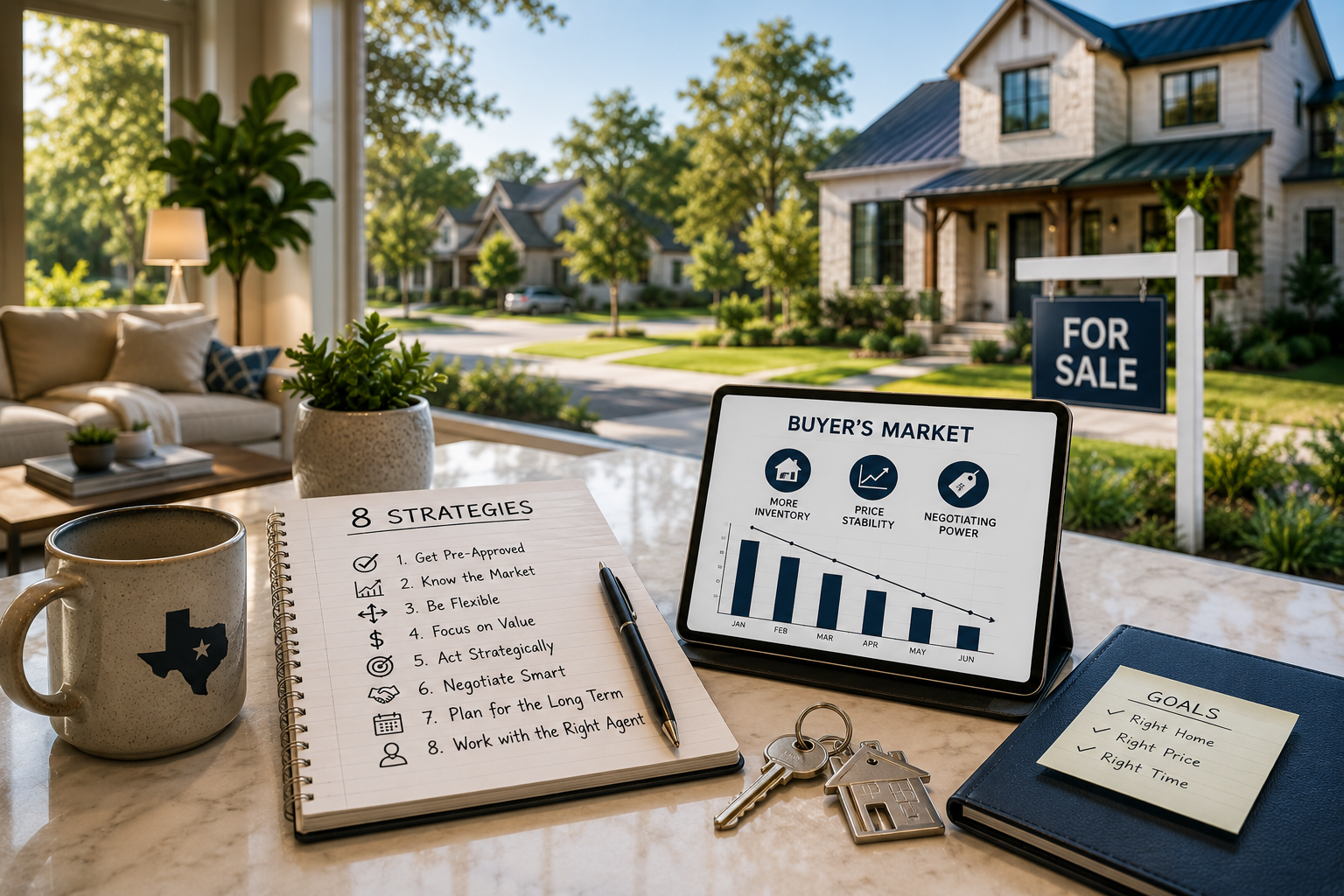
8 Strategies to Buy a Home in Austin's Buyer's Market (Mid-2026 Edition)
Austin has shifted to a buyer's market with 5.3 months of inventory and homes closing 3-4% under list. Eight tactics for negotiating price, structuring seller-paid rate buydowns, using contingencies as leverage, and targeting stale listings while mortgage rates hover near 6.5%.
2026-06-21 • 16 min read

How to Buy a Luxury Home in Austin: 9 Insider Strategies for High-End Buyers
Nine Austin-specific strategies for buying a high-end home above $2M, from neighborhood-by-neighborhood market realities and Lake Austin waterfront nuance to off-market access, pricing logic, and relocation considerations most national guides miss.
2026-06-01 • 20 min read

7 Proven Strategies to Find the Best Luxury Real Estate Agents in Austin
Discover the best luxury real estate agents austin buyers trust. These 7 proven strategies help you find top experts for $2M+ luxury properties today.
2026-05-15 • 12 min read

How to Access Exclusive Home Inventory
How sophisticated buyers actually access exclusive and off-market home inventory in Austin, why the best properties trade quietly, what separates real access from noise, and how to position yourself to see the right homes early.
2026-05-14 • 8 min read