How to Access Exclusive Home Inventory
How sophisticated buyers actually access exclusive and off-market home inventory in Austin, why the best properties trade quietly, what separates real access from noise, and how to position yourself to see the right homes early.

The most desirable homes are often the least visible. By the time a standout property appears on the public market, the most informed buyers may have already toured it, evaluated the seller's posture, and positioned themselves ahead of the crowd. That is the real context behind how to access exclusive home inventory, especially in the upper tier of the market where privacy, timing, and relationships shape outcomes.
For buyers focused on quality rather than volume, public search portals are only a partial view. They are useful for tracking broad pricing and watching market sentiment, but they rarely reflect the full supply available to well-connected buyers. In luxury real estate, access is not just about seeing more homes. It is about seeing the right homes earlier, with enough context to act intelligently.
Why exclusive inventory stays exclusive
Not every seller wants broad exposure. Some are testing pricing. Some value discretion because of profile, family considerations, or security. Others are open to selling only if the terms, timing, and buyer profile align. In those cases, a home may trade quietly through private outreach, broker-to-broker conversations, or a curated list of qualified buyers. We unpack this dynamic in why Austin luxury sellers are going quiet.
This is especially common in markets where high-end inventory is limited and demand is selective. In parts of Austin, certain homes are effectively spoken for before they ever reach a public feed. That does not mean the market is closed. It means access is filtered through trust, a pattern we explore in why most buyers never see Austin's best homes.
Exclusive inventory also includes homes that are technically available but not widely marketed. A property may sit in a private network, circulate within a top-tier agent community, or be discussed only with buyers who have a credible acquisition profile. Sellers of premium homes are not always seeking maximum exposure. Often, they are seeking certainty, discretion, and a clean process, see what a private listing really is.
How to access exclusive home inventory in practice
The short answer is that you gain access through representation, reputation, and readiness. There is no single database that reveals every off-market or private opportunity. The buyers who consistently see these properties tend to have an advisor who is deeply embedded in the local market and active in the conversations where those homes surface first.
A strong advisor does more than wait for listings to appear. They maintain relationships with listing agents, private sellers, wealth managers, builders, past clients, and local connectors who know when a property may be available before it is formally offered. That network matters, but so does judgment. Not every quiet opportunity is a good one, and not every off-market home is priced rationally.
This is where strategy separates access from noise. A well-connected advisor should be able to identify which opportunities are real, which sellers are serious, and which assets deserve attention based on location, design, lot characteristics, and resale durability.
Private networks matter, but curation matters more
Many buyers assume the goal is simply to get into more private channels. In reality, more inventory is not always better. Sophisticated buyers benefit from tighter curation. If your search is too broad, you end up reviewing properties that do not fit your standards, timing, or portfolio goals.
The better approach is precise positioning. Define the neighborhoods, product types, architectural preferences, privacy requirements, and value thresholds that matter most. That allows your advisor to make intentional calls, not generic ones. It also signals seriousness to the market. Sellers and listing agents respond differently when the inquiry is informed, specific, and credible.
Your buy-side profile affects what you see
In discreet transactions, sellers often care who the buyer is. They want confidence that the party across the table can perform, respect privacy, and move with minimal friction. If your profile is vague or unproven, access can narrow quickly.
This does not mean every buyer needs to be publicly known. It means your representative should be able to present you as qualified, decisive, and aligned with the property. In some cases, that alone opens doors. In others, it creates the trust needed to get a first look before a home reaches a wider circle.
What buyers get wrong about off-market properties
The phrase off-market tends to attract attention because it suggests scarcity and advantage. Sometimes that advantage is real. Sometimes it is overstated, a nuance covered in how to find off-market homes in Austin.
An off-market property is not automatically a better deal. In fact, some private sellers expect a premium for discretion and convenience. Others are simply curious and not fully committed. Buyers who treat every exclusive opportunity as a hidden bargain often waste time. The value is not always in price. It may be in access to a rare street, a larger lot, a better view corridor, or a chance to secure an asset with very little competition.
That trade-off matters. If your priority is absolute pricing efficiency, the public market may occasionally offer stronger leverage. If your priority is securing a highly specific asset that rarely trades, private inventory can be the only meaningful path.
The Austin factor: micro-markets move differently
In Austin, exclusive inventory behaves differently depending on the submarket. Some neighborhoods have enough turnover that strong on-market opportunities still appear regularly. Others trade through relationships, with very little public visibility. Waterfront, legacy neighborhoods, and tightly held luxury enclaves often operate by a different set of rhythms than the broader market, a theme we trace through Austin luxury market trends.
This is where local pattern recognition becomes indispensable. Two homes with similar square footage may trade very differently based on block quality, topography, school adjacency, remodel depth, or how the street is perceived by buyers already active in that tier. Public data alone rarely captures that nuance.
A buyer looking for a modern estate in Barton Creek is not operating in the same environment as a buyer seeking a quiet, design-forward home in Tarrytown, Westlake, Rollingwood, or along Lake Austin. The search strategy, access points, and negotiating posture should change accordingly. Our guide to the best luxury neighborhoods in Austin maps where each segment lives.
How to improve your access before you need it
The best time to build access is before you feel urgency. Buyers who enter the market only when a move becomes immediate are often forced into a reactive posture. By contrast, buyers who establish relationships early can monitor patterns, refine criteria, and be introduced to opportunities with better timing.
That preparation usually includes a few things. First, your parameters need to be clear enough that a trusted advisor can advocate for you with precision. Second, your decision-making process should be organized. If the right property appears quietly, delay can cost more than price. Third, your representation should be selective and proactive, not transactional.
This is one reason many high-level buyers prefer an advisory model. They are not looking for access in the abstract. They are looking for someone who can interpret the market beneath the surface and tell them when a property is worth pursuing, when it is overpriced, and when patience will likely produce a better outcome, see our view on wealth building through luxury real estate.
Signs your access strategy is too passive
If your search relies mostly on public alerts, you are seeing only part of the market. If your advisor sends broad listing drips but rarely discusses seller motivation, private channels, or neighborhood-specific movement, you are likely operating without an edge. And if every opportunity reaches you at the same moment it reaches everyone else, you are not truly in the flow of exclusive inventory.
The goal is not to chase secrecy for its own sake. It is to reduce informational lag. In the upper end of the market, timing shapes leverage. The buyer who hears about a property before formal launch can often evaluate it more calmly, understand what the seller actually wants, and structure a cleaner offer.
That advantage is subtle, but meaningful.
Choosing the right path to exclusive inventory
There is no universal formula for how to access exclusive home inventory because the answer depends on your goals. A buyer prioritizing architectural rarity may need a long-horizon relationship strategy. A relocator with immediate timing may need rapid, high-trust introductions. An investor focused on basis and future liquidity will evaluate private opportunities differently than an end user buying for lifestyle.
What remains consistent is this: exclusive inventory tends to favor buyers who are well represented, well prepared, and well positioned within the right local networks. Access is earned through credibility and sharpened through judgment.
For clients operating in Austin's luxury market, that often means working with an advisor who understands not just what is available, but why certain homes trade quietly, where hidden supply is likely to emerge, and which opportunities deserve real conviction.
The smartest buyers do not ask how to see everything. They ask how to see what actually matters, early enough to act with confidence. If that is the kind of access you are looking for, start a confidential conversation.
Want access to Austin's exclusive home inventory?
Request Private AccessFrequently Asked Questions
What does exclusive home inventory actually mean?
Exclusive inventory refers to homes that are not broadly marketed on public portals. That includes true off-market properties, pre-market listings being quietly tested with qualified buyers, and homes circulated only within trusted broker networks. The defining feature is controlled exposure rather than price discount.
How do buyers access off-market homes in Austin?
Access comes through representation and relationships. A well-connected advisor maintains active conversations with listing agents, private sellers, builders, and wealth professionals so opportunities surface before they are formally launched. There is no public database that aggregates this inventory.
Are off-market homes always a better deal?
Not automatically. Some private sellers expect a premium for discretion and convenience. The real advantage is usually access to scarce assets, a specific street, lot, view, or architectural style, rather than a guaranteed discount. Pricing discipline still matters.
Why do Austin luxury sellers choose to go off-market?
Privacy, timing, and control. Many high-end owners are testing pricing, protecting family or professional profile, or open to selling only if a qualified buyer appears. A private process lets them gauge real interest without the exposure and fatigue of a public listing.
How can a buyer position themselves to see exclusive inventory first?
Be specific, be credible, and be ready. Define neighborhoods and criteria precisely, organize financing and decision-making in advance, and work with an advisor who is genuinely active in private channels. Sellers and listing agents respond faster to buyers who present as informed and decisive.
Continue Exploring
Three places to go from here

ABOUT THE AUTHOR
Taylor Sherwood
Austin Real Estate Advisor · Echelon Property Group
Taylor Sherwood is a Certified Luxury Home Marketing Specialist (CLHMS) and top-performing Austin real estate advisor. He specializes in luxury residential properties, land development, commercial real estate, and investment property across Austin and the Texas Hill Country. With deep market expertise and a results-driven approach, Taylor helps buyers, sellers, and investors navigate Austin's most competitive real estate segments.
Related Reading
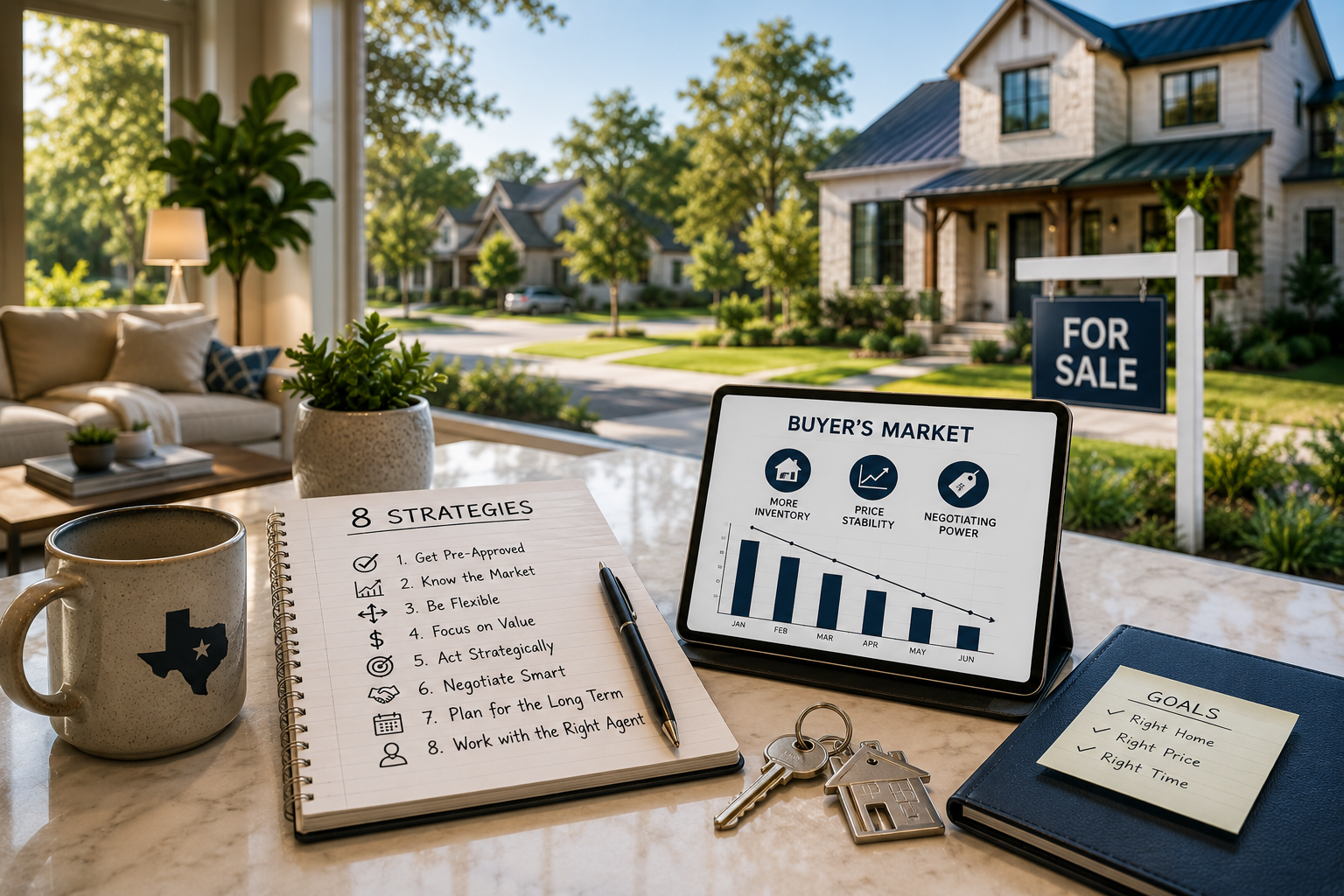
8 Strategies to Buy a Home in Austin's Buyer's Market (Mid-2026 Edition)
Austin has shifted to a buyer's market with 5.3 months of inventory and homes closing 3-4% under list. Eight tactics for negotiating price, structuring seller-paid rate buydowns, using contingencies as leverage, and targeting stale listings while mortgage rates hover near 6.5%.
2026-06-21 • 16 min read

How to Buy a Luxury Home in Austin: 9 Insider Strategies for High-End Buyers
Nine Austin-specific strategies for buying a high-end home above $2M, from neighborhood-by-neighborhood market realities and Lake Austin waterfront nuance to off-market access, pricing logic, and relocation considerations most national guides miss.
2026-06-01 • 20 min read

7 Proven Strategies to Find the Best Luxury Real Estate Agents in Austin
Discover the best luxury real estate agents austin buyers trust. These 7 proven strategies help you find top experts for $2M+ luxury properties today.
2026-05-15 • 12 min read

How to Buy a Luxury Home in Austin: The 2026 Buyer's Guide
A step-by-step 2026 guide to buying a luxury home in Austin: off-market access, jumbo financing, buyer representation, neighborhoods, and negotiation backed by current MLS data.
2026-07-18 • 14 min read