10 Things Buyers Should Know Before Purchasing an Exotic Ranch in the Texas Hill Country
A buyer's guide to exotic wildlife ranches across the Texas Hill Country, covering habitat, infrastructure, wildlife management, tax treatment, revenue potential, and off-market access.
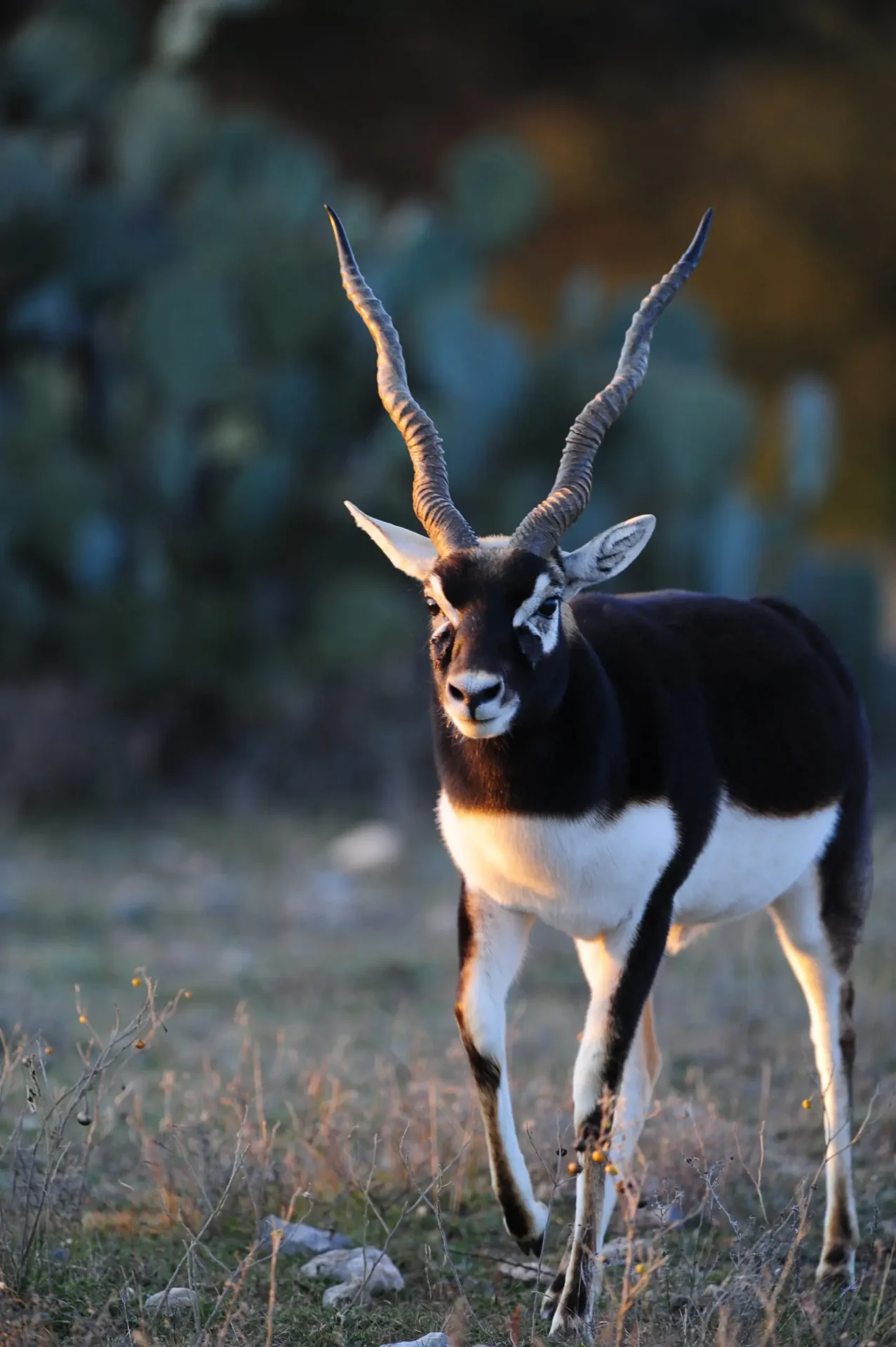
Blackbuck antelope on a Texas Hill Country exotic wildlife ranch. One of many non-native species that thrive across Gillespie, Kerr, Llano, Burnet, and Bandera counties.
The Texas Hill Country has long attracted buyers seeking privacy, open space, and a deeper connection to the land. In recent years, a more specialized category of ownership has gained significant attention: exotic wildlife ranches.
Across Gillespie, Kerr, Llano, Burnet, Bandera, and surrounding counties, species such as axis deer, blackbuck antelope, oryx, fallow deer, and even zebra roam properties that combine recreation, conservation, and long-term land ownership. For many buyers, an exotic ranch offers something increasingly difficult to find elsewhere: a private retreat with tangible lifestyle benefits and meaningful investment potential.
Before purchasing an exotic ranch, it is important to understand what separates these properties from traditional ranches, recreational tracts, and rural estates. Echelon Property Group's Central Texas land and ranch advisory works with buyers across these categories every week, and the patterns below tend to recur.
1. Exotic Ranches Are a Unique Asset Class
An exotic ranch is a property where non-native wildlife plays a significant role in how the land is managed and enjoyed. Unlike traditional cattle ranches, these properties are often designed around wildlife habitat, herd management, recreation, and conservation.
Texas is uniquely positioned for exotic wildlife ownership because many exotic species are classified as livestock rather than native game. This creates a different regulatory framework than buyers may expect if they are familiar with hunting properties focused solely on whitetail deer or turkey.
Today, Texas supports one of the largest populations of exotic hoofstock anywhere in the world outside of their native ranges.
2. The Texas Hill Country Is Ideal Habitat for Exotic Wildlife
The Hill Country's rocky terrain, oak-covered hills, and mild climate create surprisingly suitable habitat for many exotic species.
Axis deer thrive throughout the region and have become one of the most recognizable animals on Texas ranches. Blackbuck antelope, fallow deer, aoudad, nilgai, gemsbok, kudu, and sika deer can also be found across the Hill Country.
Because these animals are well adapted to local conditions, many ranches can support healthy populations with relatively limited intervention when habitat and water resources are properly managed.
For many buyers, the opportunity to watch herds of exotic wildlife roam across their property is one of the most compelling aspects of ownership.
3. Not All Exotic Species Have the Same Value
One of the biggest mistakes first-time buyers make is assuming every exotic animal contributes equally to a ranch's value.
Axis deer are common, reproduce quickly, and remain highly desirable. Blackbuck antelope are prized for their striking appearance and trophy quality. Larger species such as kudu, sable, oryx, and nilgai often command substantially different values due to breeding potential, rarity, and management requirements.
When evaluating a ranch, buyers should request population estimates, breeding records, and herd documentation whenever available. Wildlife inventory can represent meaningful value, but those numbers should always be independently verified during due diligence.
4. Understanding the Difference Between Ranch Types Matters
Not every ranch is designed for the same purpose.
Working cattle ranches focus on agricultural production. Recreational ranches prioritize hunting, fishing, and family enjoyment. Hunting ranches are actively managed to support wildlife populations and hunting opportunities.
Many exotic ranches fall into a fourth category: the gentleman's ranch.
These properties emphasize lifestyle over production. They typically feature custom homes, guest accommodations, improved roads, water features, and carefully managed wildlife populations. The goal is not maximizing agricultural output. The goal is creating an exceptional ownership experience.
For many Austin-area buyers, this category represents the natural bridge between luxury residential real estate and meaningful rural land ownership.
5. Infrastructure Often Determines Long-Term Value
Wildlife may capture attention, but infrastructure often determines whether an exotic ranch becomes an enjoyable asset or a costly headache.
Premium ranches typically include high fencing, reliable water systems, interior road networks, equipment barns, wildlife feeding stations, and well-maintained improvements.
High fencing deserves particular attention. Proper exotic-grade fencing represents one of the largest capital investments on many ranches. Deferred fence maintenance can quickly become a significant expense for a new owner.
Water infrastructure is equally important. Wells, storage tanks, troughs, ponds, and distribution systems should all be evaluated carefully before closing.
6. Wildlife Management Is an Ongoing Responsibility
Exotic ranch ownership is not passive.
Healthy wildlife populations require active stewardship. Herd sizes must be balanced with available habitat. Water systems need maintenance. Native vegetation must be protected from overgrazing.
Many owners work with wildlife biologists and ranch managers to develop long-term management plans that preserve both the ecological health and economic value of the property.
This stewardship component is often one of the most rewarding aspects of ownership. A well-managed ranch can provide exceptional wildlife experiences while preserving habitat for future generations.
7. Property Tax Benefits Can Be Significant
Property taxes are one of the most important financial considerations in ranch ownership.
Many Hill Country ranches qualify for agricultural valuation, which allows land to be taxed based on productive capacity rather than market value. In some situations, wildlife management practices can help maintain this favorable tax treatment.
However, buyers should never assume an existing agricultural valuation will automatically continue after closing. Qualification requirements vary, and maintaining favorable tax treatment often requires ongoing management activities.
Verifying appraisal status and consulting qualified professionals should be part of every buyer's due diligence process.
8. Exotic Ranches Can Produce Revenue
While most buyers purchase exotic ranches for lifestyle reasons, revenue opportunities do exist.
Animal sales, breeding programs, hunting operations, lodge rentals, and agritourism can all contribute income. Some ranches generate meaningful revenue through carefully managed wildlife programs and premium hunting experiences.
That said, most luxury ranch buyers should view income as a potential offset to ownership costs rather than the primary investment thesis. Buyers evaluating a ranch primarily on yield, appreciation, or development optionality should pressure-test the numbers the same way they would on any other real estate investment.
Historically, the strongest financial performance has often come from long-term land appreciation, particularly on well-located properties within easy reach of Austin and the established Hill Country markets around Fredericksburg and Kerrville.
9. Many of the Best Ranches Never Reach the Open Market
Unlike residential real estate, some of the most desirable ranches in Texas are sold quietly.
Families often hold these properties for decades. When they decide to sell, transactions frequently occur through private networks before reaching public marketing channels.
Buyers relying exclusively on listing websites may never see a significant portion of available inventory. That is especially true at the upper end of the market, where sellers prioritize discretion and qualified buyers over broad exposure. It is the same dynamic that shapes our off-market opportunities across Austin and the surrounding region.
Relationships, local knowledge, and access to quiet inventory remain meaningful advantages in the ranch market.
10. Due Diligence Is More Important Than Most Buyers Realize
A ranch purchase requires a different level of investigation than a traditional home purchase.
Water resources, fencing, wildlife inventory, access, infrastructure, tax status, easements, and operational costs all deserve careful review. For buyers also weighing larger acreage positions or development-oriented tracts, our guide to Austin ranch land and Hill Country acreage covers the broader land-buying framework in more depth.
The most successful buyers build a team that includes experienced ranch advisors, wildlife consultants, property tax professionals, and legal counsel familiar with Texas land transactions.
The goal is not simply to buy a beautiful property. The goal is to understand exactly what you are acquiring and how it will perform over the long term.
The Bottom Line
Exotic ranches occupy a unique place within the Texas land market. They combine wildlife, recreation, conservation, privacy, and long-term ownership in a way few other real estate assets can match.
For the right buyer, a well-located Hill Country ranch can become a family retreat, a legacy asset, and a meaningful store of value for generations to come.
Whether your vision involves watching axis deer from the porch of a custom lodge, creating a family gathering place outside Fredericksburg, or acquiring a substantial land holding within reach of Austin, success begins with understanding what makes these properties different.
The buyers who take the time to understand the market, evaluate opportunities carefully, and surround themselves with the right advisors are often the ones who find the most rewarding ranch ownership experiences.
Frequently Asked Questions
What qualifies a property as an exotic ranch in the Texas Hill Country?
An exotic ranch is generally a property where non-native species such as axis deer, blackbuck antelope, fallow deer, aoudad, oryx, or nilgai play a meaningful role in how the land is managed and enjoyed. In Texas, many of these species are legally classified as livestock rather than native game, which gives owners more flexibility in herd management, sales, and hunting compared with native species like whitetail deer.
How is a gentleman's ranch different from a working ranch?
A gentleman's ranch is primarily lifestyle-driven. It typically combines a custom home or lodge, improved roads, water features, and a carefully managed wildlife population on acreage that can be enjoyed without depending on agricultural income. A working ranch, by contrast, is structured around cattle, hay, or other production activities and is evaluated more on operational economics than on lifestyle amenities.
Where are most exotic and gentleman's ranches located in Central Texas?
The strongest concentration sits across the Hill Country counties west of Austin, including Gillespie, Kerr, Llano, Burnet, Bandera, Mason, and Blanco. The markets around Fredericksburg and Kerrville are among the most established, with a deep base of high-fenced properties, experienced ranch managers, and infrastructure that supports exotic wildlife at scale.
Do exotic ranches still qualify for agricultural or wildlife property tax valuation?
Many Hill Country ranches qualify for agricultural valuation, and in some situations a property can transition to or maintain a wildlife management valuation while supporting exotic species. Qualification rules are county-specific and depend on prior use and active management practices, so buyers should never assume current tax treatment will carry forward after closing without verifying with the county appraisal district and qualified advisors.
How do buyers find exotic ranches that are not publicly listed?
A significant share of high-quality ranch transactions in Texas happen through private channels before, or instead of, appearing on public listing sites. Working with an advisor who is active in the Hill Country ranch market, has relationships with neighboring landowners, and tracks off-market inventory is usually the most reliable way to see properties that are not openly marketed.
Considering an exotic or gentleman's ranch in the Texas Hill Country?
Request a private ranch consultationContinue Exploring
Three places to go from here

ABOUT THE AUTHOR
Taylor Sherwood
Austin Real Estate Advisor · Echelon Property Group
Taylor Sherwood is a Certified Luxury Home Marketing Specialist (CLHMS) and top-performing Austin real estate advisor. He specializes in luxury residential properties, land development, commercial real estate, and investment property across Austin and the Texas Hill Country. With deep market expertise and a results-driven approach, Taylor helps buyers, sellers, and investors navigate Austin's most competitive real estate segments.
Related Reading
Buying Land in the Texas Hill Country: The 2026 Guide to Wells, Septic, Ag Exemptions, and Everything the Per-Acre Price Hides
What Hill Country acreage really costs in 2026: per-acre prices, well drilling, septic, power, ag exemptions, and the rollback tax rules most buyers get wrong.
2026-07-30 • 12 min read
Texas Hill Country Ranch Market: What Buyers and Investors Need to Know
How the Texas Hill Country ranch market really works: submarket pricing from Fredericksburg to Kerrville, water and flood due diligence after the 2025 Guadalupe flood, ag and wildlife exemptions, and how off-market land deals get done.
2026-07-12 • 14 min read
Wildlife Exemptions vs Agricultural Exemptions in Texas: What Ranch Owners Need to Know
A Texas land and ranch advisor's guide to wildlife versus agricultural valuations, including eligibility, acreage realities in the Hill Country, rollback risk, and how buyers in Fredericksburg, Kerrville, Mason, Llano, Harper, and Johnson City should evaluate ranches before closing.
2026-06-02 • 12 min read
Austin Ranch Land for Sale: Complete Guide to Hill Country Ranches and Acreage Properties
A complete guide to Austin ranch land, Hill Country properties, investment land, acreage ownership, agricultural and wildlife exemptions, and Austin-area growth corridors shaping long-term value across Central Texas.
2026-05-31 • 22 min read