Texas Hill Country Ranch Market: What Buyers and Investors Need to Know
How the Texas Hill Country ranch market really works: submarket pricing from Fredericksburg to Kerrville, water and flood due diligence after the 2025 Guadalupe flood, ag and wildlife exemptions, and how off-market land deals get done.
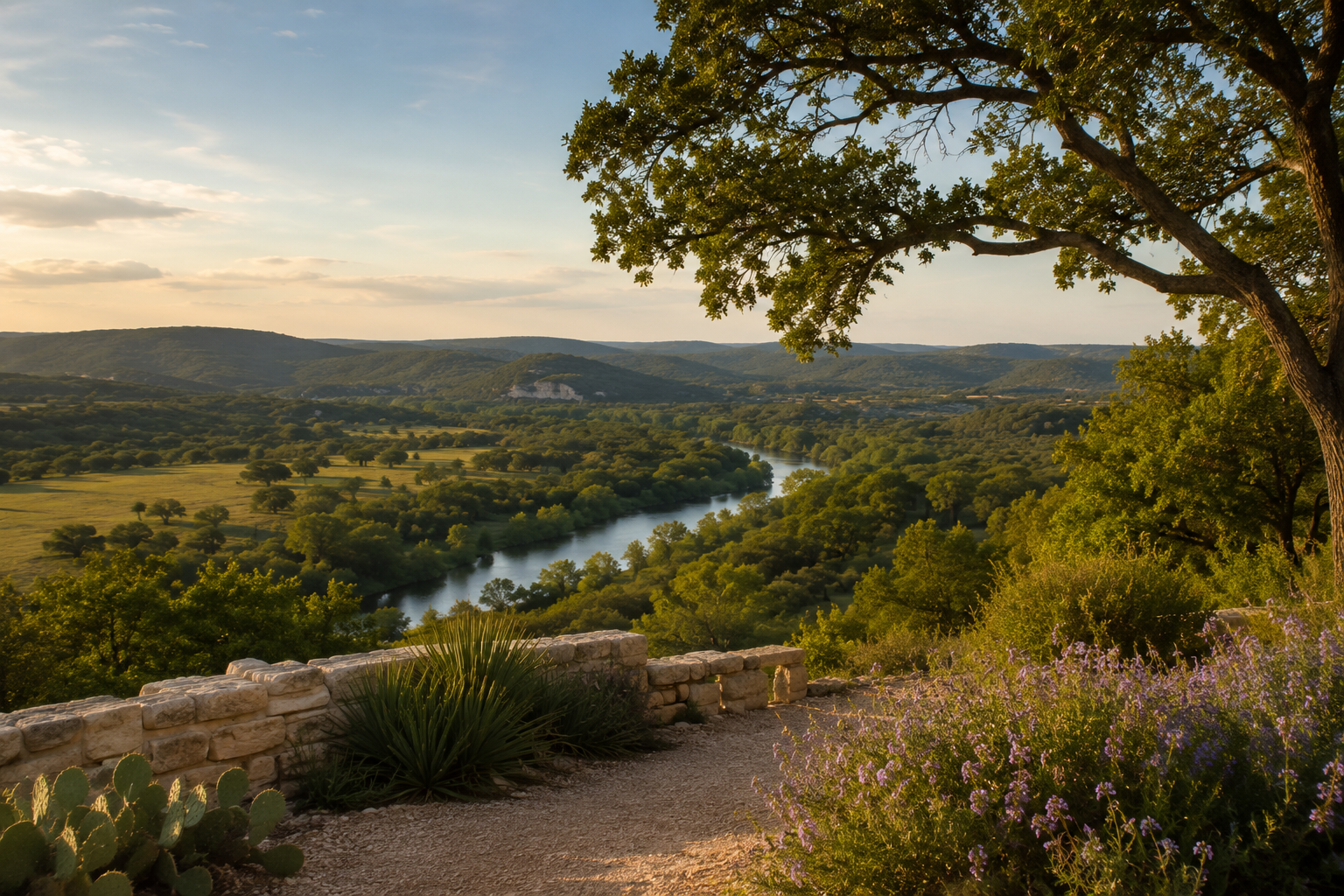
The Texas Hill Country ranch market runs by its own rules: submarket pricing, water rights, and relationship-driven off-market deals.
The Texas Hill Country ranch market attracts Austin professionals, out-of-state investors, and family offices seeking hard asset diversification, but it operates under distinct rules that differ significantly from residential real estate. This practical guide breaks down submarket pricing logic, water and flood due diligence in a post-2025 landscape, and key considerations across the region's major counties, from Dripping Springs and Marble Falls to Fredericksburg, Kerrville, and beyond.
The geographic scope here is broad: a corridor that stretches from Dripping Springs and Marble Falls in the east to Fredericksburg, Kerrville, and Llano in the heart of the region, and north through Burnet, Lampasas, and Johnson City. Each submarket has its own pricing logic, buyer profile, and land characteristics. What drives value in Gillespie County is not the same as what drives value in Kerr or Llano County.
This article is a practical guide to understanding how the Texas Hill Country ranch market works: what determines land values, who is buying and why, how transactions actually get done, and what risks are commonly underestimated before closing. Whether you're considering a recreational purchase, an investment acquisition, or a working ranch, the fundamentals here apply.
Understanding the Structure of the Hill Country Land Market
The Hill Country ranch market is not a single, uniform market. It's a collection of distinct submarkets that share geography but behave quite differently in terms of pricing, land use, and buyer demand.
The I-10 corridor running west from San Antonio through Kerrville anchors the southern tier. The Highway 290 wine corridor through Fredericksburg and Stonewall has developed its own pricing tier driven by tourism and short-term rental demand. The Highway 281 northern corridor through Johnson City, Marble Falls, and Burnet connects Austin buyers to more accessible acreage. Each of these corridors attracts a different buyer profile and supports a different range of land uses.
For context on pricing: regional land-market reporting put average rural land values across the broader Austin, Waco, and Hill Country region at a record of roughly $7,700 per acre in 2025. That average conceals enormous variance. Small live-water tracts near Fredericksburg can trade at several multiples of that figure, while large dry-land parcels in the western counties trade well below it. Treat any regional average as a reference point, not a valuation.
Property types also vary considerably, and the distinctions matter for both valuation and taxation. Recreational ranches are purchased primarily for hunting, fishing, and lifestyle use. Working cattle operations involve active agricultural production. Exotic wildlife ranches, particularly common in Kerr, Llano, and Edwards counties, are high-fenced properties managed for deer, axis, blackbuck, and other game species. Ag-exempt tracts may support minimal agricultural activity specifically to maintain their tax status. And a growing category of hybrid residential-ranch properties blends improved living quarters with rural acreage.
Each of these property types is valued differently. A high-fenced exotic ranch with established wildlife populations commands prices that a bare-land cattle operation would not. A river-front tract with riparian rights is a different conversation than a dry-land parcel with no surface water. Understanding what type of property you're actually evaluating is the first step in any credible due diligence process.
Structurally, this market also differs from Austin residential real estate in ways that catch buyers off guard. Days on market are longer. Pricing is less standardized because comparable sales data is thin and properties are rarely identical. A significant portion of transactions happen off-market through local land broker networks and direct relationships with landowners. If you're searching exclusively on the MLS, you're seeing a fraction of what's actually available or changing hands.
The Forces Behind Land Values in the Region
Proximity to Austin and San Antonio is the single largest demand driver across the Hill Country. Drive-time thresholds matter: properties within 60 to 90 minutes of Austin's western suburbs consistently price above comparable acreage further out. The growth of Dripping Springs, Marble Falls, and Bee Cave has effectively compressed what used to be considered the rural buffer zone, pushing lifestyle buyers further west and creating upward pressure on land values in areas that were once considered remote.
Water is the other major value driver, and it deserves serious attention. Texas follows the rule of capture for groundwater, which generally means landowners own the water beneath their property. But groundwater rights can be complicated by Groundwater Conservation District regulations that vary by county. Surface water rights follow a prior appropriation doctrine, and river frontage reflects both recreational value and practical water access. Depending on where a property sits, aquifer oversight may come from the Edwards Aquifer Authority, the Barton Springs/Edwards Aquifer Conservation District, or TCEQ's Edwards Aquifer rules, another layer of regulatory complexity buyers need to understand before assuming they have unrestricted water access.
Frontage on the Pedernales, Guadalupe, Llano, and Colorado rivers is among the most sought-after land characteristics in the region. Properties with live water, meaning year-round flowing creeks or river access, consistently command higher per-acre prices than dry-land tracts.
That said, the July 2025 Guadalupe River flood permanently changed how sophisticated buyers underwrite river frontage. The river rose roughly 26 feet in under an hour near Hunt, more than 100 lives were lost in Kerr County alone, and residential damage across Central Texas ran over a billion dollars. Properties once mapped as low-risk were pushed into new high-risk categories, and reporting after the flood found that only about 3% of damaged Kerr County homes carried flood insurance. A year later, the market has largely normalized and river frontage still draws strong demand, but the lesson stands: flood exposure is now a first-order due diligence item on any water-frontage acquisition, not a box to check.
Agricultural and wildlife exemptions are a structural advantage of Texas ranch ownership that is often underappreciated by buyers coming from other states. Under Texas Property Tax Code Chapter 23, land that qualifies for agricultural or wildlife management use is appraised based on productivity value rather than market value. The practical effect is a dramatically lower annual property tax burden, which makes Hill Country land structurally more affordable to hold than comparable acreage in many other states.
Wildlife management exemptions, which allow landowners to transition from traditional ag use to wildlife management practices while maintaining the tax benefit, are widely used across the region. For buyers evaluating carrying costs over a multi-year hold, understanding whether a property has an active exemption, and whether it can be maintained, is a material financial consideration.
Who Is Buying Hill Country Ranch Land
The buyer profile in the Hill Country ranch market has shifted meaningfully over the past decade. Traditional ranching families, who once represented the core of land transactions in this region, have been joined, and in many corridors displaced, by Austin-based professionals, corporate relocators, out-of-state investors, and family offices seeking hard asset diversification.
This shift has changed negotiation dynamics. Lifestyle buyers often place significant emotional value on specific attributes, such as a particular view shed, a named creek, or proximity to Fredericksburg's amenities. That emotional premium can push offer prices above what a purely investment-driven buyer would justify on fundamentals. Sellers and their brokers understand this, and it affects how properties are positioned and how negotiations unfold.
At the larger end of the market, institutional and corporate buyers have become more active in tracts of 500 acres and above. Conservation buyers, including land trusts and conservation-focused family offices, have been acquiring larger tracts in sensitive ecological areas. These buyers are often less price-sensitive than individual buyers and can move quickly when the right property is identified. Their presence compresses available supply at the top end of the market and can make large-tract acquisition more competitive than it appears from the outside.
Recreational and lifestyle buyers approach due diligence differently than income-generating buyers. A lifestyle buyer may prioritize aesthetics, accessibility, and improvements. An investor or operator evaluating the same property will focus on water infrastructure, grazing capacity, lease income potential, or STR revenue if the property sits in a tourism corridor. These different priorities lead to very different financing approaches and risk tolerances. Lifestyle buyers often use cash or conventional financing. Income-focused buyers are more likely to engage Farm Credit lenders and structure the acquisition around operational projections.
How Hill Country Ranch Transactions Actually Get Done
A significant share of Hill Country ranch deals never appear on the MLS. Local land brokers maintain networks of landowners who are open to selling but have no interest in public marketing, and rural transactions frequently occur outside formal listing systems entirely. If you're not connected to those networks, you're not seeing the full market.
This is why representation matters more in land transactions than it does in most residential deals. A buyer's agent with genuine Hill Country relationships can identify off-market opportunities, make introductions to landowners, and provide context on properties that never get formally listed. Without that access, buyers are competing only for publicly available inventory, which tends to be more picked-over and more competitively priced.
The transaction process itself is more complex than a residential closing. Timelines are longer. Survey requirements are more involved, particularly for larger tracts with irregular boundaries or easements. Title work requires careful examination of mineral rights, surface rights, and any existing easements, whether for utilities, roads, pipelines, or neighboring landowner access. In Texas, mineral rights are frequently severed from surface rights, meaning the seller may not own what's beneath the ground. A thorough mineral rights title search is not optional; it's standard practice.
Standard residential purchase contracts are inadequate for land transactions. TREC's Farm and Ranch Contract is the appropriate starting point, but experienced land attorneys and brokers often supplement it with additional addenda covering water rights, wildlife exemption transitions, and specific use representations.
Financing is another area where land transactions diverge from residential. Conventional mortgage lenders generally do not finance raw land or working ranches the same way they finance homes. Farm Credit institutions, including Capital Farm Credit and AgTexas Farm Credit, are federally chartered lenders specifically designed for rural land acquisition and are the most common financing source for Hill Country ranch purchases. That said, cash buyers and well-capitalized buyers hold a structural advantage in this market. Sellers who have held land for decades are often motivated by certainty of close over maximum price, and an all-cash offer with a short due diligence period carries real weight.
Risks Buyers Commonly Underestimate
Valuation is genuinely difficult in the Hill Country ranch market. Unlike residential real estate, where comparable sales data is relatively abundant and properties share standardized characteristics, rural land parcels are rarely comparable in any meaningful way. Two adjacent tracts can differ substantially in water access, topography, road access, and improvements, and those differences justify wide price variances. Appraisals on rural land are less reliable than in residential markets, and buyers should not treat an appraised value as a ceiling or a floor without understanding the methodology behind it.
Environmental and regulatory considerations deserve careful attention, particularly for buyers who envision any future development or infrastructure improvements. The Edwards Aquifer recharge and contributing zones span portions of Hays, Travis, Comal, and other counties. Land within these zones is subject to regulatory oversight, TCEQ's Edwards Aquifer rules, plus the Edwards Aquifer Authority or the Barton Springs/Edwards Aquifer Conservation District depending on location, and certain activities, including impervious cover expansion and chemical storage, are restricted. Buyers need to know whether their target property sits within a regulated zone before making assumptions about development potential.
Floodplain risk deserves its own line item, and the July 2025 Guadalupe River flood is the proof point. FEMA flood maps for rural areas are often outdated or less detailed than urban maps, and in 2025 the Guadalupe exceeded its mapped flood expectations, placing properties once considered "safe" into new high-risk categories. Post-flood remapping is still working through the system, which means the map you pull today may not reflect either the actual hydrology or the designation a lender or insurer will apply at closing. Commissioning an independent floodplain analysis is worth the cost on any property with significant water frontage, and flood insurance, which almost no affected Kerr County owners carried in 2025, should be priced into carrying costs, not treated as optional.
Deed restrictions and existing easements can limit what buyers can do with a property in ways that aren't immediately obvious from a surface review. Pipeline easements, utility corridors, and neighbor access easements can all affect land use and future value. Buyers counting on short-term rental income should also verify local STR rules early: several Hill Country cities and counties have tightened permitting and enforcement as tourism has grown.
Finally, carrying costs beyond the purchase price are frequently underestimated. Without an active agricultural or wildlife exemption, property taxes on Hill Country land can be substantial. Fencing, road maintenance, water infrastructure, insurance, and the cost of managing a wildlife program or cattle operation add up quickly. Buyers should build a realistic annual operating budget before closing, not after.
Submarket Snapshots: Where the Opportunities Are
Fredericksburg and the Highway 290 corridor represent the most competitive and highest-profile segment of the Hill Country ranch market. Gillespie County's wine country identity, combined with strong short-term rental demand and proximity to San Antonio and Austin, has driven sustained buyer interest and limited available inventory. Pricing here reflects not just land value but income potential. Competition is real, and buyers should expect to move decisively when the right opportunity appears.
Kerrville and Kerr County offer a different proposition. Tracts here tend to be larger and more accessible in price per acre than comparable Gillespie County properties, and the county has a strong exotic wildlife ranch tradition, with high-fenced properties managed for axis deer, blackbuck antelope, and other species forming a distinct and well-established segment. Kerr County is also where the 2025 flood hit hardest. Some sellers pulled listings in the immediate aftermath, and while the market has since stabilized, and Guadalupe River frontage continues to attract buyers, flood mapping, elevation, and insurance are now standard parts of the underwriting conversation here in a way they weren't before.
Johnson City and Blanco County sit at an interesting intersection. The area offers genuinely rural character at price points that remain more accessible than the Fredericksburg market, and properties along the Pedernales River command above-market pricing. As Fredericksburg becomes increasingly competitive, Johnson City is drawing more attention from buyers who want Hill Country character without the full Gillespie County price tag.
Llano County is the destination for buyers specifically seeking large recreational ranches with strong hunting. Deer and exotic game management are central to land use here, and wildlife exemptions are widely applied. Buyers focused on investment-grade hunting operations or conservation acquisitions should be looking at Llano.
Dripping Springs and Marble Falls represent the Austin-adjacent tier of the Hill Country market. These areas sit at the intersection of suburban growth and rural land, which creates both opportunity and complexity. Land values here are influenced by both residential development pressure and traditional ranch market dynamics. Buyers need to think clearly about which market they're actually buying into, because the two have different risk profiles and different exit strategies.
Burnet County and the Highland Lakes corridor are drawing increasing interest from Austin buyers as western Travis County has become more built out. Lake access, combined with Hill Country character, creates a distinct value proposition that is attracting both lifestyle buyers and investors.
Before You Make a Move
The most important step before entering the Hill Country ranch market is defining your primary use case with clarity. Are you buying for lifestyle and personal enjoyment? For investment and appreciation? For agricultural income or wildlife management? For conservation? For future development potential? Each of these objectives drives a completely different acquisition strategy, a different set of due diligence priorities, and a different view of what constitutes a good deal.
A buyer purchasing a weekend retreat near Fredericksburg should be evaluating different things than an investor acquiring a working wildlife ranch in Llano County. Getting that clarity before you start searching saves time, prevents misaligned purchases, and helps your advisors identify the right opportunities.
Representation matters significantly in this market. You want advisors who understand both the Austin real estate landscape and the specific dynamics of Hill Country land transactions. That means access to off-market inventory, relationships with local landowners and land brokers, and the ability to navigate the title complexity, water rights questions, and exemption structures that define this market.
Echelon Property Group works with buyers navigating exactly this kind of acquisition, from identifying the right submarket and property type to managing the due diligence process and connecting clients with the right legal and agricultural resources. Learn more about our services and how we approach land and ranch advisory work in the Austin and Hill Country region.
Continue Exploring
Three places to go from here

ABOUT THE AUTHOR
Taylor Sherwood
Austin Real Estate Advisor · Echelon Property Group
Taylor Sherwood is a Certified Luxury Home Marketing Specialist (CLHMS) and top-performing Austin real estate advisor. He specializes in luxury residential properties, land development, commercial real estate, and investment property across Austin and the Texas Hill Country. With deep market expertise and a results-driven approach, Taylor helps buyers, sellers, and investors navigate Austin's most competitive real estate segments.
Related Reading
Buying Land in the Texas Hill Country: The 2026 Guide to Wells, Septic, Ag Exemptions, and Everything the Per-Acre Price Hides
What Hill Country acreage really costs in 2026: per-acre prices, well drilling, septic, power, ag exemptions, and the rollback tax rules most buyers get wrong.
2026-07-30 • 12 min read

Wildlife Exemptions vs Agricultural Exemptions in Texas: What Ranch Owners Need to Know
A Texas land and ranch advisor's guide to wildlife versus agricultural valuations, including eligibility, acreage realities in the Hill Country, rollback risk, and how buyers in Fredericksburg, Kerrville, Mason, Llano, Harper, and Johnson City should evaluate ranches before closing.
2026-06-02 • 12 min read

10 Things Buyers Should Know Before Purchasing an Exotic Ranch in the Texas Hill Country
A buyer's guide to exotic wildlife ranches across the Texas Hill Country, covering habitat, infrastructure, wildlife management, tax treatment, revenue potential, and off-market access.
2026-06-01 • 10 min read
Austin Ranch Land for Sale: Complete Guide to Hill Country Ranches and Acreage Properties
A complete guide to Austin ranch land, Hill Country properties, investment land, acreage ownership, agricultural and wildlife exemptions, and Austin-area growth corridors shaping long-term value across Central Texas.
2026-05-31 • 22 min read