Wildlife Exemptions vs Agricultural Exemptions in Texas: What Ranch Owners Need to Know
A Texas land and ranch advisor's guide to wildlife versus agricultural valuations, including eligibility, acreage realities in the Hill Country, rollback risk, and how buyers in Fredericksburg, Kerrville, Mason, Llano, Harper, and Johnson City should evaluate ranches before closing.
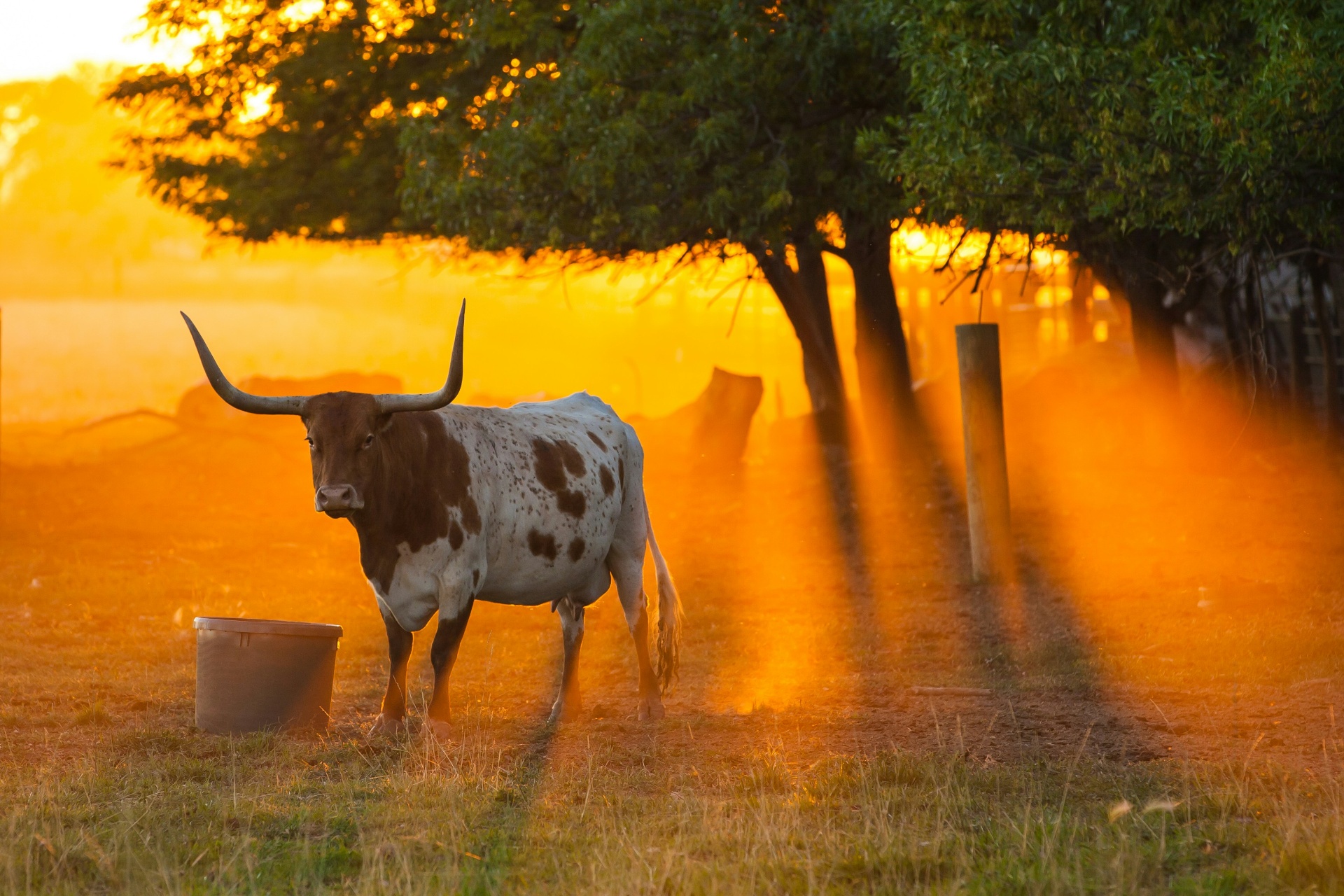
A Texas Longhorn at sunset on a Hill Country ranch. Special-use valuations protect the productive value of rural land across Gillespie, Kerr, Llano, Burnet, and surrounding counties.
If you are evaluating ranch property in the Texas Hill Country, the difference between a wildlife valuation and an agricultural valuation can shape the economics of your purchase for decades. Both can dramatically reduce annual property taxes on rural land, but they carry different obligations, different ownership lifestyles, and very different risks at the closing table. This guide is written from the perspective of a Texas land and ranch advisor working with buyers across Fredericksburg, Kerrville, Mason, Llano, Harper, and Johnson City, and it focuses on the practical questions buyers actually ask before they sign.
If you have spent any time evaluating ranches in the Texas Hill Country, you have almost certainly heard the phrase "ag exempt" used to describe a property's tax status. It sounds simple enough. But that shorthand glosses over something buyers need to understand clearly before signing a contract: there is no such thing as an agricultural exemption in Texas property tax law.
What actually exists are special-use valuations. These are legal mechanisms that allow qualifying rural land to be taxed based on its productive capacity rather than its full market value. The distinction is not just semantic. It has real financial and legal consequences for anyone buying, selling, or holding rural land in Texas.
In markets like Fredericksburg, Kerrville, and Johnson City, where Hill Country ranch land has appreciated significantly, the gap between a property's market value and its assessed value under one of these programs can be dramatic. A 200-acre ranch with a market value in the millions may be taxed on a basis a small fraction of that size. Losing that valuation status, or triggering what is known as a rollback tax, can create a significant and unexpected liability.
This guide is written for buyers evaluating rural land in Texas, not as a legal or tax treatise, but as an advisory framework. Whether you are looking at a working cattle operation outside Llano, a hunting property near Mason, a recreational tract in Harper, or a legacy ranch in the Fredericksburg corridor, understanding how these valuations work is fundamental to understanding what you are actually buying. For a broader view of how we evaluate rural opportunities across the region, see our Austin ranch land and Hill Country properties overview.
Special Valuations, Not Exemptions: Getting the Language Right
A tax exemption eliminates a tax obligation entirely or reduces taxable value by a fixed amount. A special-use valuation does something different: it changes the basis on which a property is assessed.
Under the Texas Property Tax Code, most real property is assessed at market value, meaning what a willing buyer would pay a willing seller in an arm's-length transaction. Special-use valuations break from that standard by assessing land based on what it can produce in its qualifying use, whether that is cattle grazing, hay production, or wildlife management.
Two separate provisions govern this in Texas law. Agricultural valuation is authorized under Texas Property Tax Code Section 23.51, commonly referred to as "1-d-1." Wildlife management valuation is authorized under Section 23.521 as a subset of agricultural valuation. Both calculate taxable value based on productive use rather than market value.
In practical terms, this matters enormously in high-demand markets. Consider a 300-acre Hill Country property near Fredericksburg. At current values in that corridor, the land might be assessed at several million dollars under standard market appraisal. Under an active agricultural or wildlife management valuation, the taxable value could be a small fraction of that figure, with annual tax savings that compound significantly over a long ownership hold.
That gap is precisely why these valuations are so consequential in Hill Country ranch transactions, and why buyers need to understand exactly what they are inheriting when a property carries one.
The other reason language matters: when buyers assume a property is "exempt," they sometimes also assume the status is permanent, transferable, and effortless to maintain. None of those assumptions are reliable. A special-use valuation must be earned, maintained through ongoing qualifying activity, and in some cases re-established after a change in ownership.
Getting the framework right from the start shapes how you evaluate every other aspect of the transaction.
Quick Definitions
- Agricultural valuation (1-d-1). Land taxed on its agricultural productivity, supported by genuine livestock, hay, crop, beekeeping, or timber use.
- Wildlife management valuation. A conversion from an existing ag valuation in which the owner manages the land for native wildlife under a written plan.
- Rollback tax. A recapture of the tax savings (plus interest) when qualifying use stops or the land is converted to a non-qualifying use.
- Wildlife Management Plan (WMP). A written plan filed with the county appraisal district describing the practices the owner will implement each year.
Agricultural Valuation: Requirements and Ongoing Obligations
Agricultural valuation under Texas Tax Code Section 23.51 requires that land be devoted principally to agricultural use for five of the preceding seven years. That history has to be genuine and ongoing, not nominal or token.
Qualifying uses include livestock production, crop farming, orchards, hay production, beekeeping, and timber. The land does not need to be commercially profitable, but the use must be real and consistent. A handful of goats on 500 acres is unlikely to satisfy a county appraisal district looking for evidence of genuine agricultural activity.
One nuance that surprises many buyers: there is no single statewide standard for minimum acreage or stocking rates. Each county appraisal district sets its own requirements. In Hill Country counties, minimum acreage for livestock-based agricultural valuation commonly falls in the range of 10 to 20 acres, but that varies by county and by use type. A hay operation in Llano County may be evaluated under different standards than the same operation in Gillespie County around Fredericksburg.
Before assuming a property qualifies, buyers should contact the relevant county appraisal district directly to understand local standards. What worked for the seller may not automatically work for the buyer, particularly if the buyer intends to change the nature of the operation.
Documentation is a real consideration. Appraisal districts may request lease agreements for grazing operations, receipts for agricultural inputs, evidence of hay sales, or records of livestock inventory. Properties with well-documented agricultural histories are in a stronger position than those where the qualifying use has been loosely maintained.
When agricultural use lapses or is discontinued, the land becomes subject to a rollback tax. That rollback recaptures the difference between what was paid under the special valuation and what would have been owed at market value, assessed over a lookback period. Texas law in this area has seen legislative changes, including a 2019 reduction in the rollback period for many agricultural scenarios. Buyers and their advisors should verify the current rollback window with the Texas Comptroller's guidance or a Texas property tax professional, as the applicable period depends on the nature of the change in use. We address rollback risk in more detail in a later section.
Wildlife Management Valuation: How It Actually Works
Wildlife management valuation is one of the most misunderstood concepts in Texas ranch real estate. The most critical thing to understand is this: it is not a standalone status that can be applied to raw land.
Wildlife valuation is a conversion from an existing agricultural valuation. Land must already qualify for and hold an ag valuation before an owner can elect to transition to wildlife use. A buyer who purchases raw land with no agricultural history cannot simply declare wildlife management intent and expect to receive a special valuation. The underlying agricultural qualification must exist first.
Once that foundation is in place, the landowner must actively implement at least three of seven wildlife management practices recognized by Texas Parks and Wildlife each year, document them, and file a written Wildlife Management Plan with the county appraisal district.
What Hill Country Ownership Actually Looks Like
A few realistic scenarios we encounter regularly:
- Fredericksburg, 180 acres. A family acquires an inherited cattle ranch in Gillespie County, retires the herd, and converts to wildlife use focused on whitetail and axis deer. Their plan combines brush sculpting along oak motts, three new wildlife guzzlers, predator control, and annual spotlight surveys. The property continues to qualify, taxes hold steady, and the family uses the ranch as a weekend retreat and hunting camp.
- Kerrville, 95 acres on the Guadalupe. A retired couple buys a riverfront tract that the previous owner ran under a small hay lease. They keep the ag valuation in year one, then convert to wildlife in year two with a plan emphasizing riparian habitat protection, native grass restoration, and songbird monitoring. See our Kerrville land overview for similar profiles.
- Mason, 640 acres. A multi-generational legacy ranch with strong ag history transitions fully to wildlife management. The plan supports a mix of native whitetail, turkey, and quail, with food plots, brush piles, and a contracted biologist conducting annual deer surveys. Mason County is known for thorough review of wildlife plans, and the owner's documentation is built accordingly.
- Llano, 250 acres. An investor holds the property for long-term appreciation while leasing seasonal hunting access. The ag valuation is preserved through a documented grazing lease with a neighboring cattleman, avoiding the wildlife conversion entirely.
- Harper, 120 acres. A buyer assembles two adjacent tracts into a single family retreat. Because one tract lacked recent ag history, the team works with a wildlife biologist to time the application so the consolidated property carries a clean qualifying record before filing.
- Johnson City, 300 acres. A conservation-minded owner manages for native species and habitat restoration, removing cedar, restoring native grasses, and installing supplemental water. Hunting is recreational rather than commercial, and the wildlife valuation aligns naturally with how the land is actually used.
Across all of these, the through-line is the same: the tax treatment reflects how the land is genuinely managed, and the documentation supports it.
Why Owners Choose Wildlife Over Continuing Ag
Many Hill Country owners convert because running livestock no longer fits their life. The land may be too rocky or steep for an efficient herd, the labor and infrastructure may be more than the owner wants to take on, or the goal may be hunting, family retreat use, or long-term conservation rather than agricultural production. Wildlife valuation lets the tax treatment match the actual ownership purpose.
A written Wildlife Management Plan must be submitted to the county appraisal district. The depth of review varies by county. Mason and Kimble counties, for example, have rigorous processes for reviewing these plans, and landowners in those areas should expect meaningful scrutiny. Annual activity logs documenting which practices were implemented and when are typically required to maintain the valuation year over year.
Texas Parks and Wildlife Department biologists provide free technical assistance to landowners developing management plans. This is a genuine and underutilized resource. Working with a TPWD biologist not only helps ensure the plan meets state standards but also adds credibility when the plan is submitted to the appraisal district. Buyers interested in exotic ranches in the Texas Hill Country will find this technical assistance especially valuable during due diligence.
The Seven Wildlife Management Practices, With Real-Ranch Examples
Texas Parks and Wildlife recognizes seven categories of wildlife management activity. A qualifying plan must implement at least three each year. Here is what they actually look like on working Hill Country properties.
- Habitat control. Selective cedar removal on a Llano ranch to release native oak and grasses, prescribed burns on a Mason property to regenerate grasslands, or sculpting brush lines to create edge habitat for whitetail and quail.
- Erosion control. Building rock check dams on a Harper draw, reseeding bare slopes with native grasses on a Kerrville hillside, or stabilizing ranch roads with caliche and water bars to prevent gully formation.
- Predator management. Documented feral hog trapping on a Fredericksburg ranch, coordinated coyote management around fawning grounds in Johnson City, or trail-camera-supported control of nest predators on a quail-focused property.
- Supplemental water. Installing wildlife guzzlers in dry pastures, maintaining year-round troughs on a high-fenced Mason property, or restoring an earthen tank with a wildlife escape ramp on a 250-acre Llano tract.
- Supplemental food. Establishing warm-season food plots of cowpeas and milo near a Johnson City creek, maintaining protein feeders on a managed deer ranch, or planting oat and wheat strips for turkey and quail in Harper.
- Supplemental shelter. Constructing brush piles on cleared cedar lines, installing bluebird and screech-owl nest boxes around a Kerrville ranch headquarters, or leaving designated escape cover near food and water on a Fredericksburg recreational tract.
- Census and monitoring. Annual spotlight deer surveys with a Texas Parks and Wildlife biologist, year-round game camera networks on a Mason ranch, quail call counts in spring, or songbird point counts on a conservation-focused property in Johnson City.
Passive wildlife presence does not qualify. A landowner who simply has deer on the property and does nothing structured to manage them will not satisfy the requirement. The practices must be active, documented, and consistent.
Making the Transition from Agricultural to Wildlife Management Use
The transition from agricultural valuation to wildlife management valuation is a formal process, not an informal one. It requires submitting an application and a written Wildlife Management Plan to the county appraisal district, typically by a specific annual deadline. Most counties require applications to be submitted by April 30th of the tax year, though buyers should confirm the deadline with their specific county.
Many Hill Country ranch owners make this transition for practical reasons. Maintaining an active livestock operation requires ongoing labor, infrastructure, and management attention. For buyers who want to use the land for hunting, habitat restoration, family retreats, or conservation, wildlife valuation offers a way to preserve the tax benefit without the overhead of a working agricultural operation.
A deer hunting property near Johnson City or a cedar restoration project outside Kerrville can qualify under wildlife management if the owner implements the required practices and maintains the documentation. That alignment between actual use and tax status is one reason wildlife management ranches have become increasingly common across the Hill Country.
For buyers, the transition history of a property matters. If a seller recently converted from agricultural to wildlife valuation, or if the agricultural history underlying the valuation is thin, the new owner may face additional scrutiny from the appraisal district after the sale. Appraisal districts have the authority to re-evaluate a property's valuation status after a change in ownership, particularly if there are questions about whether the qualifying use is being continued.
Buyers should request the existing Wildlife Management Plan and any activity logs as part of due diligence. Review them carefully. A well-documented plan with several years of activity records is a meaningful asset. A plan that was hastily assembled before a sale is a risk factor.
If the current plan is thin or the agricultural history is unclear, factor in the cost and time required to establish or strengthen the valuation. That may include hiring a wildlife biologist, installing supplemental water or feeding infrastructure, and building a credible documentation history over time.
Rollback Taxes: The Liability Buyers Often Underestimate
Rollback taxes are one of the most significant financial risks in Texas ranch transactions, and they are frequently underestimated by buyers focused primarily on purchase price and closing costs.
When land receiving a special-use valuation changes to a non-qualifying use, a rollback tax is assessed. The rollback recaptures the difference between what was paid under the special valuation and what would have been owed at market value over a lookback period. Interest is also applied.
Texas law governing the rollback period has evolved. The 2019 legislative session reduced the rollback period from five years to three years for many agricultural land scenarios. The precise window depends on the nature of the change in use, and this area of law has continued to see legislative attention. Buyers should not rely on a single number without confirming the current statute with the Texas Comptroller's guidance or a Texas property tax attorney.
What triggers a rollback? The most common scenarios are a change of use by the current owner, development activity such as subdivision or construction, and a sale followed by the new owner's failure to continue qualifying use. A sale itself does not automatically trigger a rollback. The change in use after the sale is what creates the liability.
For high-value Hill Country land, this distinction matters enormously. If you purchase a ranch near Fredericksburg at current market values and then convert part of the property to non-qualifying use, the rollback liability can be substantial. The gap between productive value and market value in that corridor is wide, and the rollback calculation reflects that gap. For buyers approaching ranch ownership as part of a broader portfolio, our investment advisory can model that exposure alongside acquisition and hold costs.
Practical guidance: confirm the valuation status directly with the county appraisal district, not just through seller representations. Request the property's full tax history. Understand how rollback responsibility is allocated in the purchase contract, because this is a negotiable term. Some sellers will agree to indemnify the buyer against rollback taxes triggered by prior actions. Others will not. Knowing where that risk sits before you close is essential.
Due Diligence: The Questions to Actually Ask
Before purchasing any Texas ranch with a special valuation in place, buyers should work through a structured diligence process. The valuation status deserves the same rigor as water rights, mineral rights, and title review.
Questions for the Seller
- What is the current valuation type, and how long has it been in place?
- Can you provide the most recent Wildlife Management Plan and the last three to five years of activity logs?
- Have you received any correspondence from the appraisal district questioning the valuation?
- For ag valuations: can you provide grazing leases, hay sales records, livestock inventories, or beekeeping documentation?
- Has any portion of the property been taken out of qualifying use, even temporarily?
- Are you willing to indemnify the buyer for rollback taxes triggered by your prior use?
Questions for the County Appraisal District
- What is the current valuation status of record, and when was it last reviewed?
- What are the county's minimum acreage and stocking standards for ag valuation?
- What is the county's process for reviewing and approving Wildlife Management Plans?
- Are there any open notices, pending changes, or flags on the property's account?
- What is the application deadline if we need to convert or re-apply after closing?
Questions for a Wildlife Biologist
- Does the current Wildlife Management Plan reflect realistic, defensible practices for this property?
- Which three or more practices are best suited to the habitat, terrain, and species mix?
- What infrastructure investments would meaningfully strengthen the plan?
- Can you serve as the plan author or annual reviewer going forward?
Questions for Your Land Broker
- Has the valuation status been independently verified with the appraisal district?
- How is rollback responsibility allocated in the proposed contract?
- Are there comparable transactions in this county where valuation issues affected price or terms?
- What ongoing costs should we budget for to maintain the valuation under our intended use?
A specialist advisor will already be raising most of these questions before the contract is drafted. If they are not, that is a signal.
Valuation Comparison: Side by Side
Common Myths
"I can buy raw land and immediately get a wildlife exemption." No. Wildlife valuation is a conversion from an existing agricultural valuation. Raw land with no qualifying history cannot jump straight into wildlife status. You first need to establish or inherit a valid ag valuation.
"A sale automatically triggers rollback taxes." No. A sale alone does not trigger a rollback. A change to non-qualifying use does. A buyer who continues the same qualifying activity typically inherits the valuation without a rollback event.
"Wildlife valuation means I do not have to manage the property." The opposite. Wildlife valuation requires active, documented management each year across at least three of seven categories, plus a written plan and ongoing logs.
"Any amount of livestock qualifies for ag valuation." No. County appraisal districts evaluate genuine, ongoing agricultural use against local stocking and acreage standards. Token livestock on a large tract will not satisfy a district looking for legitimate operation.
Matching the Right Valuation to Your Ownership Goals
There is no universal answer to which valuation is better. The right fit depends on the land, the buyer's intended use, and the county's specific standards.
For traditional operators, cattle ranchers, hay producers, and working farm owners in Llano, Mason, and Harper typically find agricultural valuation the most straightforward path. Their existing operations naturally satisfy the requirements without additional planning overhead. If you are buying a working cattle ranch and intend to keep it as one, agricultural valuation is likely already the right structure and should remain so.
For lifestyle owners and conservation-focused buyers, wildlife valuation tends to be a better long-term fit. If your primary goals are hunting, habitat restoration, cedar management, family retreat use, or legacy stewardship, wildlife valuation aligns the tax benefit with what you are actually doing on the land. You are not maintaining a livestock operation to satisfy a tax requirement that does not reflect your ownership purpose.
For buyers focused on long-term land investment, both valuations can support a portfolio strategy, but the rollback exposure on high-value Hill Country land deserves careful attention. The larger the gap between market and productive value, the larger the potential rollback liability if use changes.
Some buyers in areas like Blanco County or Kerr County are pursuing both conservation and recreational goals and finding that wildlife valuation supports both. A well-designed plan can drive habitat improvements, support native species recovery, and provide a legitimate framework for hunting access, all within the same documented program.
The key is working with an advisor who understands both the real estate transaction and the valuation landscape. Knowing whether a property's current valuation is secure, at risk, or worth renegotiating is not something a standard transaction process will surface on its own.
FAQ
How many acres are needed for a wildlife exemption in Texas? There is no fixed statewide minimum. Wildlife valuation inherits the underlying ag valuation acreage standard, which varies by county and by prior use. In many Hill Country counties, the practical threshold falls in the 10 to 20 acre range, with some counties expecting more for properties converted out of high-intensity ag use. Confirm the standard with the specific county appraisal district before relying on a number.
Can wildlife valuation transfer to a new owner? The valuation can carry forward if the new owner continues qualifying use and timely files any required applications or plan updates. It is not automatic. Buyers should request the existing plan and activity logs, confirm status with the appraisal district, and be prepared to file under their own name.
Can exotic wildlife support a wildlife management plan? The wildlife management program is built around native Texas species. Many ranches manage habitat that benefits both native and exotic wildlife, but the qualifying practices and documentation must focus on native species. Properties featuring axis, blackbuck, or other exotics typically pair native-focused plans with separate exotic herd management. See our exotic ranches in the Texas Hill Country buyer's guide for more.
How often are wildlife management plans reviewed? Plans are typically supported by annual activity logs submitted to the county appraisal district. Some counties also require periodic updates to the underlying plan itself, and districts can request additional review when ownership changes or when activity appears inconsistent.
What happens if qualifying activities stop? If qualifying use stops, the property loses its special valuation and becomes subject to a rollback tax that recaptures the prior tax savings, plus interest, over the applicable lookback period. Restoring the valuation later generally requires re-establishing qualifying use and re-applying.
Understanding Valuation Is Part of Understanding What You Are Buying
The valuation status of a Texas ranch is not a secondary item to review after the price is agreed. It is a core component of the true cost of ownership, the ongoing obligations attached to the land, and the financial exposure if use changes after closing.
Buyers who treat the "ag exempt" label as a simple checkbox often discover complexity after the fact. Buyers who approach valuation with the same rigor they apply to water rights, mineral rights, and title review are in a much stronger position to make informed decisions and avoid unexpected liabilities.
Whether you are evaluating a working cattle operation outside Llano, a wildlife property near Mason, a recreational tract in Harper, or a legacy ranch in the Fredericksburg corridor, the questions are the same: What is the valuation status? How secure is it? What does it cost to maintain? What happens if you want to change how the land is used?
Echelon Property Group works with buyers across Hill Country ranches, recreational properties, and long-term investment land throughout Texas. If you are navigating a ranch acquisition and want to work with an advisor who understands the full picture, explore our land and ranch advisory or our broader investment practice to start the conversation.
Continue Exploring
Three places to go from here

ABOUT THE AUTHOR
Taylor Sherwood
Austin Real Estate Advisor · Echelon Property Group
Taylor Sherwood is a Certified Luxury Home Marketing Specialist (CLHMS) and top-performing Austin real estate advisor. He specializes in luxury residential properties, land development, commercial real estate, and investment property across Austin and the Texas Hill Country. With deep market expertise and a results-driven approach, Taylor helps buyers, sellers, and investors navigate Austin's most competitive real estate segments.
Related Reading
Buying Land in the Texas Hill Country: The 2026 Guide to Wells, Septic, Ag Exemptions, and Everything the Per-Acre Price Hides
What Hill Country acreage really costs in 2026: per-acre prices, well drilling, septic, power, ag exemptions, and the rollback tax rules most buyers get wrong.
2026-07-30 • 12 min read
Texas Hill Country Ranch Market: What Buyers and Investors Need to Know
How the Texas Hill Country ranch market really works: submarket pricing from Fredericksburg to Kerrville, water and flood due diligence after the 2025 Guadalupe flood, ag and wildlife exemptions, and how off-market land deals get done.
2026-07-12 • 14 min read

10 Things Buyers Should Know Before Purchasing an Exotic Ranch in the Texas Hill Country
A buyer's guide to exotic wildlife ranches across the Texas Hill Country, covering habitat, infrastructure, wildlife management, tax treatment, revenue potential, and off-market access.
2026-06-01 • 10 min read
Austin Ranch Land for Sale: Complete Guide to Hill Country Ranches and Acreage Properties
A complete guide to Austin ranch land, Hill Country properties, investment land, acreage ownership, agricultural and wildlife exemptions, and Austin-area growth corridors shaping long-term value across Central Texas.
2026-05-31 • 22 min read