Data Center Development in Texas: What It Means for Real Estate, Land, and the Austin Economy
Data center development Texas is reshaping land values, industrial zoning, and long-term investment opportunities across Central Texas as AI computing demand drives unprecedented need for power-ready land and commercial facilities.
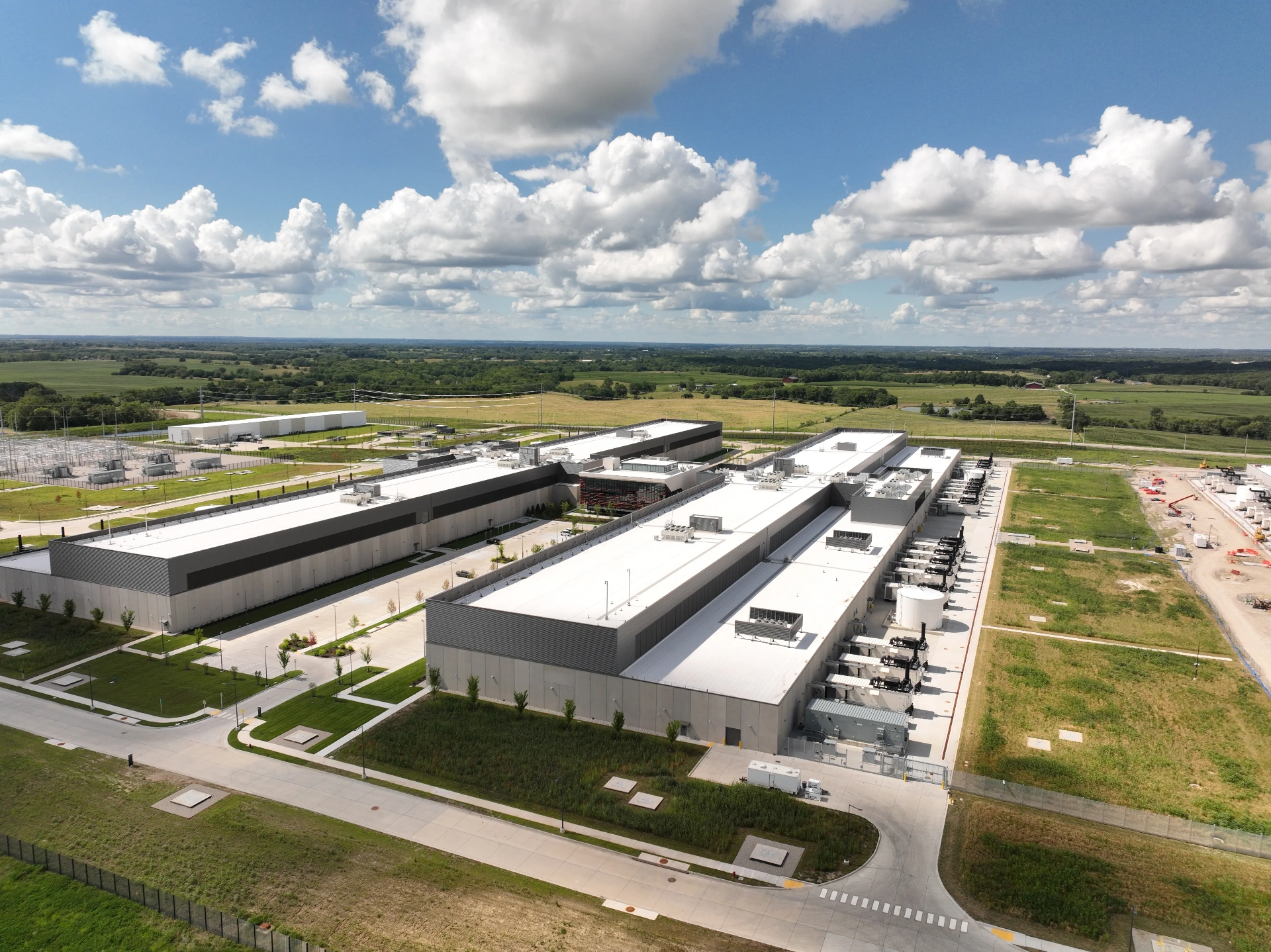
Hyperscale data center campuses are reshaping land values, transmission corridors, and industrial zoning decisions across Central Texas.
Data center development Texas is reshaping land values, industrial zoning, and long-term investment opportunities across Central Texas as AI computing demand and cloud infrastructure expansion drive unprecedented need for power-ready land and commercial facilities. For landowners, investors, and anyone tracking Austin's economic trajectory, understanding this structural shift is essential to identifying which corridors and parcels are positioned for significant appreciation.
Texas has quietly become one of the most consequential data center markets in the country, and the implications stretch well beyond the tech sector. For landowners, investors, and anyone tracking Austin's economic trajectory, this is a trend worth understanding in detail.
Data center development is reshaping land values, infrastructure planning, and commercial real estate demand across the state. In Central Texas specifically, it is influencing which parcels get attention from site selectors, which counties are seeing industrial zoning amendments, and which suburban corridors are being positioned for long-term infrastructure investment. Our deeper look at Austin land development opportunities covers how that influence is showing up in current entitlement and acquisition activity.
This is not a story about speculative tech hype. It is a structural shift driven by AI computing demand, cloud infrastructure expansion, and enterprise digital transformation, all of which require physical facilities built on real land with real power connections. Understanding how that plays out across the Texas market gives investors and landowners a more complete picture of where capital is flowing and why. For a broader view of the regional investment thesis, our Austin real estate investment overview and our investment advisory services walk through how we frame these decisions for clients.
Why Texas Became a Data Center Destination
Texas did not become a top-tier data center market by accident. Several structural factors converged to make the state particularly attractive to large-scale operators, and those factors are not going away.
The most significant is energy. Texas operates its own deregulated power grid through ERCOT, which gives data center operators considerably more flexibility in energy procurement than they would have in most other states. Rather than negotiating with a single regulated utility, operators in Texas can structure power purchase agreements, access competitive wholesale markets, and layer in renewable energy contracts in ways that improve both cost and sustainability profiles. For facilities that consume power at the scale of a small city, that flexibility has real financial value.
Texas also offers meaningful tax advantages. Under the Texas Economic Development Act, data center operators that meet certain investment thresholds and job creation requirements can qualify for a sales tax exemption on electricity purchases. The Texas Comptroller's office administers this program, and it has been a documented factor in site selection decisions for large facilities. Combined with the absence of a state income tax, the overall tax environment is competitive with any market in the country.
Beyond energy and taxes, Texas offers something harder to replicate: scale. The state has large quantities of available land at price points that remain viable for industrial-scale development, a workforce with growing technical depth, and a regulatory environment that generally supports economic development at the local and state level. Our Austin commercial real estate overview tracks how that scale advantage is filtering into commercial absorption and lease activity.
The growth of AI infrastructure has added urgency to this demand. AI workloads require significantly higher power density than traditional computing, which means operators need not just land, but land with access to substantial transmission capacity. Texas, with its extensive high-voltage transmission network and ongoing grid expansion through ERCOT, can accommodate that requirement in ways that constrained coastal markets simply cannot.
The primary concentration of Texas data center activity has historically been in the Dallas-Fort Worth Metroplex, which is frequently cited by industry analysts and firms like CBRE and JLL as one of the top five data center markets in North America. San Antonio has grown as a secondary market, benefiting from lower land costs and available power infrastructure. The Austin-Round Rock corridor is increasingly relevant, though its role in the broader Texas data center landscape is more nuanced than its tech reputation might suggest.
The Land Requirements Behind a Data Center Campus
Data centers are not like typical commercial developments, and the land they require reflects that. Understanding the site selection criteria helps explain which parcels are drawing attention and why. Our breakdown of highest and best use analysis is a useful companion read for any landowner thinking through this kind of evaluation.
At the most basic level, data center operators need flat, large parcels with minimal environmental constraints. Depending on the scale of the facility, a campus can range from tens of acres for a smaller colocation facility to several hundred acres for a hyperscale campus with room for phased expansion. The land itself needs to be relatively free of flood risk, which in Central Texas means careful attention to FEMA flood maps and local drainage patterns.
Proximity to high-voltage transmission infrastructure is non-negotiable. Data centers cannot function without reliable, high-capacity power delivery, and the cost and timeline of running new transmission lines to a remote site can make an otherwise attractive parcel economically unviable. Site selectors typically start by mapping existing transmission corridors and working outward from there.
Water access is another critical requirement. Large data centers use cooling systems that consume significant quantities of water, either through evaporative cooling towers or other thermal management systems. In a state where water rights and availability vary considerably by county and region, this is not a minor consideration. Sites near municipal water systems or with viable well and water rights infrastructure have a meaningful advantage. Owners of larger Austin ranch land parcels with established water rights are increasingly being evaluated through this lens.
Fiber connectivity matters as well. Data centers need to connect to existing fiber networks to function, which means proximity to existing telecommunications infrastructure is factored into every site evaluation.
In Central Texas, these requirements are pushing site selectors toward the urban fringe. Areas in Hays County, Williamson County, Bastrop County, and portions of the Hill Country corridor are being evaluated precisely because they offer available land at more accessible price points than Austin proper, while still being within reach of the transmission and fiber infrastructure that runs through the metro. Our land and ranch practice tracks acquisition activity across all of these counties.
Landowners in these corridors are increasingly receiving unsolicited acquisition inquiries, sometimes from site selection firms rather than named buyers. Evaluating those offers requires more than comparing them to recent agricultural or residential land sales. Data center land valuations reflect entitlement risk, infrastructure proximity, power availability, and development timelines in ways that differ substantially from traditional land comps. A parcel that looks overpriced relative to neighboring agricultural land may be reasonably valued when assessed against its infrastructure position and development potential.
For landowners who receive these inquiries, working with an advisor who understands both the real estate and infrastructure dimensions of the transaction is important. Many of these conversations also benefit from a quiet, non-public process; our off-market real estate channel is built for exactly that kind of discreet land transaction. The gap between an uninformed seller and an informed one can be significant.
How Data Center Activity Affects Surrounding Property Markets
The real estate effects of a large data center campus extend beyond the parcel itself. Understanding how that influence moves through surrounding markets helps investors and property owners anticipate change rather than react to it.
Large-scale data center campuses create employment, though not at the density of a traditional office park or manufacturing facility. Operations and maintenance roles, security, facilities management, and supporting technical staff generate a steady employment base. More significantly, the infrastructure investment required to support a major campus, upgraded roads, expanded utility capacity, new fiber corridors, tends to improve the overall development viability of surrounding land. That is exactly the dynamic our Austin redevelopment opportunities coverage tracks across the metro.
Ancillary commercial development typically follows. Contractors, suppliers, food service, and hospitality businesses orient toward areas with stable employment and infrastructure. Over time, this can shift land use patterns in ways that increase competition for well-located parcels and push values upward in corridors that were previously overlooked. The Austin mixed-use development playbook is one of the clearest expressions of this pattern.
The timing of these effects is not always linear. Infrastructure buildout timelines, utility approvals, and construction phases can span multiple years. Property values in surrounding areas often move in anticipation of development rather than in direct response to it. This means that by the time a campus is operational and visible, much of the land value appreciation in the immediate vicinity may have already occurred.
In markets like Round Rock, Cedar Park, and areas east of Austin toward Manor and Elgin, data center activity is one of several industrial and tech-driven forces contributing to shifting land use patterns. The presence of major employers, improving highway infrastructure, and expanding utility capacity are all converging to increase competition for well-located industrial and commercial parcels in these corridors. Our Austin infill development analysis covers how those pressures are reshaping smaller, well-located sites inside the metro.
It is worth noting that data center development does not uniformly benefit all property types in an area. Residential neighbors sometimes raise concerns about visual impact, noise from cooling systems, and the relatively limited foot traffic these facilities generate compared to other commercial uses. Local planning and zoning decisions can be contentious. Investors tracking these corridors need to understand both the upside drivers and the potential friction points that can affect timelines and outcomes.
Austin's Position in the Texas Data Center Landscape
Austin's reputation as a tech hub creates an expectation that it would be a natural home for large data center campuses. The reality is more complicated, and understanding the distinction matters for anyone making investment or land decisions in the metro.
Austin proper faces constraints that limit its appeal for hyperscale data center development. Land costs within the city are high relative to the urban fringe. Power grid capacity within Austin's service territory is tighter than in some surrounding areas. And the city's regulatory environment, while not hostile to development, moves at a pace that can be misaligned with the speed at which data center operators want to execute.
The result is that many large facilities targeting the Austin market are actually locating in the broader metro, in Williamson County, Hays County, Bastrop County, and other surrounding areas where land is more available and infrastructure investment is more tractable. This is consistent with how other major tech markets have evolved. The facility does not need to be in the city to serve the city. For investors looking at the broader rental and income side of this shift, our Austin multifamily report examines how housing demand is following these employment corridors.
The growth of major employers in the Austin area, including Apple's campus in North Austin, Tesla's Gigafactory east of the city, Samsung's semiconductor facility in Taylor, and Oracle's relocated headquarters, has increased demand for local data infrastructure. These companies and their supply chains generate computing and data storage requirements that create demand for both large hyperscale campuses and smaller edge facilities positioned closer to end users.
Understanding the difference between these facility types matters for investors and landowners. Edge data centers are smaller facilities designed to reduce latency by positioning computing closer to users. Colocation facilities host equipment for multiple tenants in a shared environment. Hyperscale campuses are large, single-operator facilities built to accommodate massive computing workloads. Each has different site requirements, different development timelines, and different neighborhood impacts. A smaller edge facility might be appropriate for an infill commercial site; a hyperscale campus requires a fundamentally different kind of land position. Our Austin commercial real estate practice handles both ends of that spectrum.
For Austin-area investors, the practical implication is that the data center story is playing out primarily in the suburban and exurban corridors rather than within the city itself. Tracking activity in Taylor, Georgetown, Manor, Elgin, and similar locations gives a more accurate picture of where this capital is landing.
What Investors and Landowners Should Watch
If you own land or are evaluating land investments in Central Texas, the most actionable signal is proximity to high-voltage transmission infrastructure. Parcels that sit near existing transmission corridors are drawing attention from site selectors regardless of current zoning. Zoning can be changed; transmission lines cannot be moved easily or quickly.
Fiber corridor proximity is a secondary but meaningful signal. The presence of existing telecommunications infrastructure reduces the cost and complexity of connecting a facility to the broader network, which improves the economics of development for any given site.
For investors tracking this trend at a broader level, several sources of information are worth monitoring consistently. ERCOT publishes data on transmission expansion projects and interconnection queues, which can indicate where grid capacity is being built out and which corridors are being prioritized. County-level industrial zoning amendments often precede or accompany data center development activity. Economic development announcements from organizations like the Greater Austin Chamber of Commerce and the Texas Economic Development Corporation frequently signal where large-scale investment is being directed before it becomes visible on the ground. Our market intelligence dashboard layers many of these signals into one place.
The downstream effects of data center development extend beyond the parcels themselves. Industrial real estate in surrounding areas tends to see increased demand as contractors, logistics operators, and supporting businesses seek space. Workforce housing demand increases in corridors where large campuses are being built, particularly in areas that were previously rural or semi-rural. Ranch and rural land values in corridors where large campuses are being planned can shift materially as the development horizon changes. Investors repositioning out of appreciated land into income-producing assets should review our walkthrough of the 1031 exchange for Texas investors.
One caution worth noting: not every site that receives interest from a data center site selector will result in a transaction, and not every announced project will be built on the originally planned timeline. Infrastructure approvals, utility negotiations, and capital market conditions all affect execution. Investors who price in development certainty before it is confirmed take on meaningful risk. The smarter approach is to understand which parcels have the characteristics that make them viable candidates and track the progression of infrastructure investment as a leading indicator.
Putting It in Perspective for Austin Real Estate Decisions
Data center development is one layer of a broader economic story playing out across Central Texas. It is a durable trend backed by structural demand from AI, cloud computing, and enterprise digital infrastructure. But it is not the single driver of any one market segment, and it should not be interpreted in isolation.
What it does is reinforce Austin's long-term demand fundamentals. The concentration of major tech employers, the expansion of semiconductor manufacturing in the metro, and the growth of data infrastructure investment all point toward a regional economy that continues to attract capital and employment. That has real implications for land values, commercial real estate demand, and residential market depth across the metro. Our coverage of Austin commercial real estate and Austin real estate investment goes deeper on the asset-level implications.
For buyers and investors making location decisions, understanding which submarkets are seeing infrastructure investment, employment growth, and commercial development activity gives a more complete picture than residential price trends alone. A neighborhood that looks quiet on a residential price chart may be positioned in a corridor where infrastructure investment is accelerating, which changes its long-term outlook considerably.
The lines between tech infrastructure, land use, and housing demand are continuing to converge in Central Texas. Working with an advisor who tracks both residential and commercial market signals across the metro, and who understands how these trends intersect with specific parcels and submarkets, is increasingly valuable as that complexity grows.
If you are evaluating land, an investment property, or a location decision in the Austin area and want perspective on how data center development and broader infrastructure trends intersect with your specific situation, learn more about our investment advisory services and connect with Echelon Property Group for a grounded, locally informed conversation.
Frequently Asked Questions
Why is Texas such a strong market for data center development?
Texas combines a deregulated ERCOT power grid that gives operators flexibility in energy procurement, sales tax exemptions on electricity for qualifying facilities under the Texas Economic Development Act, no state income tax, large quantities of viable industrial-scale land, and an extensive high-voltage transmission network. Those structural factors are difficult to replicate in coastal markets.
What kind of land do data center operators look for in Central Texas?
Flat, large parcels (tens of acres for colocation, hundreds for hyperscale) with minimal flood risk, direct proximity to high-voltage transmission infrastructure, reliable water access for cooling, and existing fiber connectivity. Counties on the urban fringe like Williamson, Hays, and Bastrop offer the right combination of price and infrastructure access.
How does data center development affect surrounding land and property values?
Infrastructure investment around a campus (roads, utility capacity, fiber) tends to improve development viability of nearby land. Ancillary commercial demand follows. Importantly, much of the value movement occurs in anticipation of the campus rather than after it opens, so landowners tracking transmission and zoning activity often have the clearest signal.
Is Austin itself a major data center market?
Not in the hyperscale sense. Land cost, tighter grid capacity, and regulatory pace push most large facilities to the broader metro, in Taylor, Georgetown, Manor, Elgin, and surrounding counties. Edge and colocation facilities can still fit inside the urban footprint, but hyperscale campuses are following the suburban and exurban corridors.
I received an unsolicited offer on my land from a site selector. How should I evaluate it?
Data center land valuations factor in entitlement risk, infrastructure proximity, power availability, and development timelines, none of which appear in standard agricultural or residential comps. A parcel that looks overpriced versus neighboring land may be reasonably valued against its infrastructure position. Work with an advisor who understands both the real estate and infrastructure dimensions, and consider whether a discreet, off-market process protects your negotiating position better than going public.
*This article is for educational purposes only and does not constitute financial, legal, tax, or investment advice. Data center site selection, infrastructure timelines, and land valuations are highly fact-specific. Confirm current conditions with appropriate professional advisors before making property decisions.*
Continue Exploring
Three places to go from here

ABOUT THE AUTHOR
Taylor Sherwood
Austin Real Estate Advisor · Echelon Property Group
Taylor Sherwood is a Certified Luxury Home Marketing Specialist (CLHMS) and top-performing Austin real estate advisor. He specializes in luxury residential properties, land development, commercial real estate, and investment property across Austin and the Texas Hill Country. With deep market expertise and a results-driven approach, Taylor helps buyers, sellers, and investors navigate Austin's most competitive real estate segments.
Related Reading

Cost Segregation and 100% Bonus Depreciation for Austin Investors: The 2026 Playbook
100% bonus depreciation is permanent. What a cost segregation study does on a $1M Austin STR and an 8-unit, who can use the loss, and what recapture costs.
2026-08-26 • 22 min read
Austin ADU Rules in 2026: What HOME Lets You Build, What It Costs, and When the Math Actually Works
Austin ADU rules under the HOME initiative in 2026: what you can build, what it costs, what it rents for, and a worked investor model that shows when the math works.
2026-08-07 • 16 min read

Austin Short-Term Rental Rules in 2026: The Investor's Guide to the New Ordinance, the License Math, and the Shakeout Ahead
Austin rewrote its STR ordinance. License costs, the July 1 platform crackdown, real revenue data from four sources, and a full worked underwrite for investors.
2026-07-31 • 14 min read

Where Austin Homeowners Are Actually Moving in 2026, and How Investors Should Trade It
Travis County just posted its first population decline in over 20 years. County-by-county migration data, the $992/month carrying-cost arbitrage, and four investment theses.
2026-07-28 • 11 min read